Donald Trump's Iran war tensions are creating divisions within the Republican Party as candidates prepare for the 2026 US midterm elections.
Republican Senate candidates Ashley Hinson of Iowa and Mike Rogers of Michigan have called for a swift end to the conflict, while some online commenters have accused GOP figures of changing their positions for political reasons.

The debate has intensified as candidates respond to concerns about rising fuel prices and the conflict's broader economic impact.
Reuters reported that Hinson and Rogers adjusted their public messaging on Iran after previously supporting Trump's actions related to the war.
Donald Trump Critics Face Pressure Over Iran War Positions
The Republican Party has faced internal disagreements over Donald Trump's approach to the Iran war, with some candidates attempting to address concerns from voters while maintaining support among Trump's core supporters.
Republican officials have been managing competitive races, including contests involving Iowa and Kansas, as the party considers how foreign policy issues may affect campaigns. Reuters reported that the Iran conflict and rising energy costs have become issues candidates are addressing during the election cycle.
Two Republican Senate candidates have publicly called for the conflict to end. Hinson, the GOP Senate nominee in Iowa, and Rogers, the GOP Senate nominee in Michigan, have both urged a swift conclusion to the war, according to Reuters.
A senior Republican official said, 'We need to stop the contagion.' Mark Bednar, a Republican strategist and former communications director for then-Speaker Kevin McCarthy, said voter enthusiasm among Republican supporters remained a concern.
'The voter enthusiasm [for Republican voters] is not where it needs to be, but that's where a money advantage can make a really big impact,' Bednar said.
The comments highlight concerns among some Republican figures about voter engagement ahead of the midterms. However, reactions have varied, with some critics questioning whether Republican candidates challenging Trump's Iran policy will maintain those positions after the election.
Some social media users accused GOP candidates of making temporary changes rather than adopting lasting policy differences. One commenter wrote, 'Bait and switch. Any GOP opposing Trump and maga is just trying to save their asses. Once midterms are over they will crawl back under his dirty diaper.'
Another user wrote, 'It's to late Republicans had enough time. Don't trust them; they will be back kissing Trump's shoes as soon as they win again.' Those comments reflect individual online reactions and do not represent all Republican voters or party members.
Donald Trump Iran War Debate Shapes Midterm Campaign Messaging
The Donald Trump Iran war debate has become one of several issues Republican candidates are addressing as they campaign before the midterm elections. The conflict has raised questions about foreign policy, energy prices and the economic concerns affecting voters.
According to Reuters, rising fuel prices linked to the conflict have added pressure on Republican candidates as they attempt to respond to voter concerns. The war is one of several issues shaping campaign messaging alongside broader economic issues.
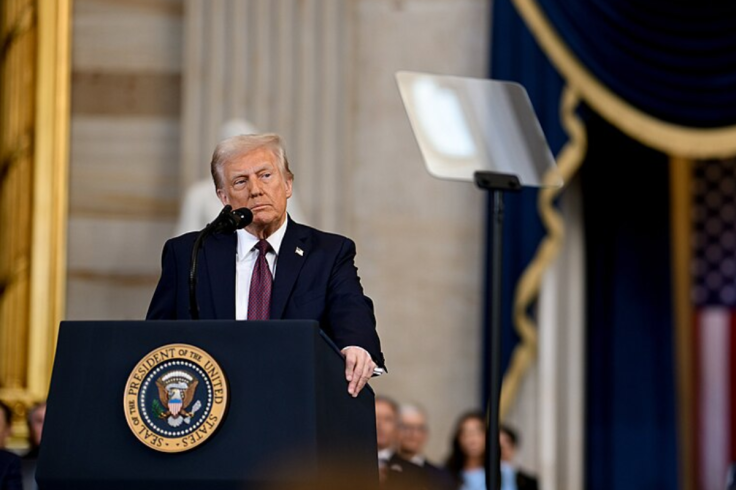
The political dispute has also unfolded as Trump continues defending his administration's position on Iran. During his 2026 United Nations General Assembly address, Trump criticised political opponents and discussed his foreign policy priorities.
Trump said, 'The Cuban regime has also spent decades coordinating with the left-wing radicals and communist networks here in the United States.'
He added, 'As our State Department has detailed, they've cultivated ties to subversive and radical groups such as the Communist Party USA, Antifa, and the Dumocrat Socialists of America.'
Trump continued, 'Communism will never be coming to America, but freedom will be coming to Cuba, and safety and security will be coming to Mexico.'
The remarks formed part of a wider speech in which Trump defended his administration's policies and criticised opponents.
As the midterm elections approach, Republican candidates are navigating competing pressures over foreign policy, economic concerns and expectations from different parts of the electorate. The effect of those issues will depend on how voters respond in individual races across the country.