Get all your news in one place.
100's of premium titles.
One app.
Start reading
International Business Times UK
Politics
Emmanuel Morilla

Trump Calls Chinese Press 'Friendliest' After Xi Welcome Camera Clash With Secret Service

The leaders’ Washington meeting unfolded amid renewed attention on security protocol, press-pool access and the handling of overseas media delegations during high-level diplomacy (Credit: The White House/X)

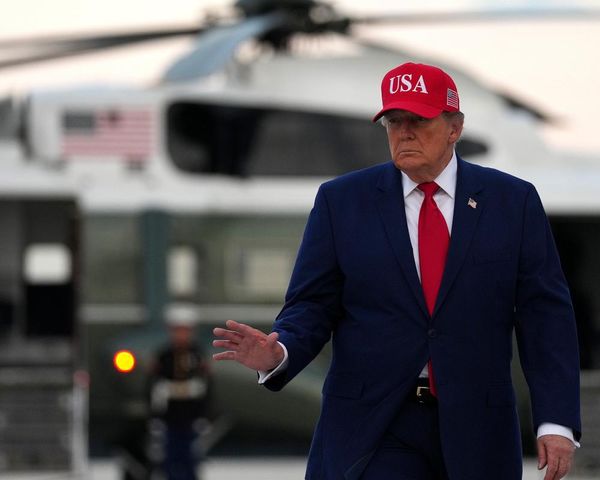
Trump hailed Xi Jinping's travelling Chinese press corps as 'the friendliest press corps in the world' on 24 September.

Hours earlier, members of the delegation had been involved in a confrontation with US Secret Service agents over camera positions ahead of the Chinese leader's White House welcome. He made the remark during a brief Oval Office photo opportunity later that day.
The camera-position dispute unfolded as the White House prepared for Xi's state visit arrival ceremony. It did not interrupt the official welcome, but provided an unscripted moment during a day focused on trade, technology and wider US-China relations.

The Oval Office session between Trump and Xi had initially been scheduled as closed to the press. The White House later allowed still photographers into the room for brief access, while the wider press pool was not given an opportunity to question the two leaders during the meeting.

Trump's 'Friendliest' Press Corps Comment

During one of two brief photo opportunities, Trump said Xi had 'the friendliest press corps in the world' and joked that Chinese journalists ask Xi for permission before speaking. Neither Trump nor the White House presented the comment as a response to the earlier confrontation.

No joint news conference was included in the programme for Xi's visit. Reporters therefore had no scheduled question-and-answer session with either leader after the Oval Office talks.

Video from outside the White House showed a dispute between Chinese press personnel seeking camera positions and Secret Service agents. Contemporaneous accounts described shouting and resistance to directions to move shortly before Xi's formal arrival ceremony.

Telegraph correspondent Connor Stringer wrote on X that there was 'chaos' before Xi's arrival, with 'lots of shouting and raised voices' as members of the travelling Chinese press corps refused to move for Secret Service personnel. A Reuters photograph showed an agent redirecting a Chinese official photographer who had initially refused to move.

The reports reviewed for this article did not mention any arrests or injuries arising from the incident. The White House, Secret Service and Chinese officials had not publicly issued detailed explanations of the episode in the available reporting.

Xi's White House Welcome Goes Ahead

Trump and First Lady Melania Trump formally welcomed Xi and his wife, Peng Liyuan, with military honours. The ceremony went ahead as scheduled before the leaders began talks during Xi's state visit.

Trump told Xi that they had 'forged a friendship, a truly great friendship, actually'. Xi said he had travelled to the United States to 'carry on our friendship, expand cooperation and promote well-being of both our peoples'.

Xi also said that the countries should maintain 'no conflict and no confrontation'. The leaders began discussions on trade, technology and artificial intelligence.

Earlier Beijing Access Disputes

During Trump's May 2026 visit to Beijing, a group of Chinese journalists reportedly rushed into the venue for a bilateral meeting with Xi, knocking down a White House advance staff member. The staff member was reported to have suffered minor bruises during the commotion.

A separate dispute arose at the Temple of Heaven, where Chinese officials initially objected to a Secret Service agent entering with a firearm. The travelling press pool's entry was delayed until a compromise was reached, while US journalists also reported movement restrictions during the visit.

Neither report establishes that the May episodes and the White House confrontation were formally connected or directed by either government. The incidents were cited as examples of recurring challenges around security arrangements and press access during Trump–Xi meetings.

Trade Truce Extension Announced

Separately, Treasury Secretary Scott Bessent announced a two-month extension of the existing US–China trade truce until 10 January 2027 as the countries continued negotiations. The extension moved the truce's expiry date from November.

The trade development was separate from the media-access dispute at the White House. It formed part of the wider agenda for Xi's state visit, alongside talks on technology, artificial intelligence and bilateral relations.

Sign up to read this article
Read news from 100's of titles, curated specifically for you.
Already a member? Sign in here
Related Stories
Top stories on inkl right now
One subscription that gives you access to news from hundreds of sites
Already a member? Sign in here
Our Picks
Fourteen days free
Download the app
One app. One membership.
100+ trusted global sources.