Washington's military escalation in Latin America in recent decades, coinciding with a high-level Chinese delegation in Caracas, has triggered urgent diplomatic scrutiny as questions mount about the US-China strategic calculus.
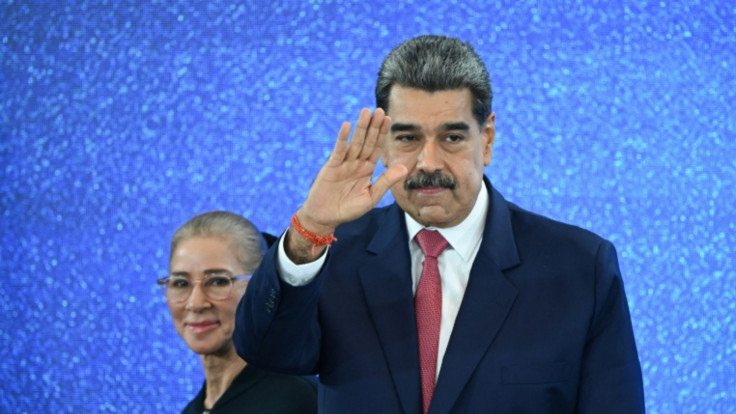
The United States launched strikes inside Venezuelan territory on Jan. 3, 2026 and Trump announced that Venezuelan President Nicolás Maduro and his wife had been captured during the operation. The attacks came just hours after a senior Chinese envoy arrived in Caracas for talks with Maduro on deepening Beijing's strategic partnership with Venezuela, igniting speculation over whether the timing was coincidental or a deliberate geopolitical signal.
US Military Strikes Mark Severe Escalation Against Caracas
In the early hours of Jan. 3, multiple explosions and sightings of low-flying aircraft were reported across Caracas, Venezuela's capital, lasting roughly 90 minutes and causing power outages in southern neighbourhoods. Witnesses saw black smoke rising from military facilities in the city.
#CountryDuty
— Tumi Sole (@tumisole) January 3, 2026
Breaking News:
The USA has launched various strikes in #Venezuela and targeted various refineries
This is a massive developing story!
Repost
pic.twitter.com/bslEZMA6Eu
Later that morning, Trump confirmed on social media that US forces had conducted a 'large scale strike' and taken Maduro and his wife to the United States, where they face criminal charges including alleged narco-terrorism offences in the Southern District of New York.
The operation represents Washington's most direct military action in its hemisphere since the 1989 invasion of Panama. In a profile of the events, Reuters noted this was the first confirmed military strike inside Venezuelan territory itself and not solely against maritime targets.
Venezuela's government immediately denounced the attacks as an act of 'military aggression', declaring a national state of emergency and accusing the United States of seeking control over Venezuela's strategic oil and mineral resources. Vice-President Delcy Rodríguez demanded immediate proof of life for Maduro, asserting Caracas had no clear information on his whereabouts following the operation.
International reactions were swift. Colombia's President Gustavo Petro urged an emergency session of the United Nations Security Council, while Cuba's leadership condemned the strike as a blatant violation of Venezuelan sovereignty.
El Gobierno de la República de Colombia observa con profunda preocupación los reportes sobre explosiones y actividad aérea inusual registrados en las últimas horas en la República Bolivariana de Venezuela, así como la consecuente escalada de tensión en la región.
— Gustavo Petro (@petrogustavo) January 3, 2026
Colombia…
Chinese Diplomatic Engagement in Caracas
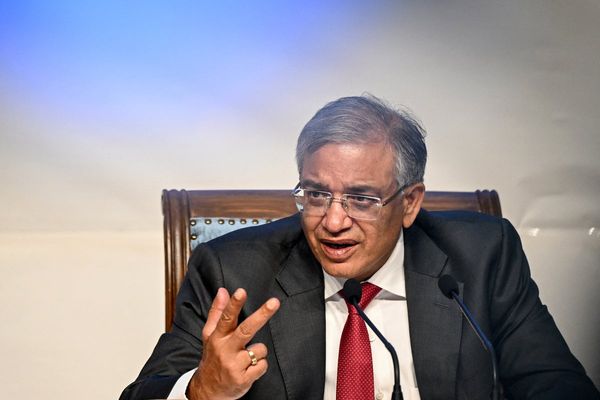
Just hours before the US attack happened, Qiu Xiaoqi, China's Special Representative for Latin American and Caribbean Affairs and envoy of President Xi Jinping, met Venezuelan President Maduro at the Miraflores Palace in Caracas. Official photos and video confirm the encounter took place on Jan. 2, as part of efforts to reaffirm ties between Beijing and Caracas.
JUST IN: 🇨🇳🇻🇪 Chinese officials arrive in Venezuela for talks with President Nicolás Maduro. pic.twitter.com/abviFRZV3f
— BRICS News (@BRICSinfo) January 3, 2026
Chinese state outlets and Venezuelan government posts show that the meeting focused on consolidating bilateral cooperation and 'mutual development'. Caracas described the relationship as a testament to a 'multipolar world order' and stressed enduring strategic partnership despite external pressures.
Beijing's presence in Caracas in recent months has been part of a broader pattern of engagement. In January 2025, Xi Jinping's special envoy attended Maduro's presidential inauguration, underlining the elevation of China–Venezuela ties to an 'all-weather strategic partnership,' a status Beijing and Caracas agreed upon in 2023.
China's Ministry of Foreign Affairs has repeatedly expressed opposition to what it terms 'external interference' in Venezuela's domestic affairs and has urged all parties to avoid escalation, defending principles of sovereign equality under the UN Charter.
Okay this might get really bad
— 𝐇𝐞𝐫𝐞𝐝𝐢𝐭𝐚𝐭𝐞𝐦 𝐑𝐞𝐛𝐞𝐥𝐥𝐢𝐨 (@HereditRebellio) January 3, 2026
Chinese officials arrived in Caracas Venezuela 3 hours before the U.S. invasion. China might actually deploy whatever domestic force it has in Venezuela to try and extract their officials
Actual kinetic World War 3 might kick off pic.twitter.com/teBg9nq8FF
Beijing's statements at the United Nations have been particularly pointed in recent months, framing US actions as unilateral, illegal and harmful to regional peace. China has consistently called on Washington to halt its campaign against Caracas under the guise of combating drug trafficking and to resolve differences through diplomatic channels.
Geopolitical Calculus: Coincidence Or Message?
The near-simultaneous timing of the Chinese envoy's visit and the US military operation has raised alarm among international relations analysts. Some in Washington view the diplomatic engagement as Beijing signalling its readiness to deepen ties with an embattled Maduro regime, potentially positioning itself as a counterweight to American influence in the Western Hemisphere.

American pressure on Venezuela has been mounting for months. Beginning in mid-2025, the Trump administration initiated Operation Southern Spear, a campaign of naval deployments and airstrikes targeting alleged drug trafficking vessels connected to Venezuela's so-called Cartel of the Suns. By late December, the US expanded operations to land targets, striking a dock area allegedly used for narcotics logistics — the first such land hit.
Trump had also imposed a blockade on Venezuelan oil tankers and supported sanctions aimed at weakening the Maduro government. These moves were justified by the White House in the name of combating cross-border crime and restoring democratic norms, but critics in Congress and international legal experts have questioned their legality and strategic value.
For Beijing, Venezuela remains a critical partner in Latin America, underpinned by substantial oil imports, infrastructure financing, and diplomatic alignment on key global issues. Chinese observers argue that engagement with Caracas supports a multipolar world order and counters what they see as American unilateralism.