Work on a controversial border wall project inside Texas’ Big Bend National Park has been placed on a temporary hold by the Trump administration, while the chief of the border enforcement agency has been tasked with an "on-the-ground evaluation."
Located in southern Texas, the development has drawn strong opposition from across the political spectrum, with critics arguing that it damages the region's unspoiled wilderness. Opponents point out that the difficult, isolated landscape naturally deters smugglers and migrants. Historically, border encounters in Big have remained lower than in other sectors and have decreased even more during the previous two years.
Writing on X, Rodney Scott, who heads Customs and Border Protection, announced: "CBP is pausing all construction activity in Big Bend National Park while I visit and conduct a personal, on-the-ground evaluation." Scott added that across the coming days, he intends to "listen to local leadership, community members and stakeholders" to confront what he characterized as "real" national security threats alongside park preservation efforts.
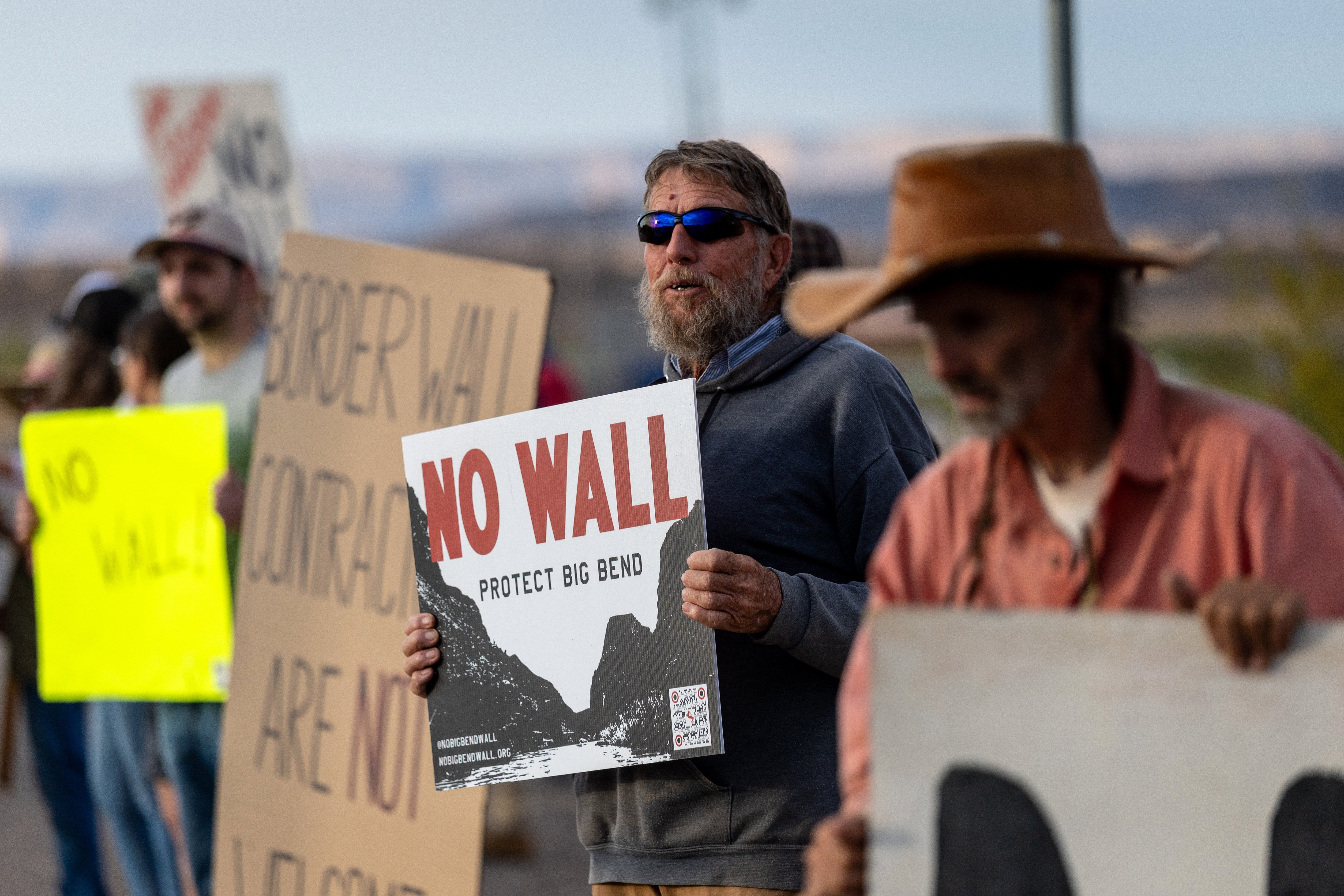
While it isn’t clear whether the brief suspension portended a more permanent halt to the construction in the area, it reflected the intensity of the bipartisan opposition and was a rare concession from the administration on a signature promise of the president’s that it has raced to complete.
Congress gave the Trump administration $46 billion last summer to build a wall from the Pacific Ocean to the Gulf of Mexico, and the administration has been charging ahead and waiving numerous regulations in an effort to swiftly build the wall.
Scott has said that he expects the first layer of the wall to be built by the end of next year.
But the administration has run into fierce opposition in Texas especially when it comes to construction in and near Big Bend National Park and a state park to the west.
Customs and Border Protection earlier this year backed off of plans to build a 30-foot tall bollard wall through the parks but was still moving forward with other border protection measures such as a new road, lights, miles of barriers designed to stop cars from crossing the border and technology such as fiber optic cables to be buried under the fences.
That has sparked opposition from Democratic and Republican sheriffs in the region, former national park officials, local residents who rely on the parks for their livelihood and from some Texas elected officials. Critics have said it will scar the rugged landscape that attracts tourists who raft down the Rio Grande River and take advantage of some of the clearest night skies in the U.S. to gaze at stars.
Last week, bulldozers were seen clearing land at the park, sparking even more concern and raising questions from one of the state's Republican senators. Sen. John Cornyn, who lost the Republican primary to the state's attorney general, wrote to Homeland Security Secretary Markwayne Mullin over construction concerns.
“My constituents believe that the 1,000-foot riverbank cliffs and remote Big Bend terrain offers its own source of deterrence for any illegal migrants crossing into the United States. The dangerous terrain includes steep mountains, deep canyons, and expansive deserts which they believe act a natural barrier that limits large-scale movements,” Cornyn wrote.