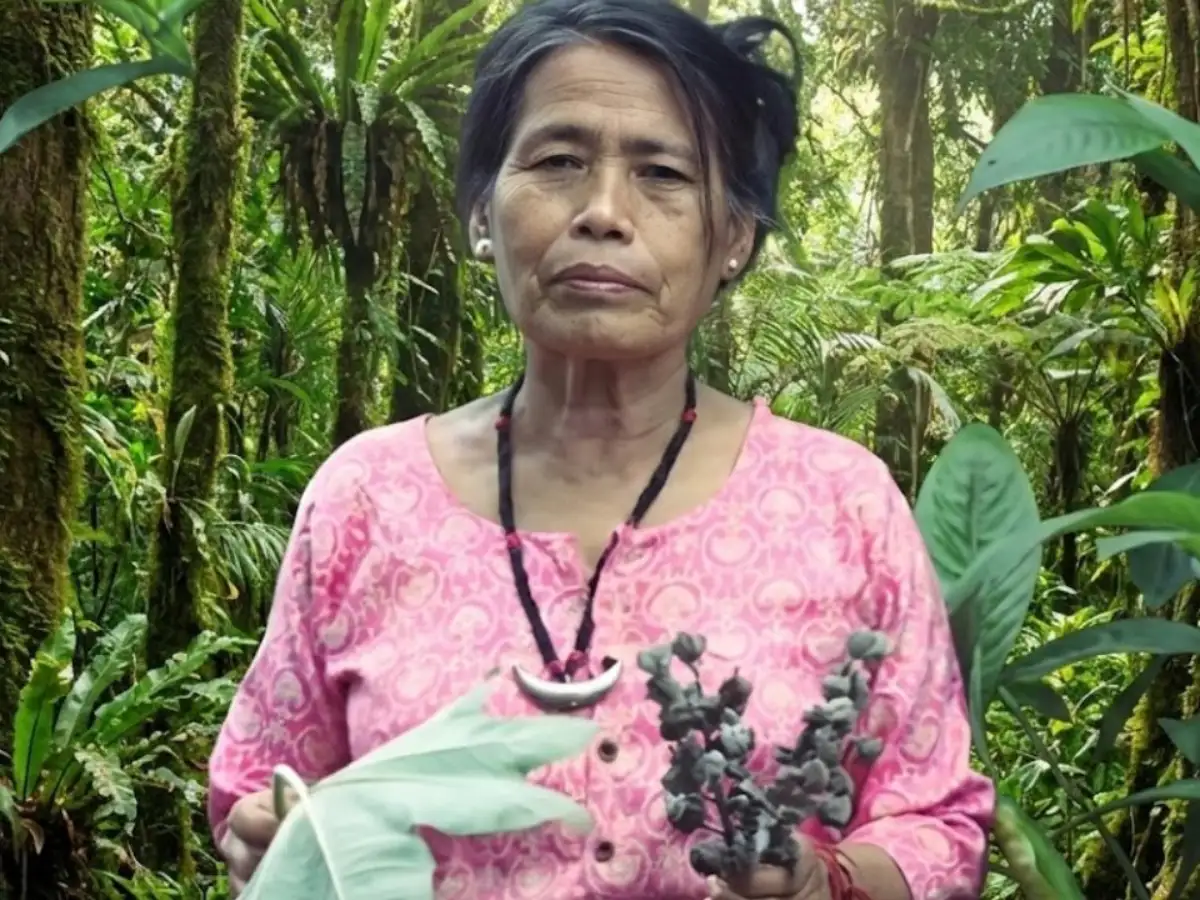
In an age when most people turn to hospitals and modern medicine for treatment, some still place their faith in traditional healing practices that have been passed down through generations. One such person is Yanung Jamoh Lego, a herbal healer from Arunachal Pradesh whose knowledge of medicinal plants has helped thousands of people over the past three decades.
Often called the "Adi Queen of Herbs", Lego has dedicated her life to preserving indigenous healing traditions while treating patients from across India and beyond.

Who is Yanung Jamoh Lego?
Yanung Jamoh Lego was born in 1963 in Sika Tode village in Arunachal Pradesh's East Siang district. She belongs to the Adi tribal community and spent her childhood surrounded by the forests of the Eastern Himalayas.
Her journey into herbal medicine began at a young age. She learned about medicinal plants from her grandmother and later gained practical knowledge by watching her father, who was a respected traditional healer in the region.
What started as family knowledge gradually turned into a lifelong passion for healing.
How did she begin her herbal healing practice?
After years of learning and hands-on experience, Lego officially started treating patients in 1995. Before opening her practice, she spent nearly 15 years studying traditional remedies and understanding the healing properties of local plants.
Today, she is known for treating a wide range of health conditions using herbal preparations made from locally sourced medicinal plants. Her treatments include powders, oils, herbal pastes and decoctions prepared fresh for patients.
Over the years, people have visited her clinic seeking help for conditions such as diabetes, arthritis, kidney disorders, liver problems, skin diseases and other chronic illnesses.
Preserving traditional knowledge for future generations
Lego's work extends far beyond patient care. In 2009, she launched Indigenous Herbal Heritage, an initiative aimed at protecting traditional medicinal knowledge and encouraging sustainable use of local plants.
Through the programme, she has trained around one lakh people and helped plant more than 5,000 medicinal plants across Arunachal Pradesh.
Her efforts have played a key role in keeping indigenous healing practices alive at a time when many traditional systems are slowly disappearing.
A healer who also became a teacher
Apart from treating patients, Lego has become a mentor for students, researchers and health enthusiasts interested in traditional medicine.
People from different parts of India as well as countries such as the United Kingdom and the United States have visited her to learn about herbal healing methods.
She believes knowledge should be shared freely and often encourages people to learn through observation and practical experience.
Qualifications and professional recognition
Alongside her traditional training, Lego also holds a Master's degree in Agriculture. She is registered as a medical practitioner under alternative medicine institutions and has served in important public roles, including as deputy director in the Arunachal Pradesh agriculture department.
She has also been appointed as a member of the State Medicinal Plants Board, highlighting her contribution to herbal healthcare and conservation.
Awards that recognised her contribution
Lego's dedication has earned her several honours over the years. Her first major recognition came in 2007 when she received the SRISTI Samman. Later, she was honoured with the Paramparika Vaidya Ratna Award in 2013 and the Arunachal State Award in 2019.
The biggest recognition arrived in 2024 when she was awarded the Padma Shri, one of India's highest civilian honours, for her contribution to traditional medicine and community service.
The award brought national attention to her decades of work in preserving indigenous healthcare practices.
Why patients continue to visit her clinic
Despite her growing reputation, Lego continues to work from her village clinic in Sika Tode. For many years, she offered treatment free of charge. Although she now charges a small fee to cover operational costs, her services remain accessible to people from different backgrounds.
Around 10 to 20 patients visit her clinic daily, where consultations are generally conducted on a first-come, first-served basis.
Many patients credit her herbal treatments with improving their quality of life, especially after struggling with long-term health conditions.
Sharing herbal knowledge on YouTube
Lego has also embraced digital platforms to reach a wider audience. Through her YouTube channel, Herbal Medicine by Yanung Jamoh Lego, she regularly shares information about medicinal plants and natural remedies.
The channel has attracted thousands of subscribers interested in learning more about traditional healing methods and indigenous knowledge systems.
The woman known as the 'Adi Queen of Herbs'
Yanung Jamoh Lego often describes herself as a student of the jungle. Yet for many people in Arunachal Pradesh, she is much more than that.
By combining ancestral wisdom with decades of practical experience, she has become one of the most recognised traditional healers in Northeast India. Her story is a reminder that ancient knowledge, when preserved and shared responsibly, can continue to inspire and benefit future generations.
Inputs from TOI