
The transfer of senior Islamic State detainees from Syria to Iraq has reignited pressure on European governments to confront the long-deferred issue of bringing home and prosecuting their citizens.
Europeans were among 150 senior Islamic State (IS) detainees transferred this week by the US military from Kurdish custody in Syria to neighbouring Iraq, as Baghdad renewed calls for EU states to take back and prosecute their nationals.

The group forms part of a far larger population of jihadist prisoners now being moved as the Kurdish-led forces that have guarded them for years relinquish territory to Syria’s advancing army.
Iraqi officials say as many as 7,000 IS detainees could ultimately be transferred.
IS seized vast areas of Syria and Iraq in 2014, carrying out mass killings and forcing women and girls into sexual slavery. The group was eventually defeated in Syria in 2019 by the Kurdish-led Syrian Democratic Forces (SDF), backed by a US-led coalition.
But the future of thousands of captured fighters has remained unresolved ever since.
That question has become more pressing after Washington said this month that its alliance with the Kurds had largely run its course, as Syria’s new authorities pushed to reassert control over long-held SDF territory in the north and east.
Syrian Army seizes northeast as US abandons Kurdish-led forces
Senior figures moved to Baghdad
An Iraqi security official said the 150 detainees transferred on Wednesday were “all leaders of the Islamic State group, and some of the most notorious criminals”, including Europeans, Asians, Arabs and Iraqis.
The group reportedly comprised 85 Iraqis and 65 foreign nationals, including Europeans, Sudanese, Somalis and people from the Caucasus region.
All had taken part in IS operations in Iraq, including the sweeping 2014 offensive that overran major cities, the official said, adding that they were all at the level of emirs within the group’s hierarchy. They are now being held at a prison in Baghdad, where Iraq has said it will launch legal proceedings.
Amnesty International warned that the wider group of around 7,000 detainees slated for transfer “likely includes Syrians, Iraqis and other foreign nationals, and approximately 1,000 boys and young men”. The organisation urged the US to put safeguards in place before any further transfers and called on Iraq to ensure fair trials without recourse to the death penalty.
Iraq has previously handed down hundreds of death sentences and life terms in terrorism cases. In a call on Friday with French President Emmanuel Macron, Prime Minister Mohammed Shia al-Sudani stressed that European countries must “assume their responsibilities” by repatriating and prosecuting their citizens.
Despite repeated appeals from the Kurds and Washington, most foreign governments have been reluctant to do so, citing security concerns and political backlash at home.
Kurds in Syria 'sacrificed' says head of Kurdish Institute of Paris
Camps, clashes and a fragile calm
The SDF has for years detained thousands of suspected jihadists in prisons and tens of thousands of their relatives in sprawling camps. Amnesty estimated that around 10,000 IS suspects were held in Kurdish-run prisons as of August 2023.
The issue has been thrust back into the spotlight by renewed instability in Syria. After toppling Bashar al-Assad just over a year ago, President Ahmed al-Sharaa has sought to consolidate control nationwide. Tensions with the de facto autonomous Kurdish administration have recently boiled over into clashes.
Damascus has accused the SDF of releasing IS detainees from Shadadi prison, while the Kurds say they lost control of the facility during an attack by government forces. Syrian authorities later said they had arrested 81 escapees. The EU said alleged jailbreaks were of “paramount concern” and confirmed it was monitoring prisoner transfers to Iraq, including foreign fighters.
In Raqa province, Kurdish forces were seen this week being bussed out of the Al-Aqtan prison under a handover deal with the government.
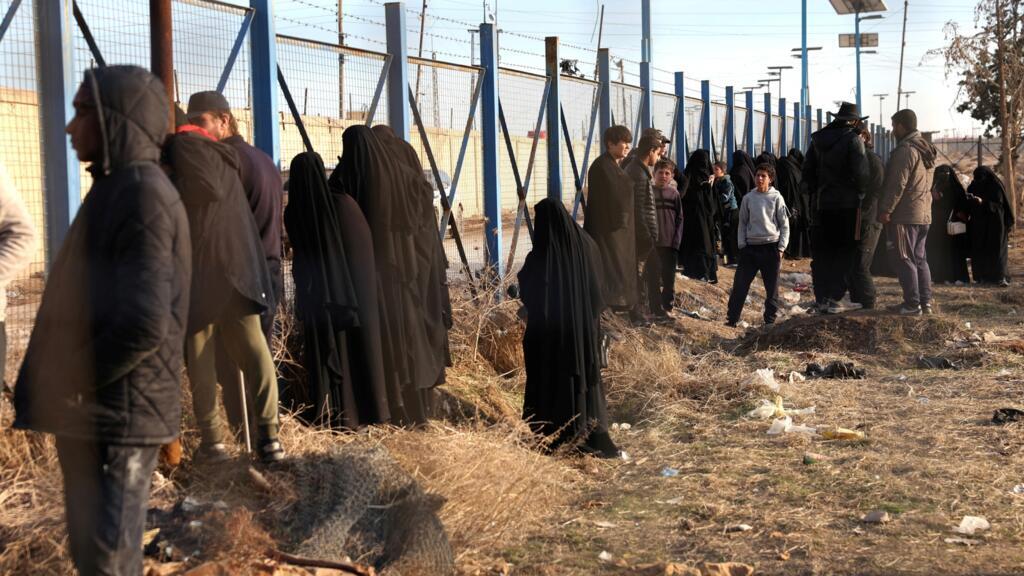
Meanwhile, the UN refugee agency said aid deliveries had resumed at Al-Hol camp, the largest site housing relatives of suspected IS members, after a brief security vacuum following the Kurdish withdrawal.
Around 23,000 people live there, including thousands of foreign women and children.
A deal announced last Sunday to integrate the Kurdish administration into the Syrian state would see Damascus assume responsibility for IS prisoners.
However, a four-day ceasefire agreed earlier this week is due to expire this Saturday evening.
(With newswires)







