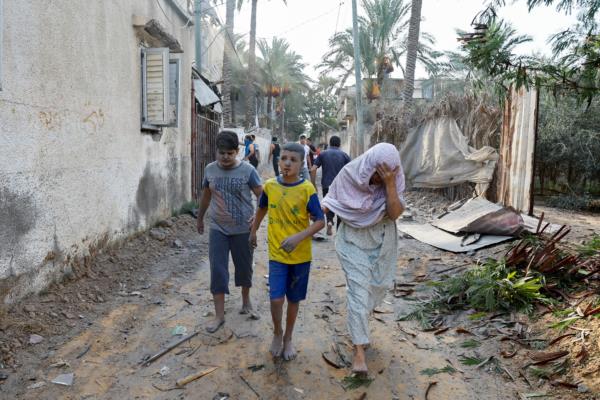
In a harrowing continuation of the conflict between Israel and Palestine, the Gaza Strip has once again become the scene of devastating destruction and loss. As Israeli airstrikes persist, Palestinians in Gaza are left to dig through the rubble with their bare hands, desperately searching for any signs of their loved ones.
The recent 24-hour onslaught has proven to be one of the deadliest in Gaza, with the Hamas-controlled Gaza Health Ministry reporting a staggering 250 deaths as a result of Israeli airstrikes on the al-Maghazi refugee camp, as well as neighboring Bordej and Nou Sayedat. These numbers, verified by the ministry in Gaza, paint a grim picture of the ongoing violence.
As families wade through the debris, their heavy hearts are burdened with the pain of discovering the remains of their beloved ones. Even more distressing, the search efforts are often in vain, with many still trapped beneath the unyielding weight of collapsed buildings. The haunting wails of grief and anguish can be heard as the community rallies together, determined to find and bury their lost ones with dignity.


The toll of this conflict extends beyond the physical destruction. Survivors of previous airstrikes, who had managed to find temporary reprieve, now step forward to help the newest survivors. It is a stark reminder of the cyclical nature of violence in this region, where generations continue to bear witness to unspeakable tragedy.
In the face of such unimaginable suffering, the people of Gaza question the notion of safety and humanity. With each passing day, the pursuit of a secure haven seems increasingly elusive. As the casualties mount, so too does the desperation for aid and respite.
Moreover, the grave reality of acute food insecurity looms over the entire population of Gaza. As the conflict rages on unabated, the question arises: how will these individuals survive when even the most basic necessities are scarce? The seemingly endless violence threatens not only lives but also the very essence of survival.
Amidst the chaos, the international community watches with a mix of concern and dismay. Calls for human rights and mercy reverberate, but the answers to these pleas remain elusive. As the casualties rise, both from airstrikes and the specter of starvation, the urgency for a resolution to this devastating conflict becomes increasingly apparent.
In the heart of this despair, questions pervade the minds of Gazans: where is safe? How will they endure? These questions, asked with profound desperation, highlight the weight of uncertainty that hangs heavily in the air. With no end in sight to the violence, the people of Gaza must grapple with the harsh reality that their lives teeter on the brink of annihilation.