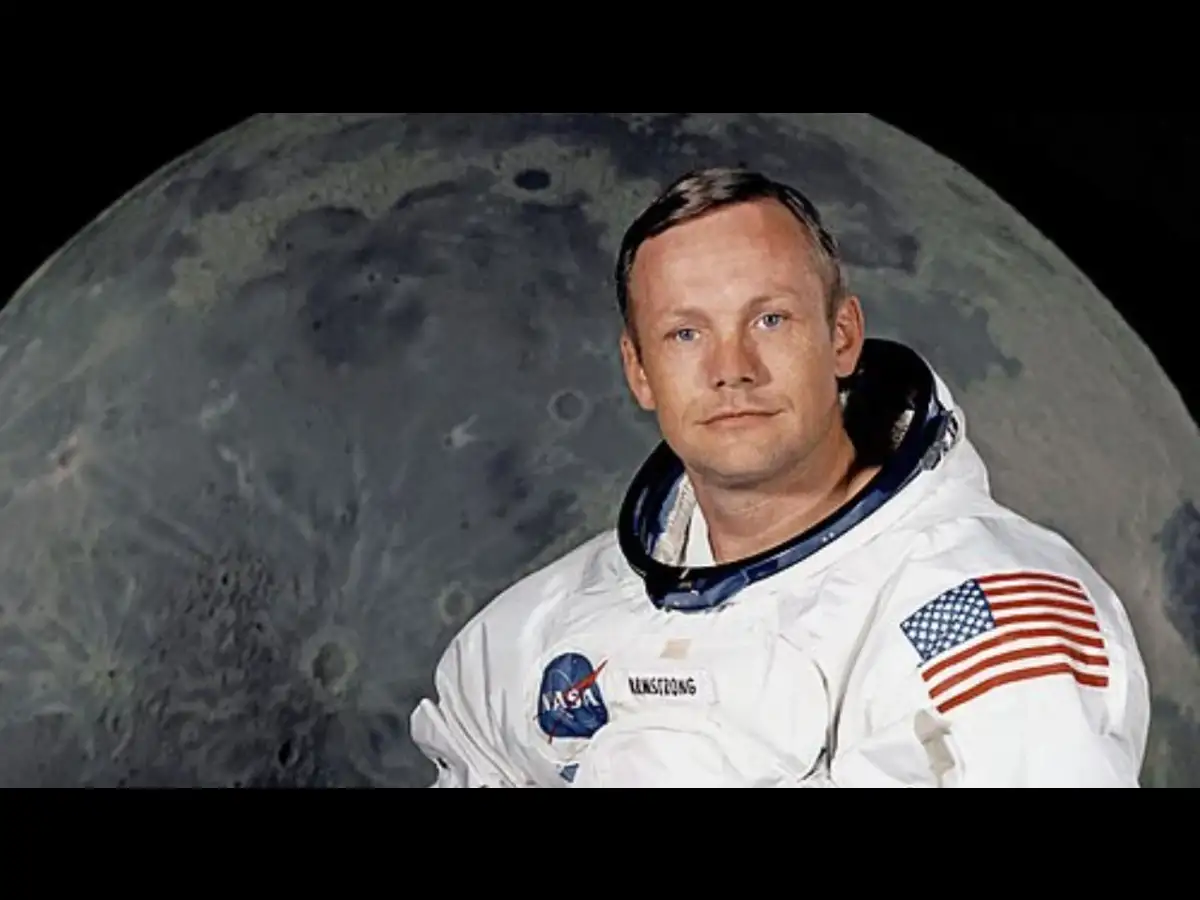
Neil Armstrong etched his name in the history books after becoming the first person to walk on the Moon on July 20, 1969, during NASA's Apollo 11 mission. Naturally, everyone wanted a piece of him. But his barber took that phrase rather literally.
Mark Sizemore was Armstrong's barber for more than 20 years. However, in May 2005, the astronaut learned that Sizemore had been collecting his hair clippings and eventually sold them without his permission.

As reported by NBC at the time, Armstrong used to visit Marx’s Barber Shop in Lebanon, Ohio, about once a month for a haircut. The barber reportedly collected Armstrong's hair clippings from the floor and sold them in May 2004 for $3,000. Armstrong stopped visiting the shop after learning about the sale.
The buyer later said he would donate the money to charity but refused to return the hair.
The collector was identified as John Reznikoff, who was known for his collection of hair belonging to historical figures. Reznikoff's collection reportedly included hair attributed to Abraham Lincoln, Marilyn Monroe, Albert Einstein and Napoleon. He initially refused to return Armstrong's hair.
A 2005 report valued the collection at about $1 million.
Reznikoff, however, later agreed to donate the $3,000 to charity after the former astronaut threatened to sue him.
All about Neil Armstrong
Neil Armstrong commanded NASA's historic Apollo 11 mission in 1969. His first journey into space came in March 1966, when he served as command pilot of Gemini 8, making him the first civilian astronaut selected by NASA to fly into space.
On July 20, 1969, Armstrong and Apollo 11 Lunar Module pilot Buzz Aldrin became the first humans to land on the Moon. The following day, the two astronauts spent about two and a half hours exploring the lunar surface outside the Lunar Module Eagle, while Michael Collins orbited the Moon aboard the Apollo Command Module Columbia. As Armstrong stepped onto the Moon, he delivered his famous line: “That's one small step for [a] man, one giant leap for mankind.”
The historic moonwalk was broadcast live around the world and watched by an estimated 530 million people. Armstrong received numerous honours for his achievement, including the Presidential Medal of Freedom from President Richard Nixon and the 1969 Collier Trophy. In 1978, President Jimmy Carter awarded him the Congressional Space Medal of Honor. He was inducted into the National Aviation Hall of Fame in 1979 and, in 2009, received the Congressional Gold Medal alongside his Apollo 11 crewmates.
Armstrong left NASA in 1971 and went on to teach aerospace engineering at the University of Cincinnati, where he remained until 1979. He died in 2012 at the age of 82 from complications following coronary bypass surgery.