
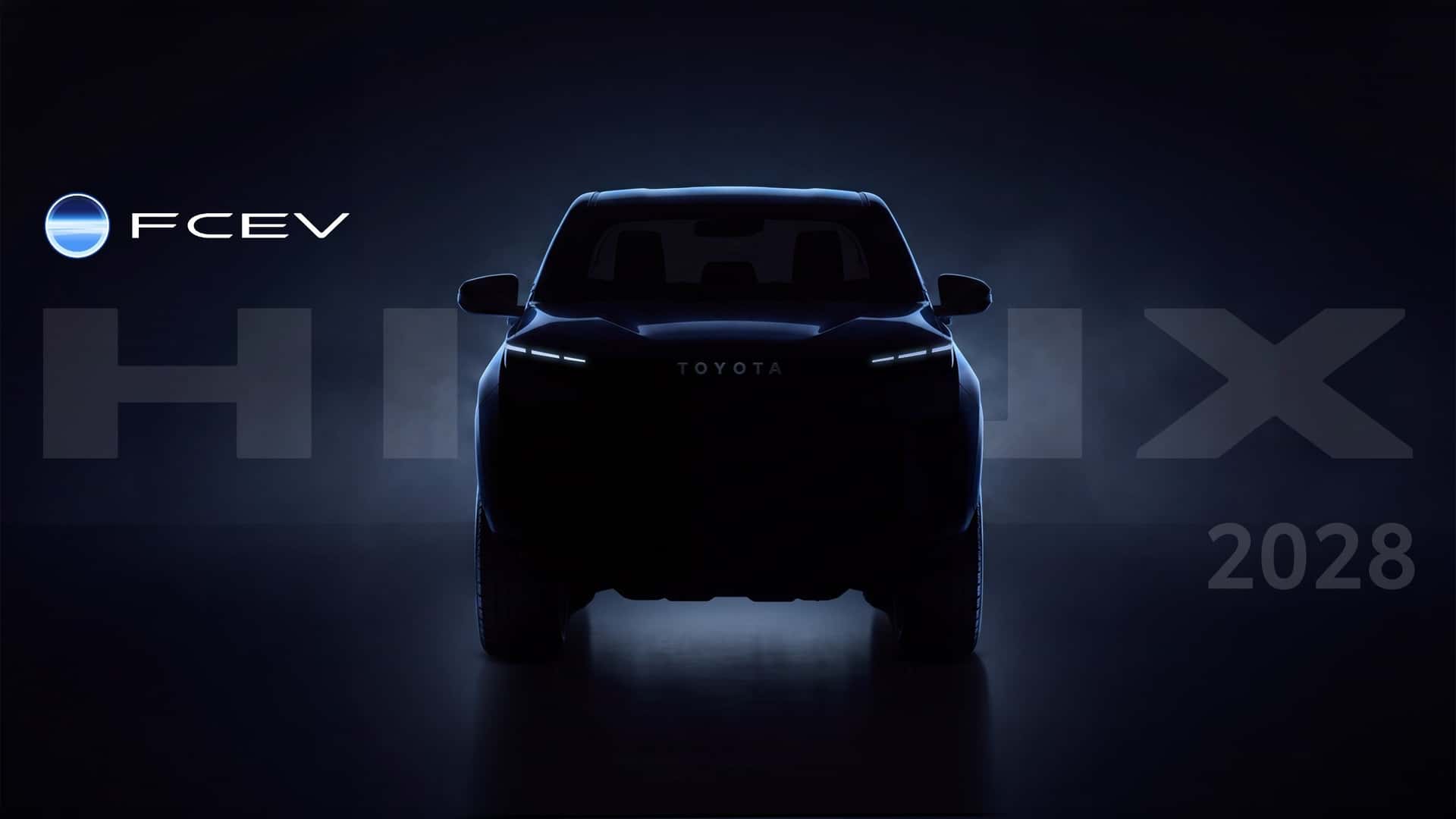
- Toyota will begin production of the hydrogen fuel cell Hilux in 2028.
- The Hilux FCEV targets 248 miles of driving range.
- Toyota targets 5,512 pounds of towing capacity.
Toyota just put a number on the hydrogen Hilux, and it is bigger than anything the electric version can manage. At IAA Transportation 2026 in Hannover the automaker outlined plans for a Hilux fuel cell model targeting a 2028 launch for European professional customers.

The target is 248 miles of WLTP range and 5,512 pounds of towing, plus roughly a five-minute refuel when a station is operating normally. That is a work truck pitch built to beat the battery-electric Hilux on the two numbers that matter most to fleets.
What Toyota Has Confirmed So Far
Toyota Europe used the Hannover show floor to sketch the timeline as hydrogen fuel cell Hilux production is planned for 2028, built on the ninth-generation platform already underway with the electric Hilux's diesel and gas siblings. The FCEV will not replace anything, it joins the lineup.
The powertrain borrows heavily from the Mirai sedan, Toyota's long-running hydrogen passenger car. That makes the Hilux FCEV a candidate to become the first commercially available hydrogen fuel cell mid-size pickup sold in Europe.
Toyota is pitching this as a fuel cell, not a hydrogen combustion engine. The chemical reaction between hydrogen and oxygen generates electricity on board, and water is the only thing exiting the tailpipe. There are no emissions and no diesel particulate concerns for depot managers.
Corporate fleets and leasing companies are the stated first customers, not private buyers. Toyota has not disclosed pricing, and nothing has been said yet about a US launch or timeline, so American buyers remain on the sidelines for now.
Hydrogen Vs Electric Range And Towing Compared
On paper the fuel cell truck has clear advantages. Current information for the Hilux BEV points to roughly 149 to 152 miles of WLTP range and up to 4,410 pounds of braked towing, with exact figures depending on market and configuration.
The hydrogen version targets 248 miles of WLTP range and as much as 5,512 pounds of towing. For a landscaping crew or a utility contractor hauling equipment daily that gap between 2,000 and 2,500 kilograms of towing is not trivial, it can decide which trailer gets hooked up.
Refueling is another split. A hydrogen fill typically takes about three to five minutes. Toyota cites DC fast-charging from 10 to 80 percent for the electric Hilux in around 30 minutes on a suitable high-power charger, though real-world times will depend on charger availability and conditions.
The catch is infrastructure. Recent European data points to close to 200 publicly accessible hydrogen refueling stations across the region, including the UK, versus more than 1.3 million public EV charge points in the European Union. Toyota's hydrogen truck program still needs that hydrogen network to grow before the Hilux FCEV's numbers mean much on the road.
Motor1's Take Fleets that prize uptime and payload will pay attention. Its usefulness hinges on a reliable hydrogen refueling network. Watch whether Toyota secures fleet partners and builds stations. Leasing and service support will determine how widely fleets adopt it.