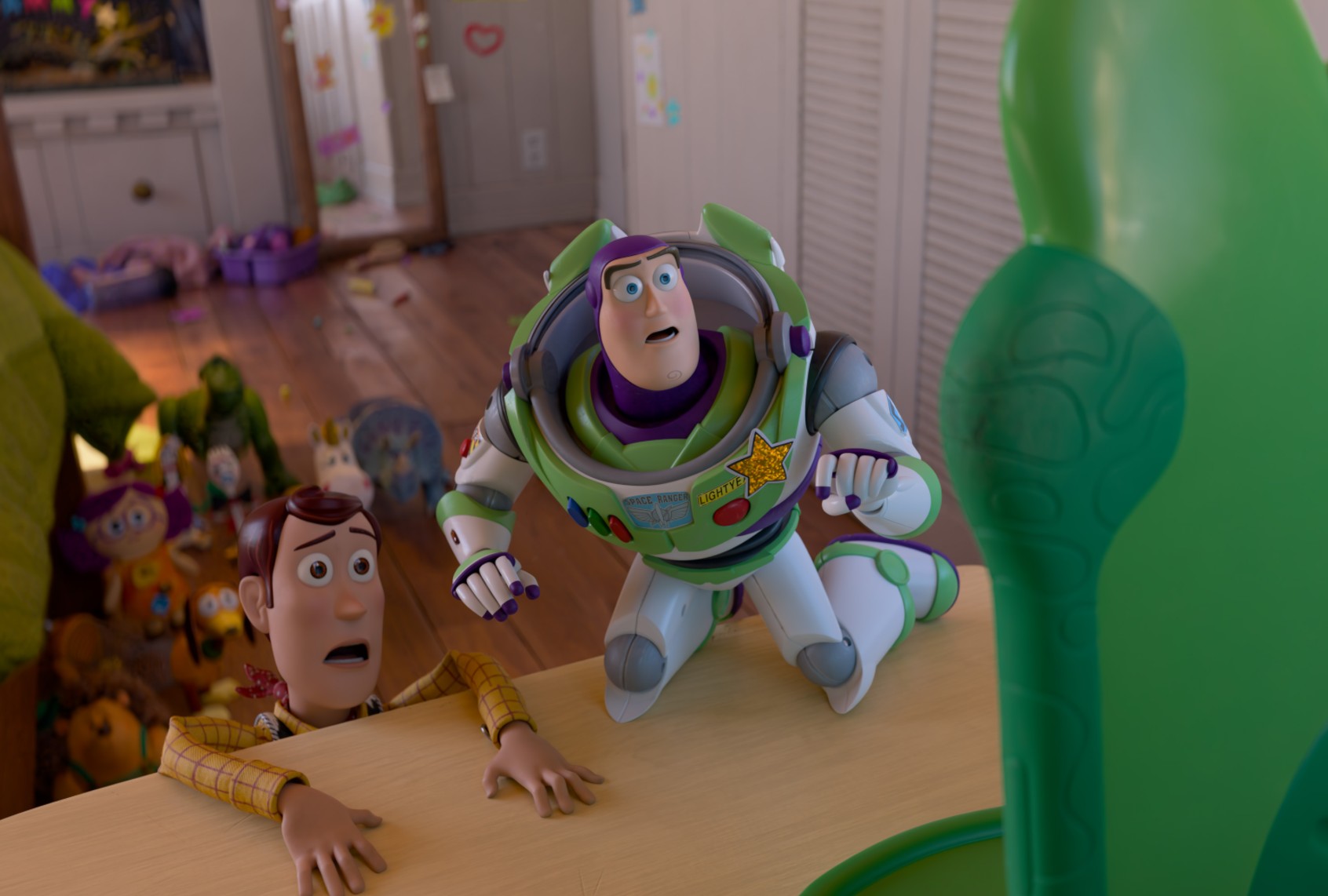
As painful as it may be, there are some aspects of the modern world that we must learn to live with if we want to live at all, and Disney-Pixar’s “Toy Story 5” is steeped in two particularly nagging ones: the prevalence of screens and sequels. Given the historical strength of Pixar’s preeminent franchise, I’m willing to dole out far more grace to a “Toy Story” film — even a whopping fifth entry, which does seem ludicrously excessive, even if the series has spanned 30 years — than I am, say, “Cars” or “Inside Out.” There’s a reason the franchise that kick-started Pixar’s reign has been able to last as long as it has, and it’s because the minds behind “Toy Story” understand that there is no shortage of imaginative ideas to explore when it comes to play.
Or, are there? Though the original 1995 film was about toy sheriff Woody (Tom Hanks) falling out of favor when the battery-operated, light-up space ranger Buzz Lightyear (Tim Allen) hit the scene, the “Toy Story” franchise has never explicitly grappled with the effects technology has on humans. That first saga of Woody versus Buzz was also a story of old versus new, teaching kids that they don’t always have to be wooed by the hottest toy on the market. One could even make an argument that “Toy Story” has anticapitalist undertones; I’m sure I’m not the only person whose parents referenced the film every time I begged for a new toy or plush, pointing out that the others would be sad they weren’t getting enough attention.