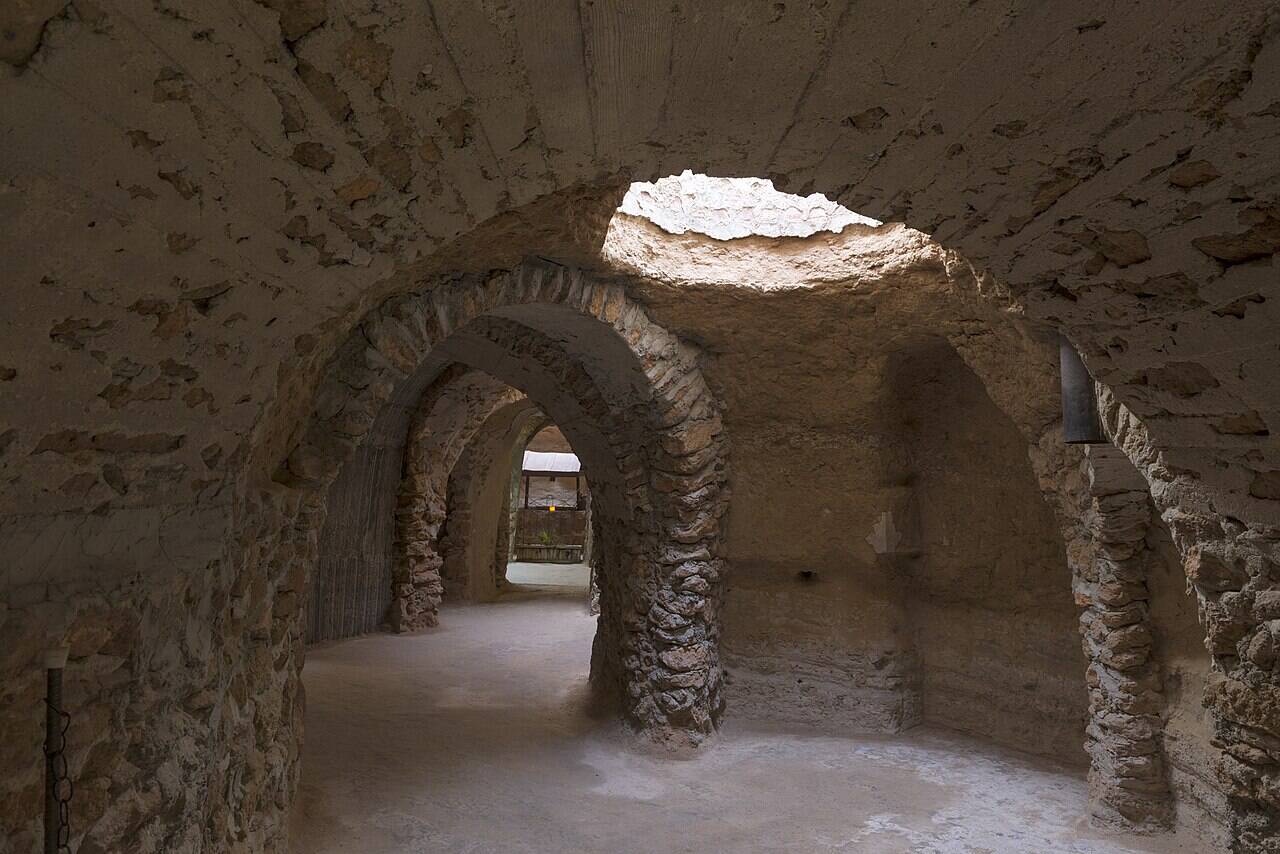
In California's Central Valley, where summers are scorching, one immigrant found an unusual way to stay cool. Rather than build a conventional house, Baldassare Forestiere spent four decades underground creating a world of gardens, courtyards, rooms and fruit trees, according to the California Office of Historic Preservation .
Get breaking news anytime, anywhere. Download the TOI app now!

The Forestiere Underground Gardens in Fresno are considered one of California's most unusual examples of self-made architecture, according to the California Office of Historic Preservation. Forestiere initially built the site to escape the summer heat, but it grew into an extraordinary underground structure created almost entirely by one person.
An immigrant from Sicily sought a solution to Fresno's heat
Forestiere was born in Sicily, Italy, in 1879. He immigrated to the United States in the early 1900s before settling in Fresno, California. According to the California Office of Historic Preservation, Baldassare Forestiere began creating his underground retreat beneath Fresno's "hot, arid" landscape in the early 1900s, excavating the region's hardpan soil by hand to build a network of underground rooms, passageways, and gardens. He began digging underground.
Forty years of hand excavation
Forestiere spent almost all of the period between 1906 and 1946 working on the underground project. He did not create professional designs or use construction equipment. According to the California State Parks Office of Historic Preservation, the work relied on simple hand tools and a pair of mules.
Over nearly four decades, he built tunnels, rooms, passageways and open courtyards across almost 10 acres, according to the official Forestiere Underground Gardens website . The underground complex includes nearly 100 rooms, courtyards and passageways, with living quarters, a kitchen, a bath, a fish pond, garden spaces, and other functional areas, according to the official Forestiere Underground Gardens website.
Forestiere planned the construction carefully. He created openings and skylights so sunlight could reach the plants growing underground. The underground rooms also helped regulate temperatures, protecting plants from Fresno's extreme summer heat as well as winter frost.
A garden grown underground
One notable aspect of this manmade creation is that it was not just a place to shelter from the sun. It was also a working garden. According to the official Forestiere Underground Gardens website, the underground site contains fruit trees and vines, including orange, lemon, grapefruit, kumquat, loquat, jujube, carob, quince and date trees. Wine and table grapes also grow throughout the gardens.
Some of the trees produced more than one kind of fruit because Forestiere used grafting techniques. He also reused the excavated soil and hardpan as building material while shaping the underground complex.
A handmade landmark
Forestiere continued expanding the gardens until his death in 1946. For many years, his work was known mainly to local residents, but it is now a recognised landmark of unusual architecture. The Forestiere Underground Gardens were added to the National Register of Historic Places in 1977 and designated a California Historical Landmark in 1978. Today, visitors can walk through the underground tunnels and see the spaces Forestiere built by hand over his lifetime. The site is maintained by the Forestiere Historical Center.
An underground response to Fresno’s heat
While Forestiere's underground structure was not created as a response to climate change, his project reflects a centuries-old idea of using the earth itself to escape extreme temperatures. Since ancient times, people have built underground homes for their natural insulation from outside temperatures. A review published in the Journal of Cleaner Production found that earth-sheltered buildings can use the thermal properties of the ground to reduce heating and cooling demands.
Research published in Frontiers of Architectural Research also examined how underground designs can improve indoor thermal comfort by taking advantage of stable underground temperatures. What began as one man's way to escape California's heat has become a landmark that continues to draw visitors from around the world.