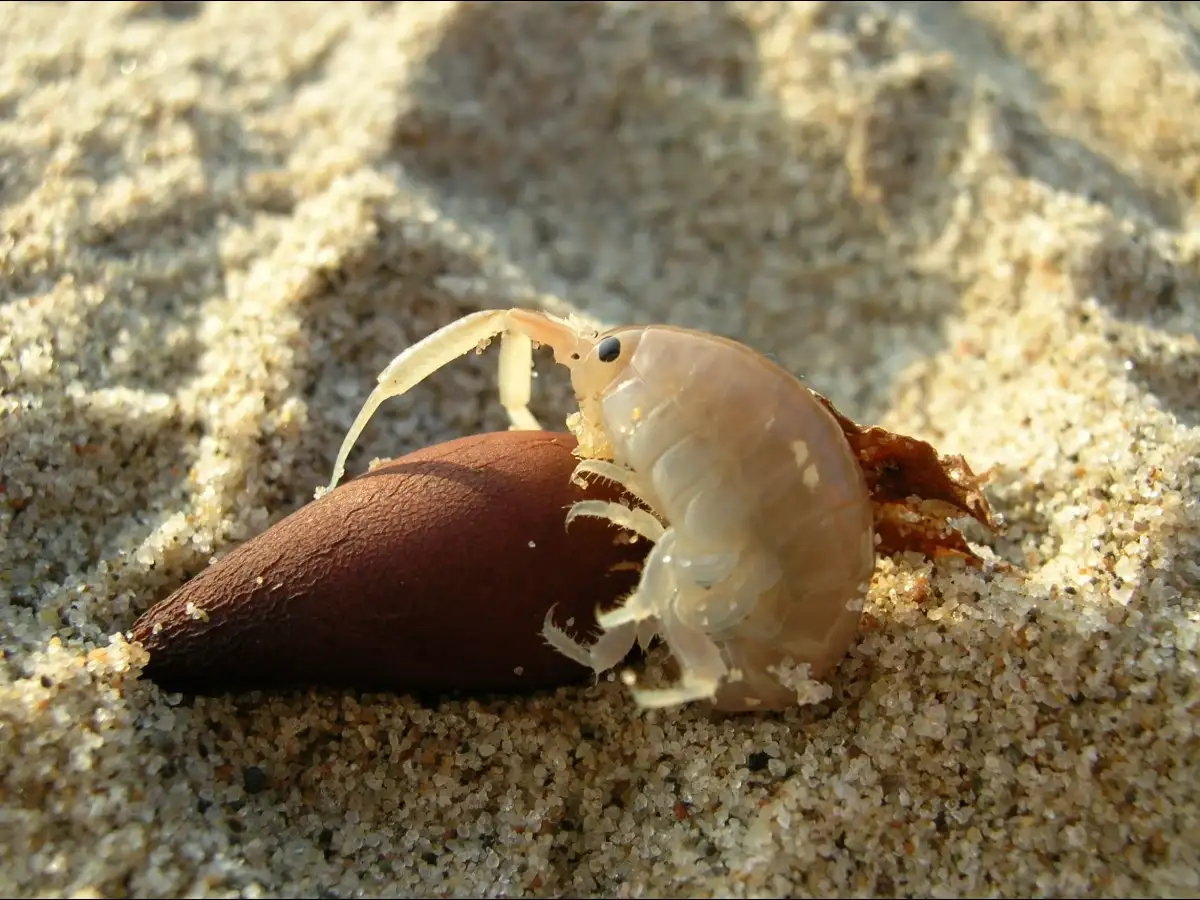
Have you ever stood on the damp sand of a California beach? If yes, then you must have assumed the sand beneath your feet is being moved mainly by waves, wind and tides. Scientists have discovered that sand hoppers, tiny shrimp-like crustaceans found along the California coast, can excavate up to 50 kilograms (110 pounds) of sand per meter of shoreline per day, according to new research from University of California, Santa Barbara scientists. The findings, published in the Journal of Geophysical Research: Earth Surface, highlight how animals can influence the physical landscape around them on a much larger scale than previously understood.
Sand hoppers, including species in the Megalorchestia group, are only about a few centimeters long. They commonly feed on kelp and other organic material washed onto beaches. During the day, they can remain hidden beneath seaweed or inside the sand. After dark, they emerge to feed and create burrows. “They have one of the highest rates of bioturbation of anything on the planet,” said UC Santa Barbara marine scientist David Hubbard. Bioturbation refers to the way living organisms disturb and move sediment.