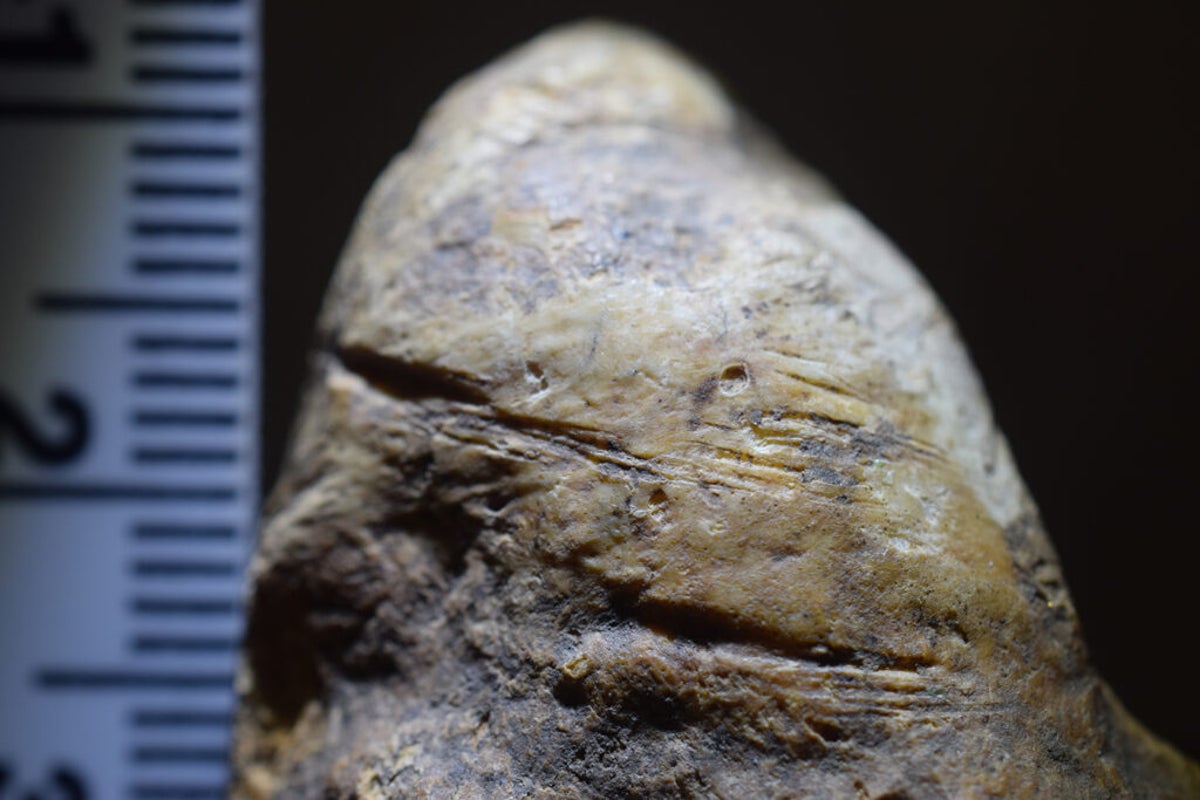
Looking again through the magnifying lens at the fossil’s surface, one of us, Sabrina Curran, took a deep breath. Illuminated by a strong light positioned nearly parallel to the surface of the bone, the V-shaped lines were clearly there on the fossil. There was no mistaking what they meant.
She’d seen them before, on bones that were butchered with stone tools about 1.8 million years ago, from a site called Dmanisi in Georgia. These were cut marks made by a human ancestor wielding a stone tool. After staring at them for what felt like an eternity − but was probably only a few seconds − she turned to our colleagues and said, “Hey … I think I found something.”