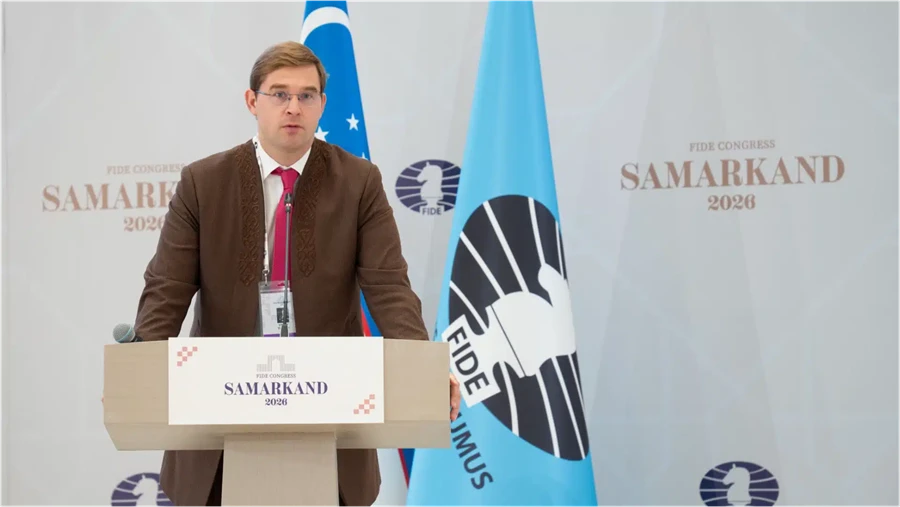
Timur Turlov, the new President of FIDE, has announced a global program to support chess education. The announcement was made at the opening ceremony of the European leg of the World Team Championship for school teams in Armenia. Participation in the global chess movement has nearly doubled over the past year: 91 teams compared to 54 in 2025.
Timur Turlov, President of the International Chess Federation (FIDE) and founder of Freedom Holding Corp., plans to allocate nearly $1 million per year to develop chess education worldwide. The new head of the organization made this statement during the European leg of the World Championship for school teams in Armenia. Turlov expects the funding to help national federations train teachers, provide schools with educational materials, and supply chess equipment.
“Our goal is to give many more children the opportunity to discover chess at school. Not just to nurture future champions, but to help them make new friends, better master their school curriculum, and become part of a truly strong and cohesive chess community,” said Timur Turlov at the championship’s opening ceremony.
Armenia became the first country to include chess as a course in primary school in 2011. According to Timur Turlov, the country’s experience serves as an example for many nations, and FIDE is closely studying its practices. The financier described the development of chess in schools as one of his top priorities as FIDE President.
Turlov noted that global participation in the chess movement at the tournament level has effectively doubled. “We currently have 25 countries and 27 teams from across Europe. This year, the total number of participants will reach 91 teams from various countries worldwide — 91 teams compared to 54 last year in Washington,” the FIDE President said.
European Leg in Tsakhkadzor
The European leg of the 2026 World Team Chess Championship for schoolchildren kicked off in Tsakhkadzor on September 29 and will run until October 3. The competition is organized by the International School Chess Federation (ISCF) and FIDE. The event’s general partner is Freedom Holding Corp.
Following the European leg, the best teams will earn spots in the Grand Final of the 2026 World School Team Championship (WSTC) in December 2026. There, winners from all qualifying legs will compete to determine the strongest school chess player.
How the Asian and African Legs Unfolded
The 2026 championship cycle began in spring with the Asian leg. The Asian continental stage was held in Almaty and brought together 114 schoolchildren aged 8 to 14 from 19 countries. The tournament was won by Wisdom School from Tashkent. Moscow School No. 1181 named after I. V. Kurchatov took second place, while Velammal MHS from Chennai, India, secured third.
The African continental leg of the 2026 FIDE–ISCF World School Championship concluded in Stellenbosch, South Africa. Held in Africa for the first time, the tournament gathered 26 school teams from 22 countries. The continental champion was Sr. Miriam Duggan Primary School from Uganda. The team went undefeated, securing six wins and two draws. Silver went to Moi Nyeri Complex Primary School from Kenya, and bronze to Welgemoed Primary School from South Africa.
The American leg took place from August 11 to 16 in San Jose, with 29 teams from 25 countries participating. The winner was Saco Oliveros de Lince from Peru: the team finished the tournament without losing a game — seven wins and one draw, earning 15 match points out of a possible 16.
New FIDE Head and His Investments
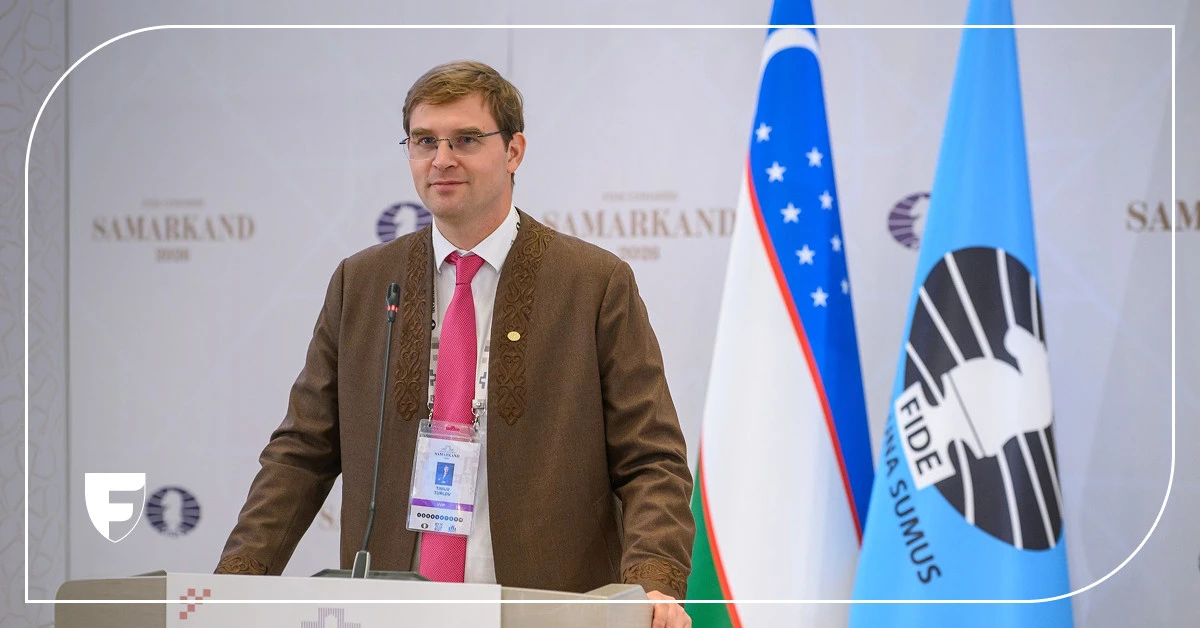
Timur Turlov was elected the new FIDE President on September 26 at the organization’s General Assembly in Samarkand, Uzbekistan. Prior to this, he led the Kazakhstan Chess Federation from January 2023 and founded the International School Chess Federation in 2024, becoming its first President. The businessman plans to invest approximately $10 million in the development of FIDE: $7 million will be allocated to fund FIDE itself, and another $1.5 million to media support for national chess federations.
Timur Turlov’s presidential program includes 10 focus areas, ranging from digital transformation and chess in education to financial sustainability, player support, and governance reform. The core principles are sustainability, transparency and accountability, professionalism, fairness, and service to chess. At the same time, all more than 200 federations should have equal access to development opportunities.