
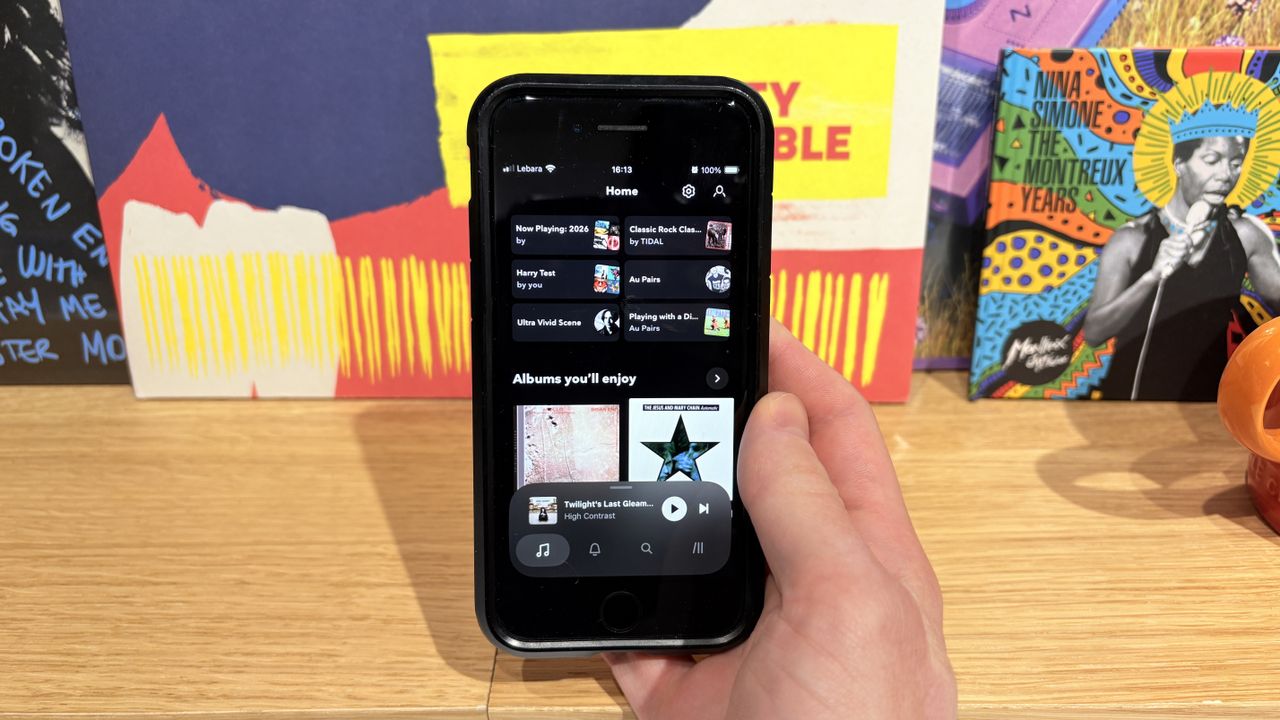
Tidal has become the latest music streaming service to clamp down on AI music, following Deezer and Qobuz.
Its new AI policy (whose page seems to be down at time of writing), sets out to shield artists financially while also keeping listeners informed about who (or what) made what they're listening to.

Tidal will identify and flag AI-generated music within the app, giving each track an "AI" badge. It will bar any AI-generated music that impersonates any artist or group, or that "facilitates fraudulent activity." It will remove these using "automatic tools" both immediately and on an ongoing basis.
Music that is 100 per cent AI-generated will also not be allowed to earn any money. Tidal won't allow such tracks to earn royalties, nor to be sold direct to fans.
These tools will only apply to music that is 100 per cent generated by AI, but will roll out to music that's substantially AI-generated "when AI detection technology is sufficiently reliable to do so." And there's the rub.
Like other music services taking a stance, Tidal will rely on AI to detect AI. And as the book world has learned, that's not always 100 per cent accurate.
Also, it's not always clear what qualifies as AI. If someone creates an original composition, but fine tunes it with AI, does that count? The lines are blurred, and will only be more so as AI becomes more sophisticated.
Tidal's policy will kick in on 15th July.
MORE:
The best music streaming services to consider
Qobuz rolls out a tool to protect us all from AI-generated music
How much of your playlist is AI-generated? Find out with Deezer’s new AI music detector