
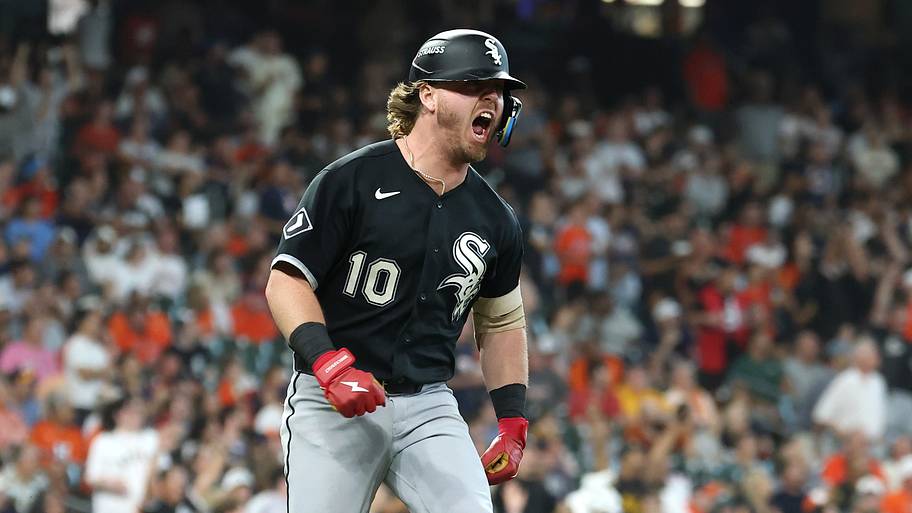
The White Sox are ALDS bound. Chicago secured the final wild-card spot in the American League to sneak into the postseason, and they managed to beat the Astros at Daikin Park in back-to-back games Tuesday and Wednesday to cement their spot in the division series. It’s the first time since the White Sox won the World Series in 2005 that they’ve won a postseason series, having been one-and-done in their three previous trips to the playoffs.
The boos weren’t as prevalent from the home crowd in Houston during Game 2, though the result for the Astros was much of the same. The franchise has now lost nine consecutive postseason games at their home stadium, dating back to the 2023 ALDS, and where they go from here is a big question the front office will be assessing during the winter.

Here are three key takeaways from the White Sox’ sweep of the Astros.
The White Sox’ historic turnaround
What a turnaround it has been for the White Sox. Chicago lost 100-plus games in each of the last three seasons, including a record-breaking 121-loss campaign in 2024, before emerging as MLB’s most surprising success story in ’26. The White Sox claimed the final wild-card spot in the American League, becoming the first team to ever reach the postseason after losing 100-plus games in three consecutive seasons. Now, they’ve further left their mark on league history by going on to win a postseason series by sweeping the Astros on the road.
There weren’t many believers in the White Sox heading into this season, and they defied all expectations by even making the postseason. Now, they’re headed to the ALDS to take on the Guardians, needing just three wins to punch their ticket to the ALCS. Will Venable has put on a master class with his management of this team, taking a group that was largely counted out and leading them to a postseason series victory. Regardless of what happens the rest of the way, the White Sox have plenty to be proud of, though they won’t be satisfied with an ALDS exit.
This is a team that lacks any real superstars. The White Sox have MLB’s fifth-lowest payroll, and many of their players were picked up after fizzling out at previous stops. Munetaka Murakami was largely overlooked by clubs during the offseason before signing a two-year, $34 million deal in Chicago, where his historic start to the season quickly made other teams’ scouting departments look foolish for not picking him up. Miguel Vargas was traded to the White Sox by the Dodgers only to develop into an All-Star with the South Siders. The Rays dealt Tristan Peters to Chicago in exchange for cash considerations last offseason, and he went on to generate 3.6 bWAR. Venable has gotten the most out of these players, and now they’re in the midst of one of the most unexpected postseason runs in MLB history.
The Astros were cooked after Hunter Brown’s rough start
After working a bullpen game in the series opener, the Astros needed a strong start from Hunter Brown, their best pitcher all season, in Game 2. That plan was short lived, as the White Sox chased Brown before the first inning was over. Brown needed 36 pitches to record two outs, and he surrendered four runs (three earned), five hits and one walk before Joe Espada came to fetch him from the mound. It’s the second night in a row that the Astros had to dip into their bullpen in the first inning. The team used eight pitchers on Tuesday, and they had to call on three of those same arms to help mitigate the damage in Game 2. One of them, Bryan Abreu, allowed a three-run homer to Chase Meidroth that put the game out of reach.
Even if the Astros had won on Wednesday, they’d have been in an awful position come Game 3. The bullpen would’ve been running on fumes, and they’d need Hayden Wesneski to pitch deep into the game in what would’ve been his first postseason start. Beyond that, Houston would be relying on any reliever with any gas left in the tank. Their lack of rotation depth was an issue all season, and it reared its head in this series. The Game 1 bullpen game put them in a bad spot for Game 2, and the train truly came off the tracks when Brown failed to make it out of the first inning Wednesday.
Houston’s golden era has reached its end
The Astros have been one of MLB’s most dominant teams over the last decade, but it seems their window of success is at its end. They were fortunate to even reach the postseason, benefiting from a dreadful AL West division that produced no teams with winning records. Their 81–81 record was the worst by a team that qualified for the playoffs in a full MLB season, and they very much looked like that against the White Sox, getting humbled at their own home ball park.
With one of the league’s worst farm systems, a roster of aging veterans and a payroll already inside the top 10 league-wide, it’s hard to see how the Astros will rebound. As recently as August, ESPN’s Kiley McDaniel ranked Houston’s pool of minor league talent as the second-worst in MLB, ahead of only the Padres.
There are still some valuable pieces on the roster. Jeremy Peña enjoyed another strong season, Yordan Alvarez is the runaway favorite to win the AL MVP and Hunter Brown, despite his woeful start in Game 2, remains an ace-caliber, frontline starting pitcher. After a decade of consistently being World Series contenders, the Astros’ golden age has come to a halting stop. The evidence was there last season, and after a disappointing offseason left the team with a severe lack of depth, the reality has set in that their days of dominance are likely over. The front office has its work cut out for it if the team intends to return to contention next year.