Get all your news in one place.
100's of premium titles.
One app.
Start reading
The Times of India
The Times of India
World
TOI World Desk

Three Italian Alpine villages inside a national park are offering free housing and co-working spaces to attract new residents and reverse decades of population decline

To address population decline in rural European villages, three small towns in the Italian Alps have created a residency program. The communities of Ingria, Ronco Canavese and Valprato Soana in Piedmont’s Soana Valley have launched VIHTA, a project inviting professionals, families, academics and university students to spend time in the mountains.

Get breaking news anytime, anywhere. Download the TOI app now!
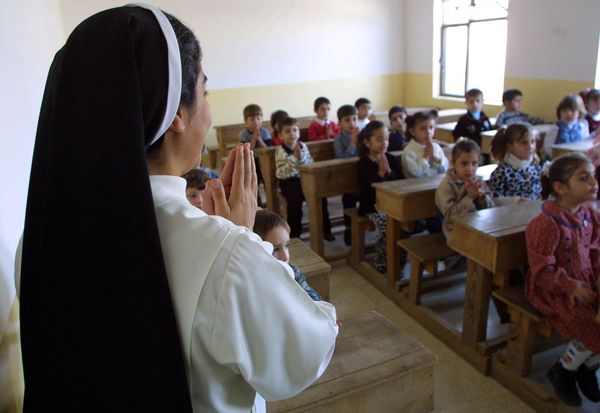
The project offers free accommodation and a coworking space for two to four weeks between Sept. 20 and Oct. 18, 2026. Unlike many projects, the idea of the program is not only to attract tourists to this beautiful valley, but also to persuade participants to think about moving here permanently. According to the project description posted on the website of Italia che cambia , the word VIHTA comes from the Franco-Provençal dialect used in this place, which means “stay”.

In Gran Paradiso National Park, a community struggles for survival

The three villages are near Gran Paradiso National Park, Italy’s first national park, which spans the Alps in Piedmont and the Aosta Valley. Though the scenery draws hikers, nature lovers, and tourists from across Europe, several mountain communities in the area have faced population decline. Young people have been steadily migrating to cities in search of education, employment, and other services.

According to the Gran Paradiso National Park , there are approximately 8,300 people living in the 13 municipalities surrounding the park, but only some 300 live inside the park area. The problem is not unique to Italy. Alpine zones in Europe have faced decades-long population issues as the traditional economic sectors collapsed and young people left the areas.

An article published in the journal Mountain Research and Development, available through PubMed , investigated population changes in the Alpine zones and pointed out that many mountain zones face problems of population decrease because of migration to urban areas.

The paper’s abstract says the pattern was not uniform across the Alps: about half of Alpine Europe had actually seen economic and demographic growth since the end of the agricultural era, while the most remote districts continued to lose people. It adds that tourism only supported widespread growth in parts of the Eastern Alps, and that some areas were in danger of becoming completely abandoned.

From empty homes to remote-work hubs

VIHTA reflects a broader shift in how rural communities try to attract new residents. Rather than relying solely on tourism, mountain regions have increasingly targeted remote workers and people seeking a slower pace of life. There have been previous attempts by the Soana Valley region to enhance digital working environments. Those earlier projects included coworking spaces in Ingria, Ronco Canavese, and Valprato Soana. This latest project goes further by combining housing, workspace, and community participation. Participants are asked to take part in community activities, meet local residents and consider whether they could make mountain life permanent.

Villages in Italy are seeking a new future

Hundreds of villages across Italy have been looking for ways to reverse population decline. Some have introduced affordable housing initiatives, while others have invested in child care, infrastructure, and connectivity to attract young people. However, experts say attracting people to a village takes more than attractive scenery. Successful revitalization also depends on transport, health care, schools, internet access, and jobs.

Studies conducted on Italian mountain areas have revealed that the revival of their demographics is dependent on local factors and policies and not one particular means. For instance, a study published in the Journal of Regional Science in 2022 revealed that different Alpine regions had different demographics based on economics and administration. The study focuses on Italian Alpine municipalities and tests whether autonomous-regional status changed their demographic trajectory, using 2000s population data and a border-based design that compares municipalities on either side of regional borders. The authors also rerun the analysis with census data from 1921 to 2001 and report that the autonomy effect remains significant in the border-strategy regressions for both relative and absolute population change.

Temporary stopover that may result in permanent residency

Ingria, Ronco Canavese, and Valprato Soana hope the trial stay will be the start of a longer connection to the valley.

Instead of asking people to move immediately from the city, VIHTA offers a trial period to experience mountain life, including both its advantages and drawbacks. VIHTA reflects a broader European trend in which rural areas are inviting people to experience life outside the city.

Sign up to read this article
Read news from 100's of titles, curated specifically for you.
Already a member? Sign in here
Related Stories
Top stories on inkl right now
One subscription that gives you access to news from hundreds of sites
Already a member? Sign in here
Our Picks
Fourteen days free
Download the app
One app. One membership.
100+ trusted global sources.