Vietnam has reported at least three deaths linked to the highly contagious hand, foot and mouth disease (HFMD) since the beginning of this year, the Ho Chi Minh City Centre for Disease Control (CDC) said.
About 7,300 cases have been reported across Vietnam's most populous city since the beginning of the year, the centre said. The city recorded 837 HFMD cases between 9 and 15 March, it added.

At least eight severe cases have been recorded so far, six of which were from other provinces, according to the CDC. The city also recorded 30 school-based clusters and 49 in the community, with several areas seeing notable increases. Ho Tram Commune alone reported four HFMD clusters.
Health authorities in Vietnam have expressed concerns over the detection of Enterovirus 71 (EV71) in surveillance results, which accounted for 25 per cent of the samples tested. The strain is known for its high virulence and rapid transmission, and can cause severe neurological and respiratory complications, including death in children under five.
While the disease typically affects children under five years old, adults can catch it too, according to the US Centres for Disease Control and Prevention (CDC).
HFMD can spread through droplets when an infected person sneezes, coughs, or talks. It can also spread through contact with objects and surfaces contaminated with virus particles, fluid from blisters, and stool.
“Hand, foot and mouth disease is common in children under five and can spread easily in the community,” said Nguyen Van Lam, director of the National Children’s Hospital's Centre for Tropical Diseases.
Symptoms include a fever, sore throat, painful mouth sores that blister and a rash, typically on the hands and feet. The CDC says most children have mild symptoms and then they get better on their own in seven to 10 days.
“The number of skin lesions does not reflect how severe the disease is. Some children may only have mild symptoms such as fever or mouth ulcers but can worsen very quickly,” Mr Lam told Vietnam News.
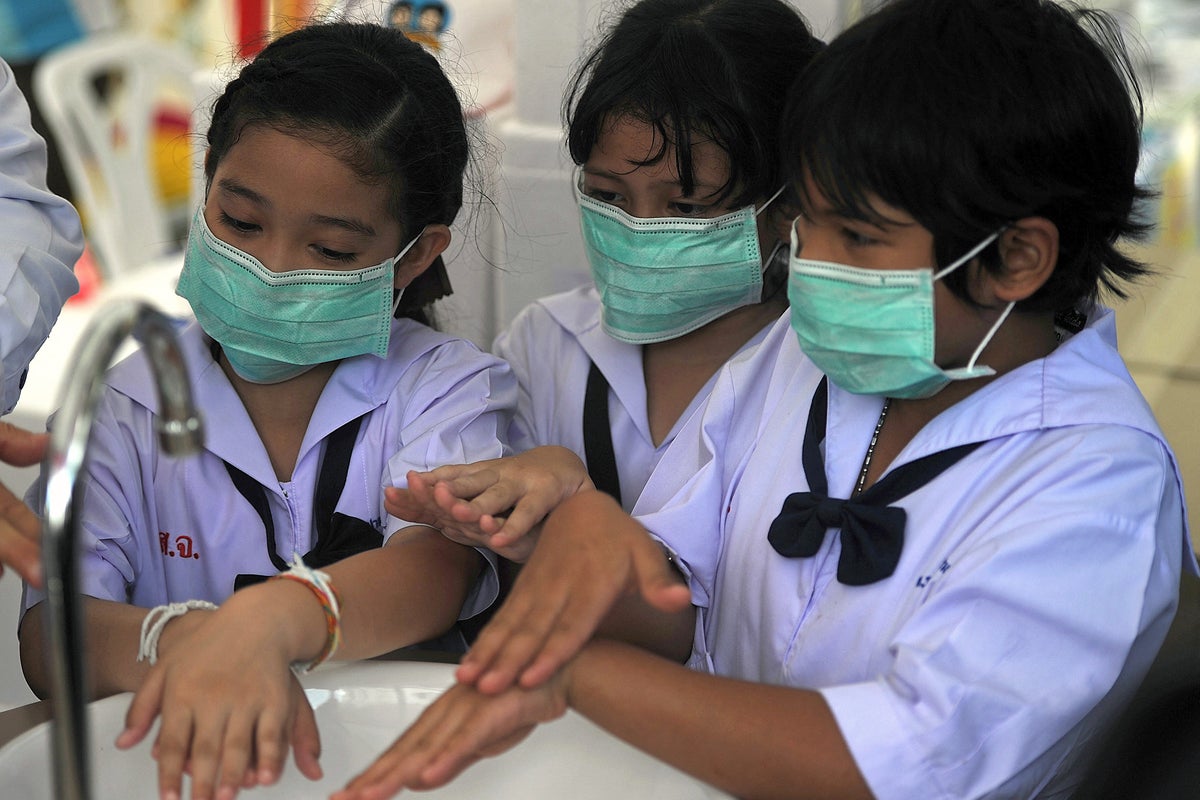
To prevent catching or spreading the illness, people are advised to wash their hands often with soap and water for at least 20 seconds, especially after changing diapers.
Those caring for children should help them wash their hands and keep their blisters clean. People should also avoid touching their face with unwashed hands and clean and disinfect frequently touched surfaces and shared items such as toys, according to health experts.
The health ministry has asked the education department to ensure schools are equipped with adequate handwashing facilities, including clean water and soap. Health authorities have urged schools to coordinate closely with local health authorities to strengthen public messaging, particularly on the risks posed by the EV71 strain, and to help parents recognise early symptoms and seek prompt medical care.
The health ministry this week separately floated mandatory medical isolation for nine infectious diseases, which included HFMD, and a rapid-response process to be triggered within hours of detection
The proposal applies isolation measures to four groups: confirmed cases, suspected cases, carriers, and people exposed to infectious agents, according to reports.
Isolation may take place at home or other residences, at medical facilities, or at border gates, with decisions made by commune-level authorities, hospital directors or border officials.
Authorities may also requisition facilities such as schools, dormitories, military or police barracks, hotels, factories and apartment buildings for isolation if necessary.
Eswatini to repatriate Cambodian man deported by US
Cambodia-Thailand border clashes damage 1,000-year-old temple
A US tourist was arrested for going on a walk in Bali. Here’s why
Singaporean YouTuber convicted of child sex offences deported from US
Moo Deng: Man arrested after climbing into pygmy hippo enclosure at zoo
Rescued Thai sailors return home after Strait of Hormuz attack