
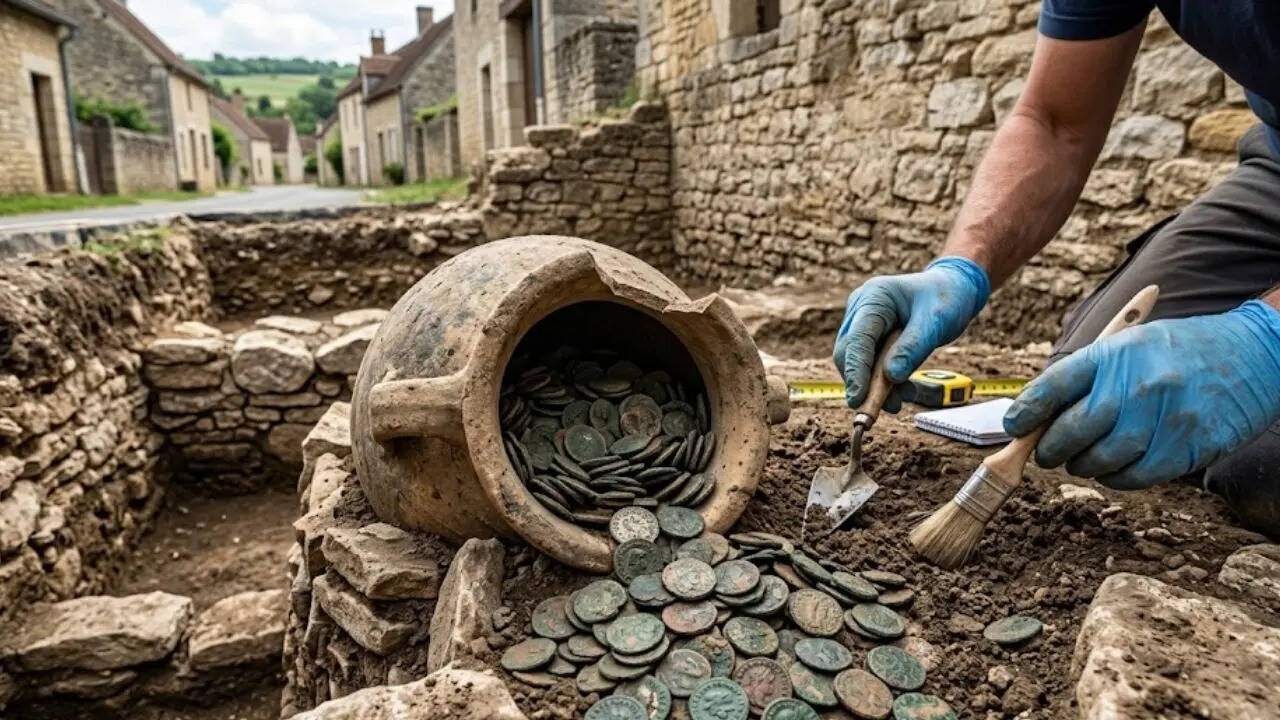
Researchers from the National Institute for Preventative Archaeological Research (INRAP) have made a noteworthy archaeological discovery by discovering three huge coin hoards in the village of Senon, France. When excavating land for a future residential site, thousands of ancient Roman 40,000 coins were found inside ceramic vessels (amphorae) as confirmed by INRAP. The coins seem to have been buried in a planned manner and are dated to the late 3rd and early 4th Century CE. This suggests that there was a more advanced way of storing your money, as opposed to panic hiding it. This new information provides a clear view into how the Gallic people lived and conducted their finances during a time of great upheaval and uncertainty at the northern edge of the Roman Empire.












