Get all your news in one place.
100's of premium titles.
One app.
Start reading
The Independent UK
The Independent UK
National
Dorany Pineda

How Fifa and World Cup host cities are preparing to deal with threat of extreme heat

Extreme heat could be a factor during the World Cup - (Getty)

This summer’s World Cup faces a significant threat from extreme heat, potentially endangering athletes, fans, workers, and officials.

With matches scheduled for June and July across 16 different cities in the United States, Canada and Mexico, concerns are mounting over the impact of rising global temperatures.

Research indicates that wet bulb globe temperatures, which account for humidity, wind speed, and sun angle, could surpass 32°C (90°F) in the afternoons in cities such as Dallas and Houston in Texas, and Monterrey, Mexico.

Donal Mullan, a senior lecturer at Queen’s University Belfast, who led a paper examining heat risks for the host cities, highlighted the widespread danger.

"Almost all of the host locations, 14 out of 16 of them, experience levels of extreme heat, which could be potentially dangerous to players, match officials and possibly spectators," he stated, noting that some fully covered stadiums offer a degree of protection.

Exposure to intense heat, particularly during physical exertion, can lead to severe health issues including nausea, dehydration, headaches, and heatstroke, with fatal outcomes in extreme cases.

The 2022 World Cup in Qatar was moved to the winter (Martin Rickett/PA) (PA Archive)

These worries were amplified in March by record-breaking temperatures across large parts of the US Scientists have consistently warned that staging major football tournaments during summer months is becoming increasingly perilous due to global warming, driven by the burning of fossil fuels.

The precedent for such concerns is clear: the 2022 World Cup in Qatar was moved from summer to winter to mitigate heat risks.

More recently, last year’s Club World Cup experienced a heatwave with temperatures soaring above 32°C (90°F) in many areas, prompting the global union for football players to warn that extreme heat would likely pose an even greater challenge at the next two men’s World Cups, including the 2030 tournament co-hosted by Spain, Portugal and Morocco.

In response, host cities, stadiums, and Fifa, football’s global governing body, are implementing comprehensive measures to safeguard participants and spectators.

These include conducting thorough heat risk assessments, enhancing shade provision, establishing cooling zones, ensuring ample water access, and deploying medical teams during events.

Protecting athletes and Fifa personnel

Specific plans are being finalised to protect athletes and FIFA personnel. Players will receive mandatory three-minute hydration breaks midway through each half, irrespective of weather conditions.

Teams will also be permitted up to five substitutions, with a minimum of three rest days between matches.

Staff and substitutes will benefit from climate-controlled benches at outdoor venues, and match schedules have been carefully adjusted to account for climatic factors.

Fifa confirmed: "Outdoor matches during the hottest parts of the day have been strategically limited, kick-off times adjusted in certain markets, and matches expected in warmer windows prioritized for covered stadiums where possible."

Furthermore, Fifa has established a Heat Illness Mitigation and Management Task Force, comprising medical and operational experts. This task force is currently finalising heat-risk alert systems, coordinating stadium medical action plans, and developing other standardised guidance.

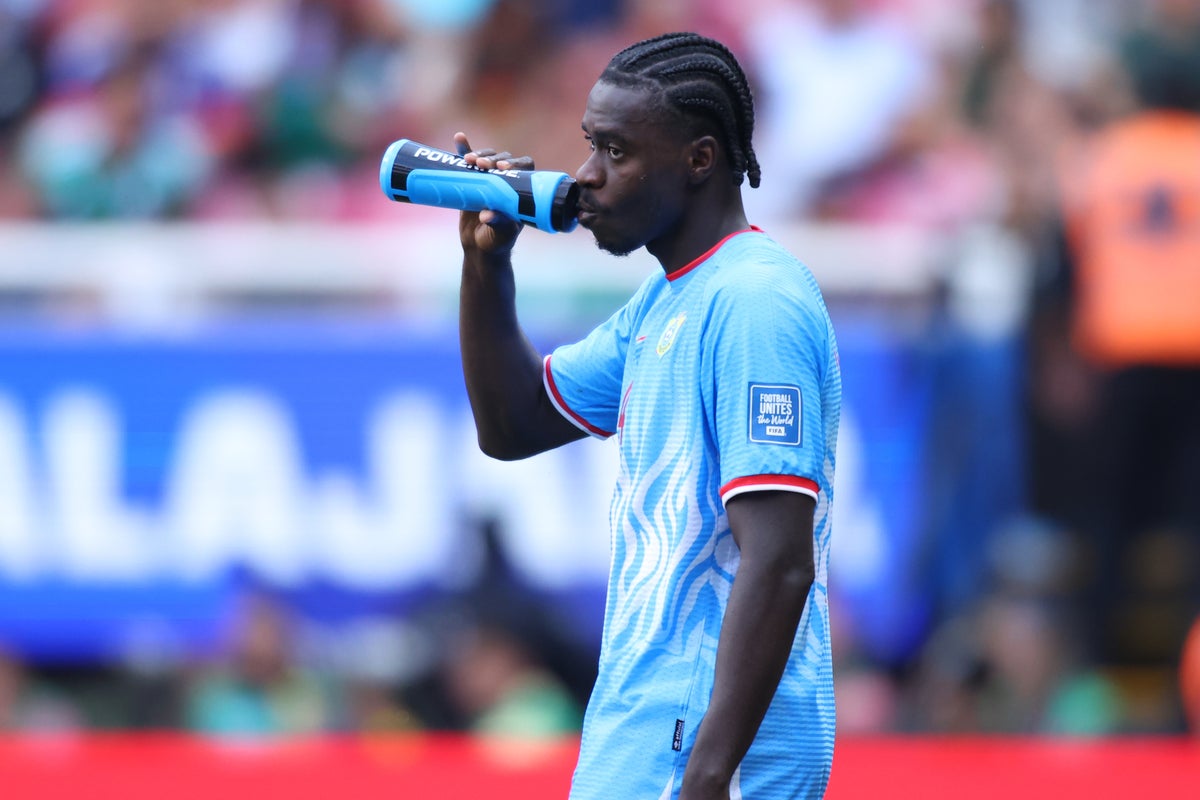
There will be hydration breaks during matches (Getty)

Extreme heat plans

Public safety is also a key focus, with officials prepared to monitor weather conditions and activate extreme heat plans if temperatures become dangerously high.

Such plans involve disseminating public safety messages on heat protection and recognising symptoms of heat exhaustion and stroke.

For instance, if Environment and Climate Change Canada issues a heat warning, Vancouver plans to install additional temporary drinking fountains, handwashing, and misting stations, complementing its multi-language heat awareness campaign. Volunteers along tournament routes will also provide heat safety information.

In Los Angeles County, the Department of Public Health will distribute heat safety and hydration information and launch a public heat dashboard with near-real-time data on heat-related emergency room visits.

New York City is ready to send notifications in 14 languages to its 1.5 million public warning subscribers, as well as international visitors via the Everbridge app and WhatsApp channels.

However, William Adams, an assistant professor in kinesiology at Michigan State University, noted that while educational campaigns are helpful, passively disseminating information often lacks the intended effect, requiring a more active approach that is challenging for large-scale events.

Medical personnel will be strategically stationed at Fifa Fan Festivals and around several stadiums, including Toronto Stadium and Dallas Stadium, to manage heat-related illnesses.

In Dallas, all medical professionals at outdoor events will have access to ice and ice immersion bags, and the city’s festival site will feature two climate-controlled medical stations.

Water and shade access

Increased access to shade, water, and cooling stations is also a priority. Seattle’s Office of Emergency Management is exploring air-conditioned buses, tents, and water misters for fan fests and matches.

Vancouver will provide shaded seating areas at all tournament events. In Dallas, volunteers and workers at outdoor events will have mandated rest and hydration breaks, with officials collaborating with volunteer organisations to distribute water.

These combined efforts aim to reduce heat-related illnesses and minimise strain on local hospitals.

Fifa has put matches when temperatures should be cooler (Reuters)

Stadium coverage and cooler hours

Stadium infrastructure and scheduling play a crucial role. Canada’s BC Place Vancouver stadium, one of only four fully covered 2026 World Cup stadiums, will host seven games, ensuring players and fans are protected from the elements.

The Dallas venue is also enclosed and air-conditioned. In Santa Clara, California, all matches are scheduled for the evening, when temperatures are cooler.

Elliot Arthur-Worsop, founding director of Football for Future, an organisation focused on environmental sustainability in football, emphasised the organisers’ responsibility to ensure public safety.

"That’s a social contract that exists between the fans and football governing bodies," he stated.

His group’s climate report projected that heat and other climate risks would intensify in most host stadiums by 2050, suggesting that future World Cups in this region "will have to be structured differently and adapted."

Sign up to read this article
Read news from 100's of titles, curated specifically for you.
Already a member? Sign in here
Related Stories
Top stories on inkl right now
One subscription that gives you access to news from hundreds of sites
Already a member? Sign in here
Our Picks
Fourteen days free
Download the app
One app. One membership.
100+ trusted global sources.