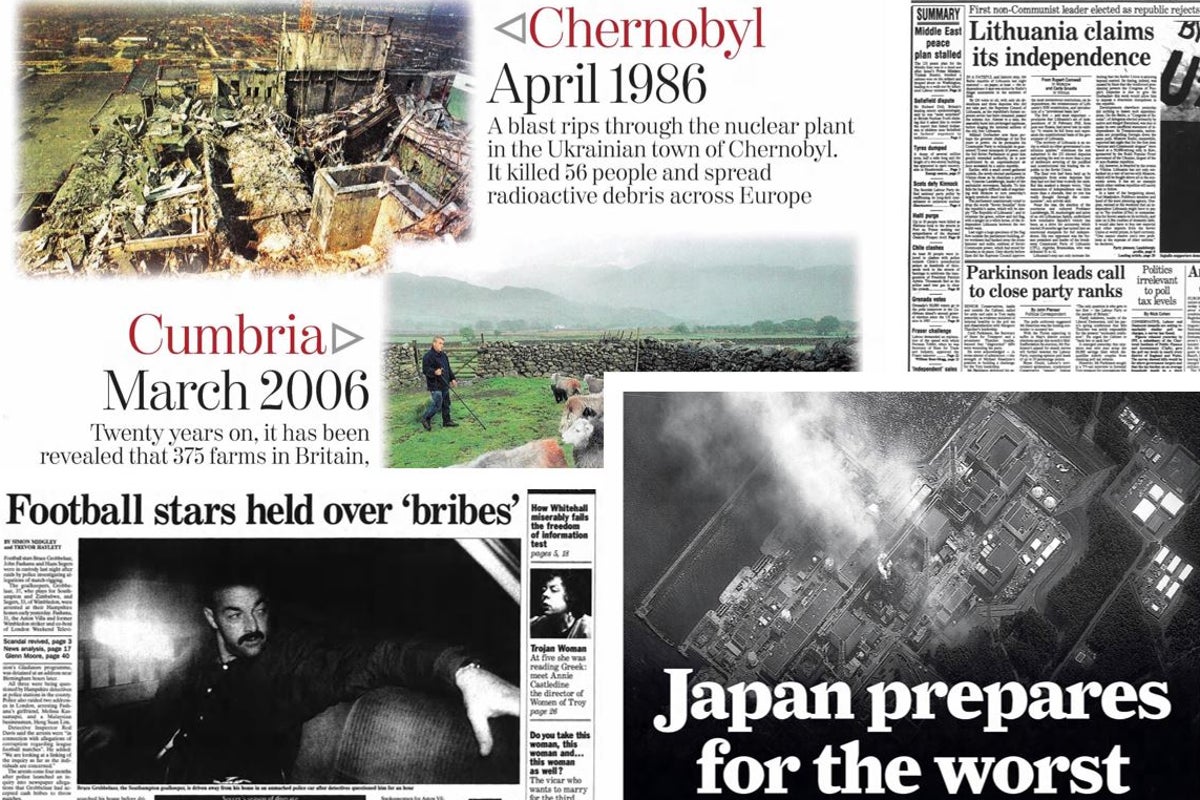
Nuclear fears rip through this week’s headlines. In Japan, explosions at the Fukushima plant trigger panic over a possible reactor meltdown in the wake of a devastating earthquake and tsunami. Across Europe, the long shadow of the Chernobyl disaster lingers, with radioactive fallout still contaminating hundreds of British farms 20 years on.
Elsewhere, scandal dominates the agenda. Peter Mandelson faces scrutiny over the “cash for passports” affair, while in sport, police launch a dramatic investigation into alleged match-fixing involving several high-profile footballers. All are captured on the front pages of The Independent.

12 March 1990 – Lithuania declares independence
Lithuania becomes the first Soviet republic to declare independence from Moscow, rejecting what it calls Stalin’s illegal annexation of the country in 1940. In a dramatic vote, the newly elected Supreme Council backs the move by 124 votes to none, with the chamber “bursting into applause” before singing the national anthem of the pre-war republic. The declaration triggers a tense standoff with the Kremlin and helps set in motion the eventual collapse of the Soviet Union the following year.

15 March 1995 – Football stars held in match-fixing probe
Three high-profile footballers – Liverpool goalkeeper Bruce Grobbelaar, former England striker John Fashanu and goalkeeper Hans Segers – are arrested and questioned by police investigating allegations of match-fixing. Detectives probe claims that players accepted bribes to influence the outcome of games, a scandal that further damages the reputation of English football in the wake of earlier controversies over corruption in the sport.

9 March 2001 – Mandelson and the ‘cash for passports’ scandal
Peter Mandelson resigns as Northern Ireland secretary after questions over his contacts with the Hinduja brothers during the “cash for passports” affair. An official inquiry is launched into the circumstances surrounding the case, dealing an early embarrassment to the government of Tony Blair. Though Mandelson later returns to frontline politics, the controversy becomes one of several scandals that continue to shadow the Labour strategist long after his reputation as the party’s formidable “Prince of Darkness” is established.

9 March 2002 – Tanks roll into Bethlehem
Israeli tanks move into Bethlehem and fighting intensifies across the occupied territories on what becomes one of the deadliest days of the second intifada. Doctors are reported among the 43 killed, as troops storm refugee camps and clashes spread from Bethlehem to Tulkarm. The violence deepens doubts over US-led peace efforts, with the arrival of envoy Anthony Zinni doing little to halt a conflict that continues to escalate in the months that follow.

14 March 2006 – Chernobyl fallout 20 years on
Two decades after the Chernobyl disaster, its radioactive legacy is still being felt as far as Britain. Officials reveal that 375 farms in Cumbria and parts of Wales remain under restrictions, with around 200,000 sheep monitored for the fallout carried across Europe by the 1986 blast. The findings underline the extraordinary reach and enduring environmental cost of the world’s worst nuclear accident.

9 March 2011 – Lukashenko faces torture allegations
Lawyers in the UK prepare a private prosecution case against Belarusian president Alexander Lukashenko following reports of systematic torture and abuse inside Belarus’s KGB-run prisons. Investigators document accounts from activists detained after the country’s disputed 2010 presidential election, alleging beatings and inhumane conditions. The case highlights mounting international concern over repression in Belarus, where Mr Lukashenko’s authoritarian rule continues to draw condemnation from Western governments and human rights groups.

15 March 2011 – Explosions rock Fukushima nuclear plant
Japan battles to prevent a nuclear catastrophe after explosions strike reactors in Fukushima in the aftermath of the devastating Tohoku earthquake and tsunami. Engineers race to cool overheating reactors amid fears of a meltdown, while global markets tumble as the scale of the disaster unfolds. The accident is the most serious nuclear crisis since the Chernobyl disaster, prompting sweeping reviews of nuclear safety around the world.

13 March 2004 – Spain mourns Madrid train bombings
Spain enters a period of national mourning after coordinated bomb attacks devastate commuter trains in Madrid, killing 193 people and injuring thousands in one of Europe’s deadliest terrorist attacks. The bombings, carried out days before a general election, are later attributed to Islamist militants inspired by al-Qaeda. In 2007, a Spanish court convicts 21 men for their roles in the plot following the largest terrorism trial in the country’s history.