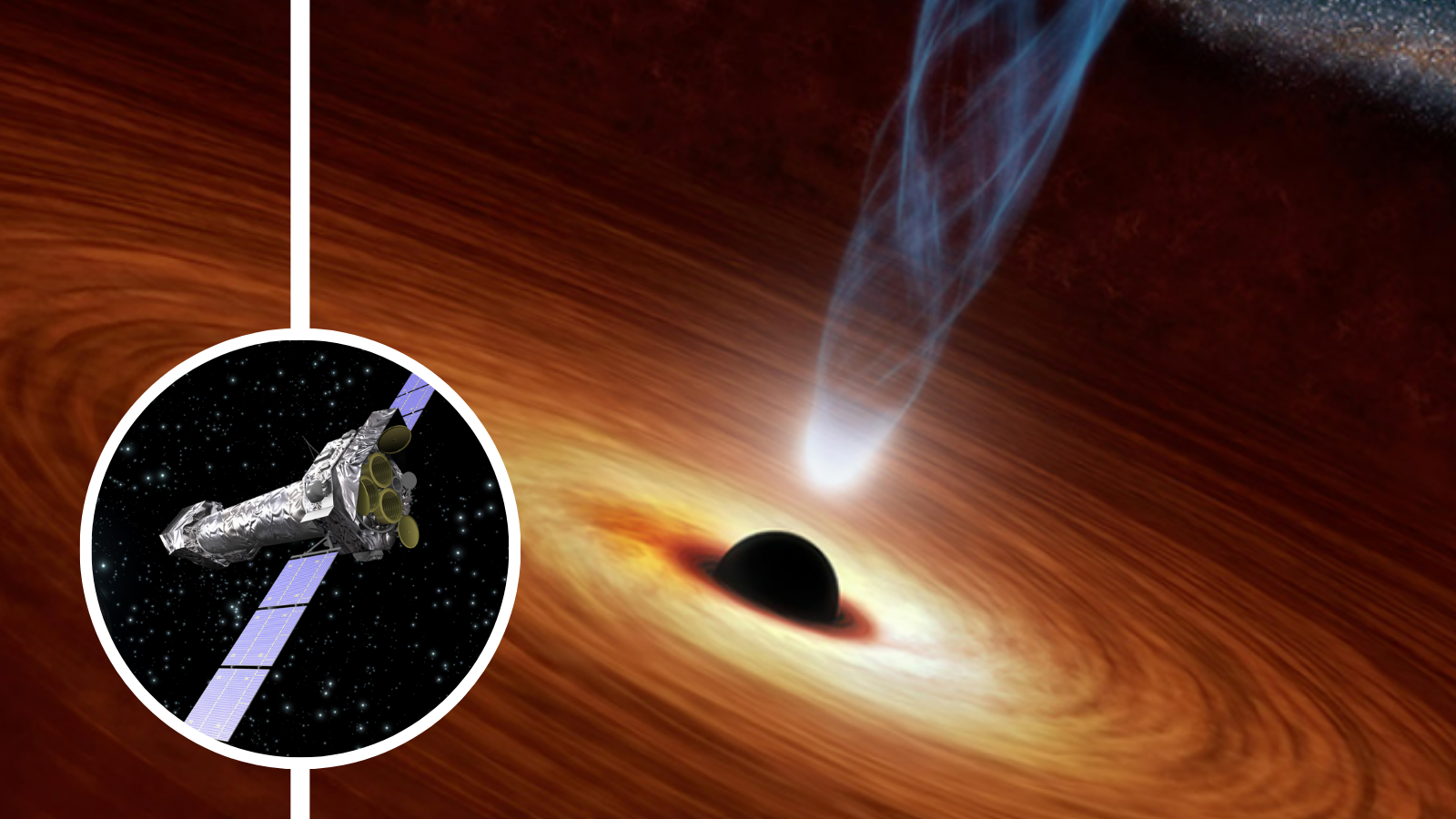
Astronomers have witnessed a distant supermassive black hole devouring its surrounding matter so rapidly that it is "burping" out excess mass at nearly a third of the speed of light.
The discovery was made when researchers studied the supermassive-black-hole-powered Active Galactic Nucleus (AGN) of a Seyfert galaxy located about 1.2 billion light-years away. The black hole, designated PG1211+143, has a mass around 40 million times that of the sun and powers a bright quasar. This made it a prime target for astronomers seeking to understand how supermassive black holes grow by feeding on, or "accreting," matter.