
Get all your news in one place.
100's of premium titles.
One app.
Start reading
The Independent UK
The Independent UK
Steve Fowler

Skoda Epiq review: I’ve driven the cool new electric SUV, but is it epic?

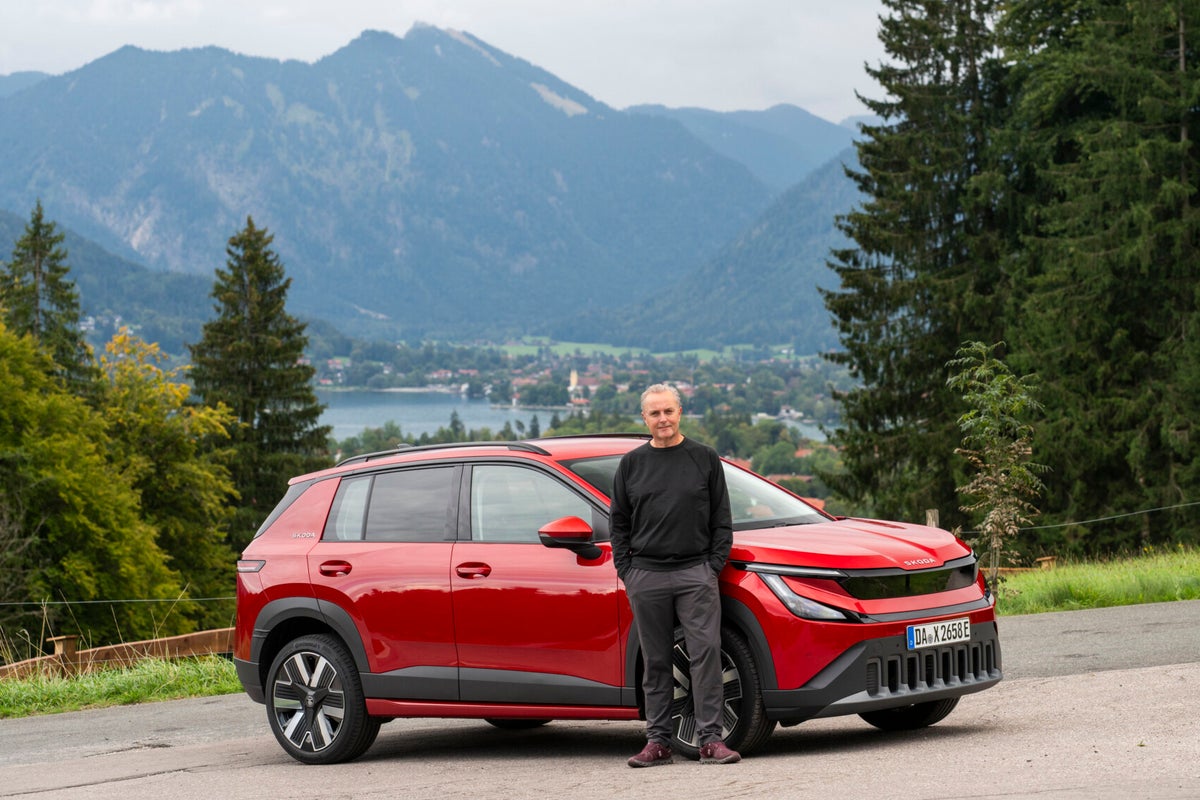
The new Skoda Epiq costs from £24,950 - (Skoda)

Calling your new car the Epiq is either a sign of supreme confidence or asking for trouble. Skoda has history here after all, with the Superb – which pretty much was. So how about the Epiq?

Having now driven the finished production car in Southern Germany, I reckon Skoda can probably relax. It isn’t quite epic, but it’s a hugely likeable little electric SUV that gets an awful lot right.

I’d already driven the Epiq in pre-production form and came away impressed by its size, practicality and general sense of being a proper Skoda, albeit with one slightly surprising reservation about the ride. The good news is that Skoda has listened – or perhaps just borrowed its sister brand’s homework – because the finished car is noticeably better. I’ll come on to that.

At 4,171mm long, 1,798mm wide and 1,581mm tall, the Epiq occupies the sort of footprint I increasingly think makes most sense for an SUV. It’s small enough to squeeze into parking spaces without a 10-point turn and a prayer, yet there’s enough room inside for it to work as a family car. The 2,601mm wheelbase helps, while the relatively upright body and deep windows also mean visibility is excellent. I could see out of it properly in pretty much every direction, which shouldn’t really be something to celebrate, but increasingly is – as is a having a rear wiper. Thank you, Skoda.

The Epiq looks good, too. It’s the first production Skoda to get the full version of the brand’s Modern Solid design, with a glossy black Tech-Deck Face hiding the myriad forward-facing sensors, distinctive T-shaped lights and chunky bumpers that give it a bit of attitude without looking as if it has spent too long in the gym. The aerodynamic work underneath all that results in a drag coefficient of 0.275.

This is Skoda’s smallest and most affordable electric car, sitting beneath the Elroq and Enyaq and effectively offering an electric alternative to the petrol-powered Kamiq. In fact, the eventual entry-level Epiq SE L 40 costs £24,950, putting it at price parity with its petrol sibling and making this the cheapest electric Skoda yet.

There’s also a rather obvious family connection with the Volkswagen ID. Cross, which uses the same new MEB+ platform. I’ve spent time with that car, too, and there are a few places where Volkswagen has clearly been allowed to keep the posher toys, particularly inside. However, we don’t yet have UK prices for the ID. Cross, so declaring one better value than the other would be getting ahead of ourselves. Traditionally, Skoda has given you much of the same basic engineering for less money, and price could be a very important part of the story again here.

How I tested

I drove the production Skoda Epiq 55 in Southern Germany, focusing on its ride, handling, comfort, refinement, technology, practicality and how it compares with the pre-production car I drove before. As always, I replicated how you would use this car, from loading the boot to parking it in a crowded car park.

Skoda Epiq: From £24,950, Skoda.co.uk

The Skoda Epiq gets an upmarket-feeling interior, but the tech is a step behind the Volkswagen ID. Cross (Skoda)

Independent rating: 9/10

  • Pros: Excellent ride comfort; easy to drive; big boot; clever practical touches; strong value; good maximum claimed range
  • Cons: Small driver display; infotainment is a generation behind the Volkswagen ID. Cross; rear space isn’t as generous as some Skodas when compared to rivals
  • Price from: £24,950
  • Battery size: 40kWh or 55kWh
  • Maximum claimed range: 272 miles
  • Maximum charging rate: 105kW DC; 10 to 80 per cent in under 25 minutes

Battery, range, charging, performance and drive

There are two battery choices for the Epiq. The smaller Epiq 40 has a 37kWh usable battery, while the Epiq 55 I drove gets the larger pack with 55kWh gross capacity and around 52kWh usable. Both versions are front-wheel drive, which makes the Epiq the first electric Skoda to send its power through the front wheels rather than the back.

The Skoda Epiq drives nicely with a good blend of ride comfort and handling fun (Skoda)

The Epiq 40 produces 133bhp, while the 55 I drove gets 208bhp and 290Nm of torque. It’ll get from 0-62mph in 7.1 seconds and tops out at 99mph, which is easily enough for a car like this. It feels properly brisk when you put your foot down without indulging in the slightly pointless speedy acceleration and accompanying wheel spin that some EVs seem to think we all need on the school run.

Maximum claimed range for the Epiq 55 is 272 miles, while Skoda quotes efficiency of 4.4 to 4.5 miles/kWh. The smaller battery car is expected to manage around 190 miles, which will clearly suit a different sort of buyer.

The 55 can charge at up to 105kW, which doesn’t sound particularly heroic these days, but there’s a relatively small battery to fill so a 10 to 80 per cent rapid charge takes under 25 minutes. All versions also get 11kW AC charging, while bidirectional charging means suitably equipped versions can use energy from the battery to power external electrical devices or, with the appropriate hardware, feed power back into a home or the grid.

There’s proper one-pedal driving in B mode, with the strength of the regeneration adjustable, or you can let the car coast. The brake pedal itself feels reassuringly normal rather than giving you that slightly odd sensation some EVs manage as they try to blend regenerative and conventional braking.

The steering is good, too. It’s not overly light, there’s enough weight to give you some idea of what the front wheels are doing and the whole car feels nice and easy to place. There’s good body control through bends without the Epiq trying to persuade you it’s a hot hatch in disguise.

But the biggest change from the prototype I drove is the ride quality. I’d been surprised by that first Epiq because it felt a little firmer and busier than I expected from a small Skoda, occasionally thumping over potholes and drain covers when I thought it would be more comfort focused.

That criticism has disappeared. Skoda has followed Volkswagen’s lead with the chassis settings used for the ID. Cross and the production Epiq is really comfortable without becoming too soft. I really like it.

The new Skoda Epiq features the latest interpretation of Skoda's Modern Solid design language (Skoda)

You still feel nicely connected to the road and it doesn’t float or wallow when the road gets twisty, but lumps and bumps are rounded off in a way they weren’t before. Crucially, there’s none of the jolting or jarring that can make some small electric cars tiresome on a rough road. It simply gets on with soaking things up, then settles down nicely as speeds rise.

It’s the balance that impresses most. Skoda hasn’t chased comfort so hard that the Epiq has become soggy to drive, and it hasn’t chased some imaginary idea of sportiness at the expense of your spine. It just feels very well judged, and the Epiq is a much better car for it.

Interior, practicality and boot space

One of the reasons people keep buying Skodas is that somebody in the design department usually appears to have spent a lot of time wondering where you’re going to put all the rubbish you carry around every day. The Epiq keeps that tradition going rather nicely.

The Epic’s interior is high quality and features plenty of clever storage spaces (Skoda)

There’s a good amount of space in the front and the excellent visibility makes the cabin feel airy, while Skoda says there’s more than 28 litres of storage spread around the interior. There are big door bins, useful spaces in the centre console and enough little cubbies that you’ll probably spend the first few weeks trying to remember where you put things.

Rear space is good rather than outstanding. With the driver’s seat set for my close to six-foot frame, I could sit behind myself in decent comfort while headroom is particularly generous and the view out is good, helped by those deep side windows. However, the Epiq doesn’t have the useful ability of some Skodas to give you vastly more back-seat space than seems physically possible from the outside – or more than its sister version from VW, which often happens.

The deep boot makes up for it. There are 475 litres with the rear seats up, which is excellent for such a compact car, while folding them increases that to 1,345 litres. There’s also a 25l frunk under the bonnet, which is exactly where charging cables belong rather than underneath three suitcases, a pushchair and the dog’s collection of damp towels.

Rear seat space in the Epiq is good enough, but not as spectacularly spacious as some Skodas are famous for (Skoda)

The sloping tailgate does mean the boot isn’t as tall right at the back as you might expect from its capacity figure, so owners of particularly large dogs may want to bring them along to the showroom. The old Yeti was still a better shape if your labrador has ambitions to become a great dane.

Then there are Skoda’s Simply Clever features, and I have to admit that this is one marketing slogan that does pretty much describe what you’re getting. There’s the usual umbrella tucked into the driver’s door and an ice scraper at the back, plus bottle holders, bag hooks and plenty of other little ideas that become far more useful once you’ve actually lived with the car.

Skoda is taking things a step further with downloadable 3D-printing plans from Printables.com, so if you own or have access to a 3D printer you’ll be able to make extra accessories for the car yourself. That’s properly clever and also has the potential to open the floodgates to all sorts of home-designed Epiq additions.

The Epic’s boot is big and especially deep. There's under bonnet storage, too. (Skoda)

There are some nice ideas with the materials, too. Textile upholstery uses recycled polyester, and Skoda has moved away from animal-derived materials – the Techtona synthetic trim looks and feels perfectly decent. The Epiq’s is the sort of cabin that concentrates more on surviving everyday family life than dazzling you for 20 minutes in a showroom, which is probably the right priority.

Technology, stereo and infotainment

Technology is where the Epiq loses a little ground to its Volkswagen ID. Cross sister car, and having experienced both, the differences are pretty obvious.

Tech is one area where the VW ID. Cross beats the Skoda Epiq – the Skoda gets an updated version of older hardware (Skoda)

The Skoda gets a 13in central touchscreen and a 5.3in digital driver display. The infotainment system has been updated with new graphics, personalisation, online services and an app store, and in isolation it’s perfectly decent. It reacts quickly enough, the menus aren’t too confusing and there are still enough physical controls around the dashboard to stop the whole thing feeling like you’re operating an iPad on wheels.

But then you get into an ID. Cross and realise Volkswagen has kept some of the best new stuff for itself. The VW’s driver display is bigger and sits up on top of the dashboard in a much more natural position, while the Epiq’s smaller screen is embedded into the dash and looks a bit old-fashioned by comparison.

It’s a similar story with the main touchscreen. Skoda’s system is essentially an updated version of its existing technology, whereas the ID. Cross gets the newer-generation Volkswagen infotainment setup. The Epiq system works perfectly well, but the VW one looks and feels a generation ahead.

I also prefer the Volkswagen steering wheel. It has more buttons, they’re clearer and the functions are easier to understand at a glance. Skoda still uses an old-style secondary stalk for its cruise control that’s hidden below the indicator and wiper stalk behind the steering wheel. Again, it feels like something from an older generation of car once you’ve used the simpler ID. Cross arrangement.

None of this makes the Epiq difficult to use and I suspect you’d get used to it pretty quickly if you owned one. It just feels slightly disappointing when you know there’s a newer and better solution sitting in another car built from much of the same basic engineering.

The other side of the argument, of course, is price. If the ID. Cross ends up costing significantly more, plenty of people will happily accept a smaller driver display and the previous-generation infotainment hardware, take the saving and spend it on something more interesting. Until Volkswagen tells us how much the ID. Cross costs in Britain, we can’t really judge that trade-off properly.

The audio system in the Epiq I drove was reasonable for the size and price of car. It’s not going to persuade anybody to sit on the driveway for another half hour when they get home just to hear the end of an album, but it sounded perfectly respectable and I had no complaints.

Wireless smartphone connectivity is included, while higher-spec versions add wireless charging and the option to use your phone as a digital key. The MySkoda app can also handle charging and selected remote functions.

As well as an older-style infotainement screen, the Epic’s steering wheel and driver display aren't as good as the VW ID. Cross's (Skoda)

There’s plenty of safety technology, too, including Front Assist, Side Assist, Lane Assist and traffic-sign recognition, while adaptive cruise control is standard and more advanced Travel Assist systems are available further up the range. Seven airbags, including a centre airbag between the front seats, are fitted as standard.

Prices and running costs

The Epiq range starts at £24,950 for the SE L 40, although that smaller-battery version comes later than the 55 models which are already available to order. The SE L 55 costs £27,700, the Edition 40 is £27,700, the Edition 55 is £30,450 and the limited First Edition 55 costs £31,450.

The Skoda Epiq price will start at £24,950 when smaller battery cars arrive (Skoda)

Even SE L versions get 18in alloys, LED lights, the 13in touchscreen and digital cockpit, wireless smartphone connectivity, rear parking sensors, climate control, keyless start and adaptive cruise control. Edition adds kit including heated front seats and steering wheel, front parking sensors, a rear-view camera, wireless phone charging, two-zone climate control, keyless entry, Drive Mode Select, more advanced driver assistance and bidirectional charging.

The First Edition gets the 55 battery and 208bhp motor, along with 20in alloys, a black roof and enough Navajo Orange detailing to make absolutely sure everybody knows you bought the First Edition. There are orange mirror details, orange trim and even orange seatbelts – something I hadn’t realised my life was missing until now.

New Skodas come with a three-year/60,000-mile vehicle warranty, while the high-voltage battery gets separate cover for eight years or 100,000 miles. Skoda also warrants the battery against excessive degradation, with cover applying if its usable capacity drops below 70 per cent within that period, subject to the warranty terms.

And then there’s value. At £27,700 for the Epiq 55 SE L, there’s an awful lot here for the money: a useful maximum claimed range, excellent ride, decent performance, a huge boot for the size of car and plenty of those little Skoda touches that make everyday life easier.

I do wish Skoda had been given the ID. Cross’s newer screens and steering-wheel controls, but I’m not prepared to mark the Epiq down too heavily for that until we know what Volkswagen is going to charge. If the traditional Skoda price advantage appears again, I suspect plenty of people will happily trade a bit of dashboard glamour for the saving.

The Skoda Epiq launches into a competitive small all-electric SUV market against VW, Kia, Ford, Citroen, Peugeot and Leapmotor (Skoda)

The verdict: Skoda Epiq

The finished Skoda Epiq fixes my biggest complaint with a lovely ride, while keeping the space, value and Skoda cleverness. It’s now a fine car and worthy of consideration, but its biggest rival will come from its own family, the Volkswagen ID. Cross, whose tech is better, but its UK price remains unknown.

Leapmotor B03X rivals:

FAQs

How long does it take to charge?

The Skoda Epiq 55 can charge at up to 105kW from a suitable rapid charger, with a 10 to 80 per cent charge taking under 25 minutes. All Epiqs also get 11kW AC charging, while the 55 I drove has a 52kWh usable battery and a maximum claimed range of 272 miles.

How much does it cost – is it worth it?

The Skoda Epiq range starts at £24,950 for the SE L 40, while the larger-battery SE L 55 I drove costs £27,700. The Edition 55 is £30,450 and the First Edition 55 costs £31,450. On what I’ve driven, the Epiq looks very good value: it’s comfortable, practical, easy to drive and has plenty of useful standard kit. I prefer some of the technology in the Volkswagen ID. Cross, but without a UK price for the Volkswagen it’s impossible to know whether that extra polish will be worth paying for.

Does Leapmotor replace batteries for free?

The Epiq’s high-voltage battery is covered for eight years or 100,000 miles, whichever comes first, while the car itself gets a three-year/60,000-mile warranty. If the usable battery capacity falls below 70 per cent during the battery warranty period, Skoda says it will be repaired or replaced subject to the warranty terms and exclusions.

Why trust us

Our team of motoring experts have decades of experience driving, reviewing and reporting on the latest EV cars, and our verdicts are reached with every kind of driver in mind. We thoroughly test drive every car we recommend, so you can be sure our verdicts are honest, unbiased and authentic.

With more than 30 years of experience, Steve Fowler is one of the UK’s best-known automative journalists. Steve has interviewed key industry figures, from Tesla’s Elon Musk to Ford’s Jim Farley, and is a judge for both Germany’s and India’s Car of the Year Awards, as well as being chair of World Car of the Year. When it comes to electric vehicles, Steve reviews all the latest models for The Independent as they launch, from Abarth to Zeekr, and he uses his expert knowledge of car buyers' needs to provide a comprehensive verdict.

Sign up to read this article
Read news from 100's of titles, curated specifically for you.
Already a member? Sign in here
Related Stories
Top stories on inkl right now
One subscription that gives you access to news from hundreds of sites
Already a member? Sign in here
Our Picks
Fourteen days free
Download the app
One app. One membership.
100+ trusted global sources.







