
Healthy aging and maintaining your independence are great goals to have, even in your 20s and 30s.
However, once you creep past 40, they should be a big focus of your workout routine.

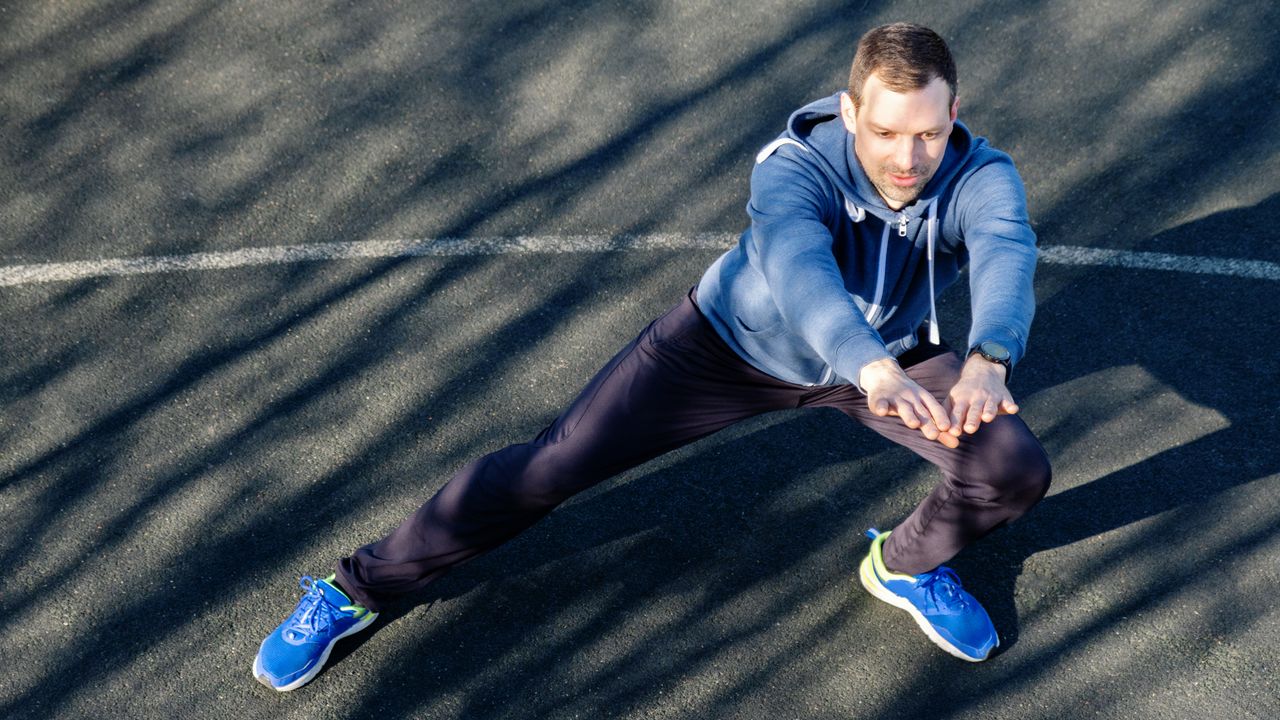
That’s why I teach all my clients over 40 the lateral lunge to balance.
This exercise strengthens lower-body muscles and improves full-body stability.
Kandis Daroski, a physical therapist and clinical program manager at Medbridge, says practicing these types of movements is crucial for aging well.
“Your 40s are a great time to be intentional about your side-to-side strength and your balance, before you ever notice a problem,” she says.
“In life, we move side to side, we go up and down curbs, we turn and twist. This exercise builds resilience, so your body is ready for whatever real life throws at it.”
How to do the lateral lunge to balance
This is a bodyweight version of the lateral lunge to balance but as you get stronger, you may want to perform it with a weight for an additional challenge.
Begin with one set of eight to 10 repetitions (reps), keeping them slow and controlled.
“By slowing down and controlling the movement, you’ll challenge the muscles more than moving quickly through 20 reps,” Daroski suggests.
Over time, build to 12 reps for two or three sets, two or three times per week.
If you're suffering from an injury or have other health issues, get clearance from your medical team before trying this move.
Reps: 12
How to do it:
- Stand with your feet hip-width apart and engage your core.
- Take a large step out to your right side with your right foot.
- Bend your right knee and push your hips back as you lower toward the floor.
- Keep your chest up and core engaged.
- Push through your right foot, bringing yourself back to center, and raise your right knee to hip height while balancing on your left foot.
- Pause briefly, then go straight into the next rep.
- Complete all the reps on one side, then the other.
Form tips: “In the lunge position, keep your chest up tall and hinge from the hips instead of rounding your upper back forward,” says Daroski. “Exhale as you push through your whole foot to come back up.”
Keep your toes pointing forward throughout the movement, and avoid letting your foot externally rotate as you step to the side.
How to make the lateral lunge to balance easier
If you’re a beginner, there are ways to simplify the exercise.
Instead of raising your knee to balance at the end of the movement, perform a standard lateral lunge by returning your foot to the floor.
You can also reduce your range of motion and limit how low you go when performing the lateral lunge.
If your leg isn't strong enough to support your weight yet, practicing step-ups and lateral step-ups will help build the muscles you need.
How to make the lateral lunge to balance harder
If you can do 12 reps of this exercise without feeling fatigued, you’ll want to increase the difficulty so that you don’t lose out on its strength-building benefits.
Hold a weight—a dumbbell, kettlebell or even a weight plate—at your chest as you do the exercise. Start with a light weight and when that starts to feel easy, try a weight in each hand.
Continue aiming for eight to 12 reps with good form. If you notice that your form starts to fail before you get to eight reps, use a lighter weight.
Your next progression is to add an overhead press by holding a weight in the opposite hand to your side-lunging leg and pressing it overhead when you raise your knee to balance.