
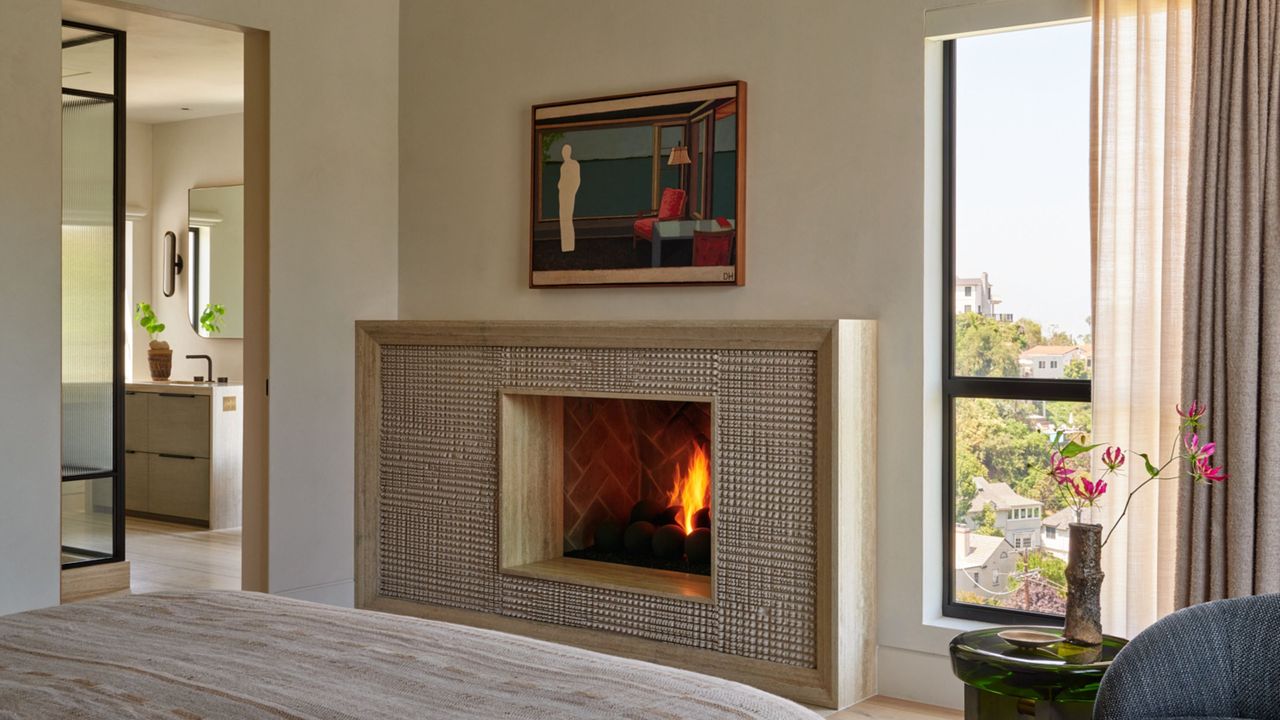
Like any good outfit, the way you dress your windows is best done in strategic layers. A sheer shade or blind to filter light, layered with a thicker curtain for more practical light-blocking and thermal regulation, works best. But there is a balance to strike between well-dressed windows and layered treatments that simply feel too heavy.
"The most effective way to optimize both style and function is layering," agrees Raymond Chen, founder of TWOPAGES Curtains. No matter what combination of curtain types you're using — whether that's a frosted privacy film framed by a semi-sheer curtain or a roman blind followed by blackout curtains — the ideal formula for layering window treatments depends on how you want to interact with the light in your space.

One thing is for sure: the mornings are starting to get a little brighter, and for that, functional curtains are a must. So, to spark some inspiration for how to filter that light for better sleep (and a better interior atmosphere), without making your space feel too heavy, I've researched and gathered designer-approved formulas for layering window treatments. Here's what they shared.
So, What's the Best Window Treatment Layering Formula?

So what is the golden ticket recipe for perfectly layered window treatments? You can't go wrong working from the inside out. Start with something small or thin that's more practical as your base. A roller blind, Roman shade, cafe curtain, or film works well.
These types of blinds offer both privacy for street-facing windows and a functional light filter. And while this practical base layer may not be as appreciated as the more decorative outer layers, just like with a good outfit, it all starts with a strong foundation.
From there, consider what curtains you want to pull the space together. This is the time to create a beautiful harmony between form and function. "I recommend pairing sheer curtains for daytime glow with a heavier drape for nighttime privacy and added performance," says Raymond Chen. Layering sheer and blackout curtains is a foolproof method for maximizing versatility.

Sheer curtains are always a strong consideration for principal roadside rooms. "They can offer some of the most effective privacy and light filtration due to their generous, voluminous folds, while also creating an elegant full-height statement," explains Pat Giddens, founder of UK-Based curtain and upholstery company.
But think about how you intend to use a sheer curtain layer. When decorating with sheer curtains, "Fabric is best kept to a lighter-weight sheer if used as a permanently drawn secondary layer, but can be a denser sheer if intended as a day-and-night standalone option," Pat adds.

Finally, blackout curtains or heavier drapery should be your final layer — a piece that won't always be in use, but is helpful to have in the mix. Heavier curtains add visual drama and weight to a room (especially when using a captivating print or material), and they are the best way to totally block light. when necessary. Much like the wool coat layer that you need when it's cold, but can easily shed once indoors.
"Layering window treatments is one of my favorite techniques since it creates dimension, flexibility, and year-round comfort," says Raymond. Yet, while experimenting with layering in design creates a more dynamic space, balance is essential to keeping things from feeling too cluttered, dense, or heavy.
For example, if you have a particularly heavy outer curtain, keep your first and second layer thinner — or cut out a layer altogether and stick to a roller shade or sheer. To help, below are a few of my favorite window treatments, perfect for mixing, matching, and layering.


So, in short: the best window treatment layering formula is a practical thin shade or film, followed by a lightweight sheet, with a heavier curtain or blackout to finish. From there, you can mix and match these layers as you please — and depending on how much light your room gets.
For more window treatment ideas (or to decide if you even need curtains in your space), be sure to subscribe to the Livingetc newsletter — we've got plenty more inspiration where this came from.