
There are a million ways in which smartphones have revolutionized our daily lives, but the feature that I get the most consistent use out of? The flashlight. How many times would I have been defeated while trying to find something in too-dark cupboards, cabinets, and closets without a light easily to hand?
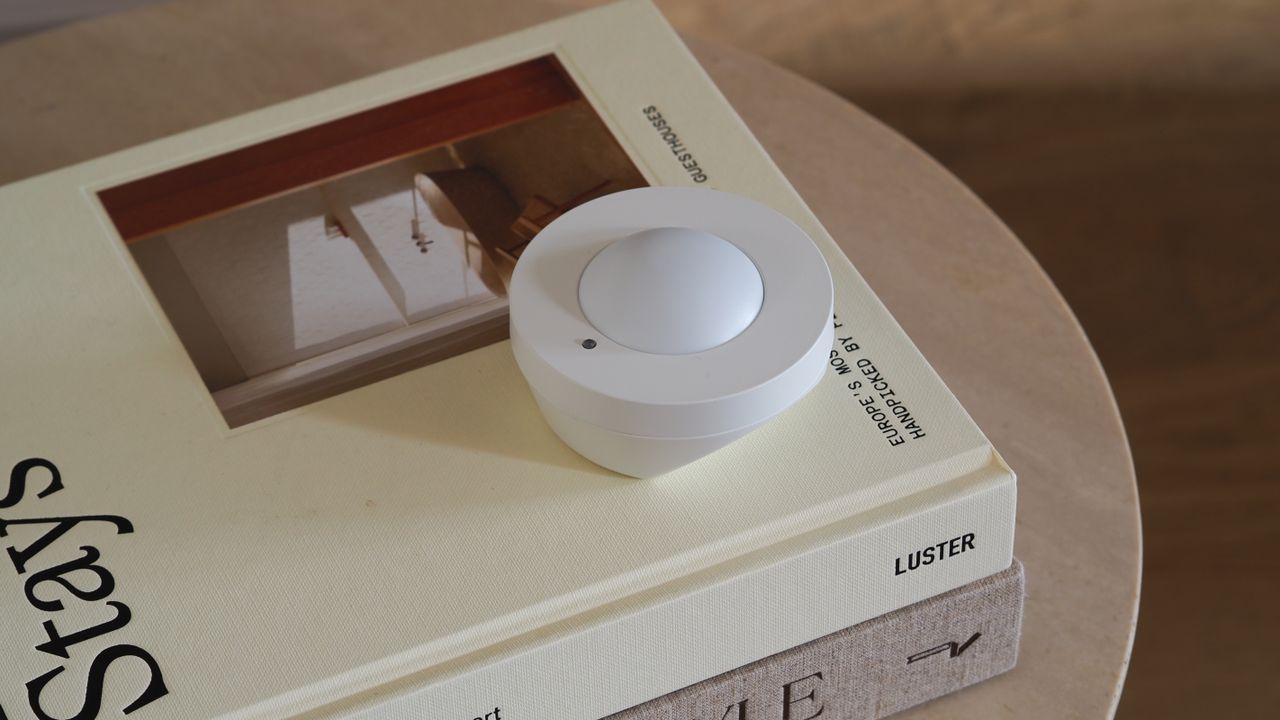
Of course, it's far from ideal — so a solution to the problem I've been keen to find. At the same time, I've been investing in some of IKEA's smart sensors recently, and I picked up IKEA's MYGGSPRAY wireless motion sensors to test out. I, particularly, wanted a solution for my understairs coat cupboard, which I often spend too long searching for a certain jacket, or pair of shoes.

My review? It does the job, but I wish this motion sensor was a little easier to set up, and a little clearer from the outset about what exactly you need to make it work. Some people may get this home and be disappointed.

But let's start with the positives. Once I'd gotten over the hurdle of the set-up, MYGGSPRAY certainly solved my dark cupboard problem. It fixes into a corner (either with screws or the included sticker pads), so it's well-positioned to cast a well-illuminating glow, and I found the sensor sensitive enough that it turned on when I opened the door to the under-stairs storage, but I didn't have problems with it flicking on and off when the door was ajar.
You can use this device indoors and outdoors (but only when under a cover such as a porch), and it's the sort of thing that makes total sense to use in a hallway at nighttime if you need a little boost of light to get to the bathroom and back, and this is where connecting it to your smart hub comes most in handy — for times when you want it on, and off.

Other than that, the smart capability of IKEA's MYGGSPRAY is more of a liability than a feature that stops it being one of IKEA's best products. Unfortunately, the device doesn't work until it's connected to your smart home's system (despite the fact that others in the IKEA smart sensor range do, and you can find plenty of sensor-activated lights like these from Amazon that don't require smart integration to work).
It's also not super clear, before you buy, that it requires a hub to work. This could be IKEA DIRIGERA if you're ready to commit to IKEA's smart products in full, but because it's compatible with Matter, this could also be a Google or Amazon device. However, not any device will do — for it to be compatible, you'll need one that works as a Thread Border Router to be able to connect. You can Google to find out if your hub has this capability, but this will then let you add the IKEA product to your system and control it via voice control through the likes of Alexa or Siri.
The benefits of its smart capabilities might depend on how you use it, however. As a way to light a dark hallway or inside a cupboard, it doesn't have much application. But, if you are using it as a sort of security light, you might be more inclined to want to get notifications when it's set off.
So, should you buy it? In truth, there aren't that many alternatives out there that don't require plugging into an electrical socket, so for versatility and a good price, it's a sound investment. However, if you're not particularly tech-y, you might find this device proves a bit of a frustration.
Why Not Try These Instead?
It's bigger and more expensive, but overcomes the smart-based functionality issues.
Philips' take on a motion sensor light is much more expensive, and requires a Philips Bridge, too.
IKEA also has a plug-in version, which might serve your needs better.
You might, ultimately, decide it's worth your time doing it properly from the get-go, in which case, we've got a guide to setting up a smart home to help.
And, for more inspiration, why not sign up to the Livingetc newsletter?