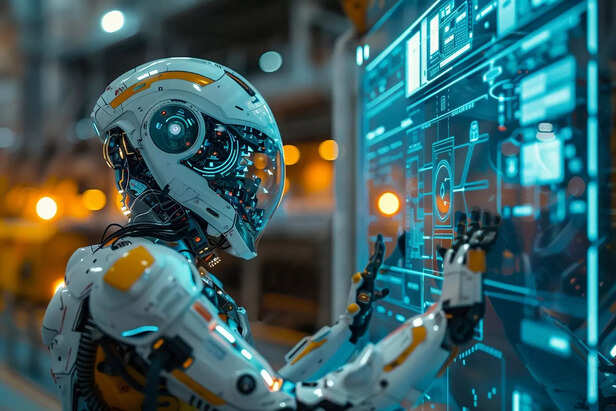
The future of computing may no longer revolve around screens, keyboards or even laptops. A major breakthrough from Anthropic is now pushing us into an era where artificial intelligence can operate computers just like a human- clicking, typing, browsing and completing tasks entirely on its own. And if this trajectory continues, the idea of personally “using” a laptop may soon feel outdated.

AI That Works Like a Human, Not Just a Tool
Anthropic’s AI assistant, Claude AI, has received a powerful upgrade that allows it to directly control a user’s computer. Unlike traditional AI tools that respond with suggestions or text outputs, Claude can now interact with a system in real time- moving the cursor, opening apps, navigating menus, filling out forms and even browsing the web as if it were a human sitting at the device. This marks a fundamental shift. Instead of being just an assistant, AI is becoming an active “operator.” It doesn’t just tell you what to do- it actually does it for you.
From Commands to Complete Task Automation
The most striking aspect of this update is automation. Users can simply give a prompt, even from their phone, and Claude will carry out the task on their computer- whether it’s finding files, sending emails, updating spreadsheets or managing apps.
The system works by giving Claude access to the screen, mouse and keyboard, allowing it to perform multi-step actions seamlessly. It can even connect with tools like calendars or workplace apps to complete workflows end-to-end. In essence, your computer becomes something you delegate to, rather than something you actively use.
A Future Where You May Not Need a Laptop
This innovation is part of a broader vision where AI handles most digital tasks independently. Anthropic has already introduced features like “Dispatch,” which lets users control Claude remotely via their phones, and is reportedly working on “Phone Use,” which could allow the AI to make calls and send messages on your behalf. With such capabilities, the role of personal devices could dramatically change. Instead of sitting down to work on a laptop, users might simply instruct an AI to complete tasks in the background- anytime, anywhere. The computer becomes invisible, and the AI becomes the interface.
Powerful- but Not Without Concerns
Despite its promise, this technology comes with important caveats. The feature is currently in a research preview and limited to select users, highlighting that it is still in early stages.
More importantly, giving an AI full access to a computer raises serious concerns about privacy, security and misuse. Since Claude can access files, apps and sensitive data, safeguards and permissions become critical. There’s also a broader question: as AI becomes capable of acting independently, how much control should humans retain? The convenience is undeniable- but so is the responsibility.
What’s clear, however, is that computing is undergoing a radical transformation. We are moving from an era of “using machines” to one where machines act on our behalf. And if this evolution continues, the humble laptop- once the center of digital life- may soon become just another tool in the background, quietly managed by AI.
Unlock insightful tips and inspiration on personal growth, productivity, and well-being. Stay motivated and updated with the latest at My Life XP.