Have you ever wondered what happens to a city when its streets are erased by water rather than time? Long before the waves took over, the Russian city of Vesyegonsk, located in the Tver oblast about 420 kilometers north of Moscow, was famous for its extreme isolation. In fact, its sheer remoteness was a source of jokes even in the 19th century. Yet, no one predicted the ultimate fate that awaited this historical hub.
What does it take to dismantle a thriving community, and who carries the burden when history is rewritten? According to Russia Beyond, Vesyegonsk suffered the same tragic fate as the neighboring town of Mologa. Before the waters claimed it, Vesyegonsk was a prosperous trading town with a population of roughly 6,000 residents. Its streets were lined with a busy shopping arcade, expensive houses, and grand stone buildings.

How things took a dark turn
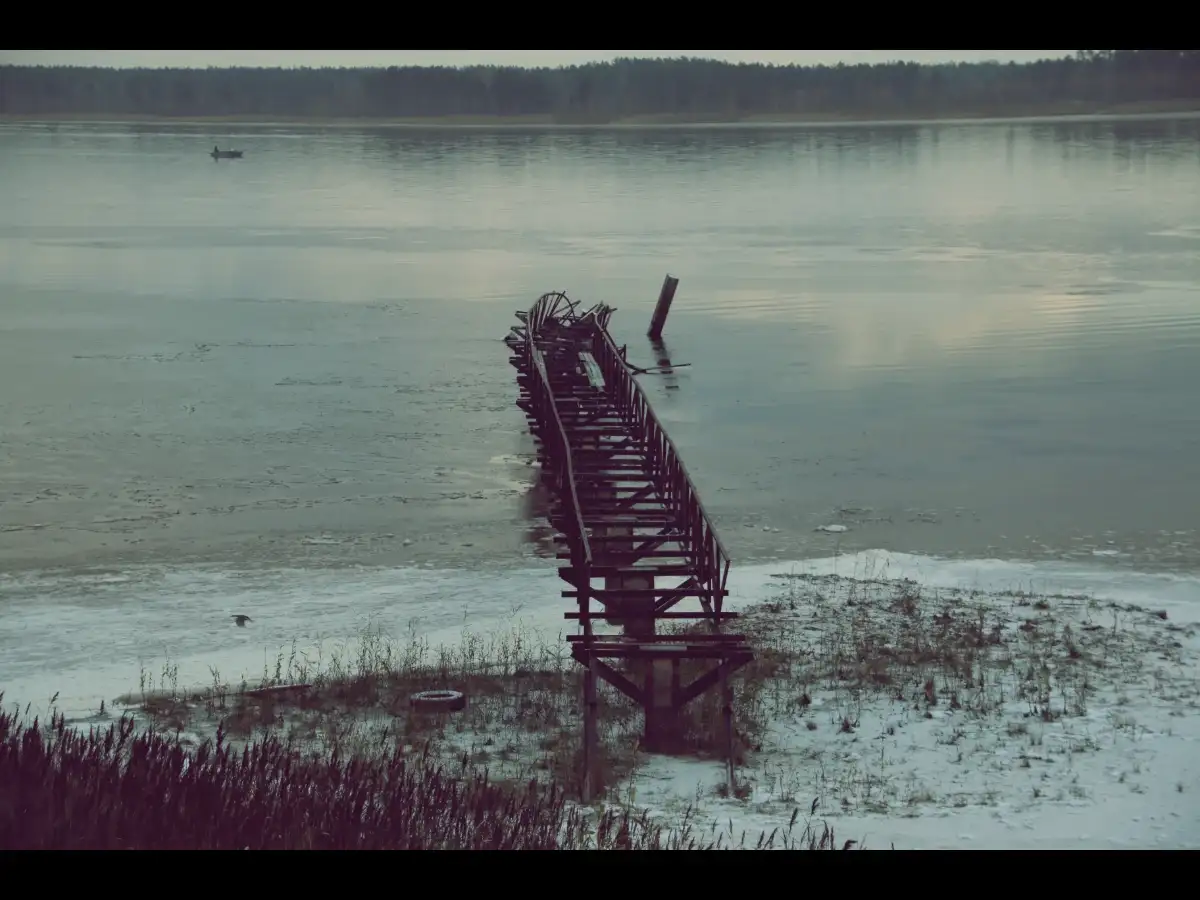
However, in the early 1940s, the creation of the massive Rybinsk Reservoir changed everything. Two-thirds of the entire city was submerged under water, forever transforming the landscape. Today, the true extent of this massive flooding is clearly shown on a detailed map located near the local library.
How did the town prepare for such a catastrophic change?
Before the flooding began, the best wooden houses were carefully moved to drier, higher ground. But almost everything built in stone could not be saved and was completely demolished.
The dismantling of Vesyegonsk’s homes began in 1940, and the town was finally flooded completely in 1943. As Russia Beyond notes, World War II was already underway, and the town’s men had been drafted into the army to fight at the front. As a result, all the grueling resettlement work had to be carried out entirely by women.
Where did the displaced families go?
The uprooted residents were resettled onto collective farm lands situated just to the south of the original town site. This new settlement was given the exact same name, preserving the identity of the lost trading post. Today, the story of Vesyegonsk remains a poignant reminder of human endurance and the silent, drowned ghost towns lying beneath the peaceful surface of the Rybinsk Reservoir.