
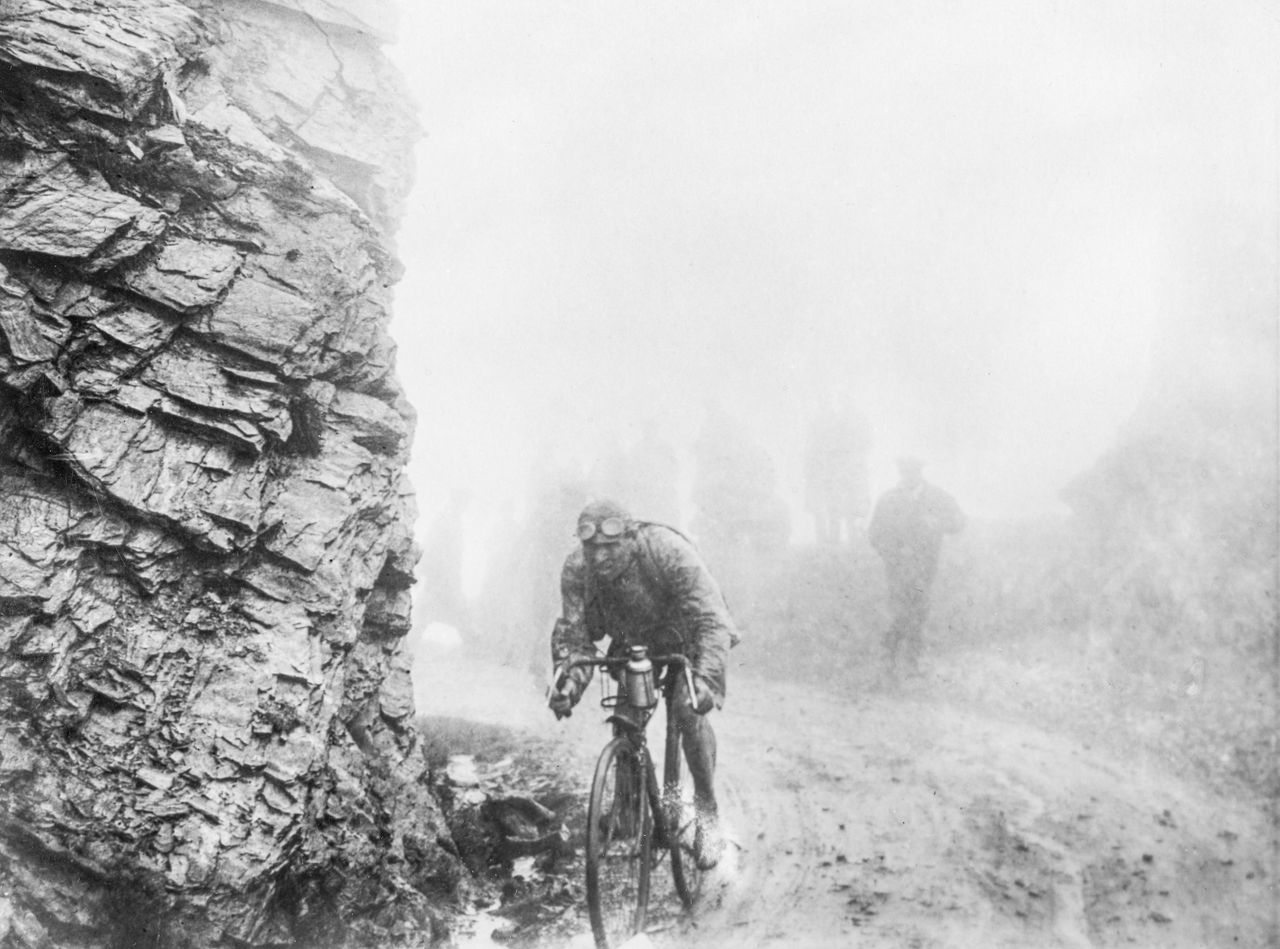
Pub pundits and sports scientists agree that the Tour de France is the ultimate test of human endurance, but compared with the pioneers of a century ago, today's riders have it easy. In 1926, La Grande Boucle was more than a nickname; that year's Tour took the peloton on a 5,745km ordeal around the perimeter of France. One hundred years on, that edition remains the longest, most brutal route in the race's history - a battle of attrition as much as it was a bike race.
The average length of the 17 stages was 338km. Yes, the average. One, stage 12, from Perpignan to Toulon, was 427km. But it's stage 10 from Bayonne to Luchon, through the Pyrenees, that's gone down in cycling folklore. Contested in apocalyptic, literally life-threatening weather conditions, this race-defining leg was won by the Belgian Lucien Buysse - in a time of 17 hours, 12 minutes. He went on to take the overall victory, and frankly, he'd earned it.














