Get all your news in one place.
100's of premium titles.
One app.
Start reading
The Times of India
The Times of India
World
TOI World Desk

They spent $300,000. Now they’re asked to give up 44 acres

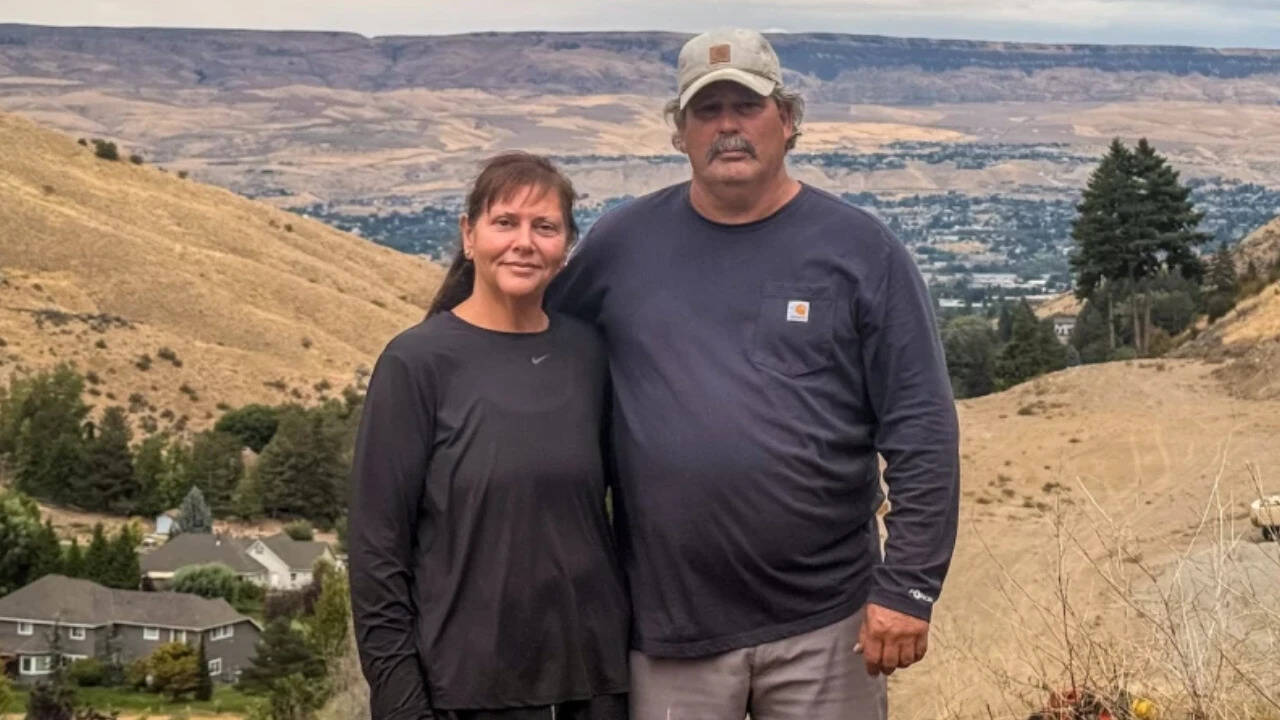
In 2021, Tyler Chambers, 59, purchased 66 acres in rural Chelan County, Washington, with his wife, Wendy, planning to construct a home. The land they bought seemed perfect: it was zoned residential, had power, PUD water, fibre and paved-road access, with other homes nearby. Everything looked promising for the small-business owner from a farming family. He had plans to build a family home and pole barn, plant some orchard acreage, and dreamt that his children or grandchildren would build on the property later. In five years, he spent nearly $300,000 on regulatory requirements, including wildlife studies and geotechnical reports, according to a report by AgWeb.

Get breaking news anytime, anywhere. Download the TOI app now!

But then the process became a bureaucratic maze. The county asked for more reports and studies, including assessments of stormwater, spotted owls, golden eagles, deer, shrubsteppe and geotechnical risks. Then the state allegedly asked him to place roughly 44.2 acres, about two-thirds of the property, under a permanent conservation deed restriction as environmental mitigation before he could build his home.

The paperwork that never ended

Tyler Chambers visited the county planning office before breaking ground. He hired engineers, paid for a surveyor, got a geotechnical report and a soil test. All these cost him about $300,000, including wildlife and environmental studies, according to the account he gave to AgWeb. However, each completed requirement was followed by another.

When he started preparing the land in 2021 under what he believed was a green light from the county, neighbours filed complaints about his earthmoving. The county opened an investigation, but the enforcement official signed off on the work. Chambers thought he was cleared to proceed.

But the trouble had only begun. The county fired its Community Development Director and hired a replacement. What followed was a stop-work order. Then came a cascade of requests: wildlife studies, spotted owl surveys, golden eagle assessments, stormwater analysis, erosion reports and geotechnical drilling. “At the start, we naively believed if we followed the rules, everything would be fine. We were wrong and terribly misled,” Chambers told the outlet. Each study came at a whopping cost.

“They kept requesting more and more. We had to do a geotech report where they drilled all over our land. The specialist drove two-and-a-half hours from Seattle, and he kept scratching his head, asking, ‘Why are you having to do this to build a house?’ All I could tell him was, ‘I don’t know,’” Chambers recalled.

The 44.2-acre restriction

In Washington, building a small number of single-family homes is generally exempt from review under the State Environmental Policy Act (SEPA). However, the exemption can depend on site conditions, critical-area rules and other exceptions. State rules generally cover up to four attached or detached single-family units, while some jurisdictions have higher thresholds.

Tyler Chambers’ proposed home in Chelan County, however, became subject to SEPA-related review. He said the process was unusually burdensome, although there is no independent evidence that his project was the only single-home SEPA review in the county’s history. According to Chambers, regulators then asked him to permanently set aside 44.2 acres of his property as mitigation. That area represents roughly two-thirds of his 66-acre property.

“We were completely shocked. They demanded almost everything we owned, meaning 44 acres of our private property placed in a deed restriction; two-thirds of our land. It was obvious that everything we’d been required to do up to that point was part of a fixed game. I can’t properly describe the emotional damage to my wife, Wendy, and the loss of faith we’ve suffered in our county and state, along with extreme financial and mental stress. We’ve been targeted, and I know we are the only ones in Chelan County’s history ever to do a SEPA for a regular house,” he told the outlet.

His consultant, Glen Grette of Grette Associates, reportedly testified before a hearing examiner that mitigation was never intended to be a deed restriction. Nothing in the county’s own rulebook justified such a massive restriction for erosion control on a single-home site. Yet the county dug in.

Chambers says this regulatory process was nothing but an attack on his property rights. His broker, Jeff Hallman, also criticised the county’s handling of the case. Neighbours who built homes never faced habitat easements. They simply constructed without these demands. There is even a data centre 10 miles away. “About 10 miles away, Microsoft is building a data centre. Microsoft has moved 500,000 cubic yards of dirt. Tyler’s guessed amount of 1,000 is 1/500th of that, like $2 on a $1,000 bill. So how much land was Microsoft asked to set aside? Substantially less than Tyler. Still think conspiracies aren’t real?” Chambers asks.

While the requirements have caused him severe financial trouble, Chambers remains determined to build his dream home. “I’ve learned that if you stay silent or try to appease, your situation only gets worse. I’m a changed man now, and I’m not afraid to speak out against governmental abuse at all levels. One thing is certain: We will build our home on our own land.”

Sign up to read this article
Read news from 100's of titles, curated specifically for you.
Already a member? Sign in here
Related Stories
Top stories on inkl right now
One subscription that gives you access to news from hundreds of sites
Already a member? Sign in here
Our Picks
Fourteen days free
Download the app
One app. One membership.
100+ trusted global sources.