Reservation isn’t high on the agenda in Hinsdale, a western suburb of Chicago. In fact, many old homes are getting knocked down in favor of new builds. So when interior designer Wendy Labrum was asked to redesign her clients’ recently acquired historic home, she was eager to lend her expertise.

‘When Chicago was first built, this was a neighborhood of old money, which is why there are so many beautiful mansions. But rather than take these on, a lot of people are opting to build generic, big, boxy new properties,’ says Wendy.
‘My clients had the budget to build something new and fancy, but it’s not what they wanted. They were keen to take something much older and do a period-appropriate and sensitive renovation. This approach can actually be more challenging, though, as the city can make you jump through more hoops.’

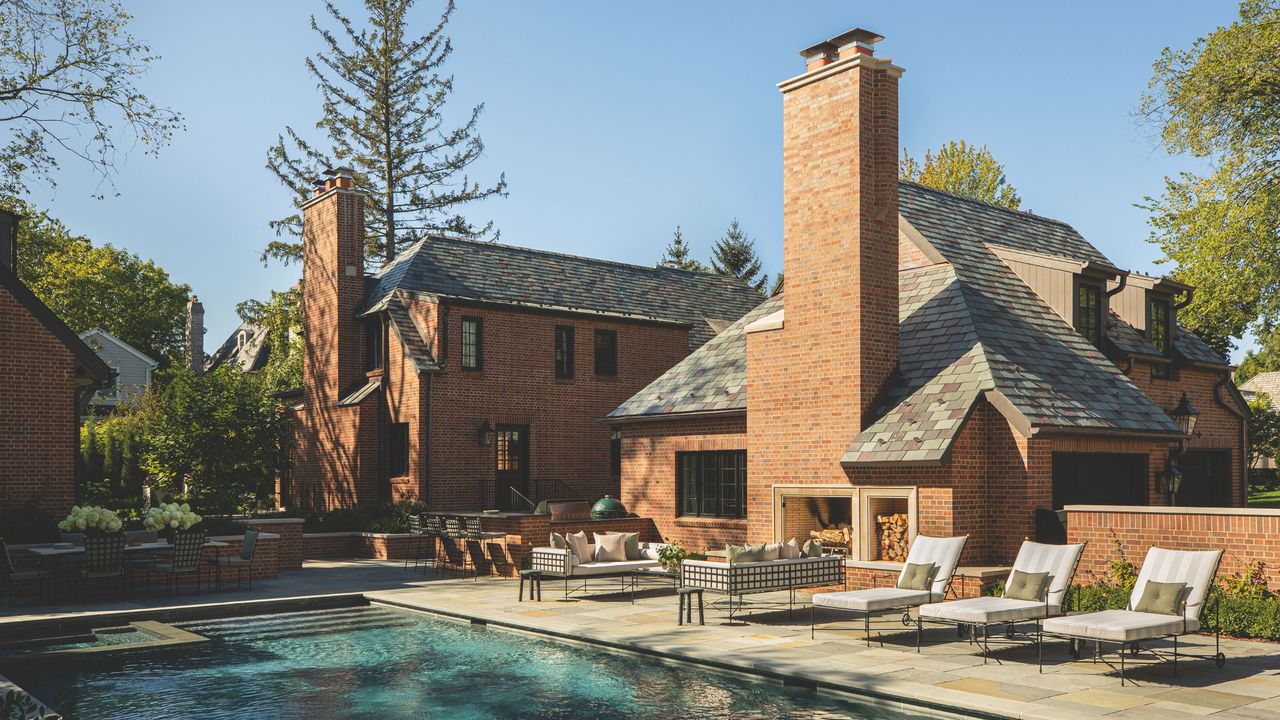
The house the couple had settled on was built in 1926 and combines details from the American Craftsman period with some Georgian elements. ‘The architecture is a bit of a hybrid, and when we did the renovation, we brought in American and English inspiration. We looked at Monticello in Virginia, which was Thomas Jefferson’s home, as a point of reference,’ Wendy explains.
Continuity was another important factor. ‘My clients wanted any development to be true to the house’s origins. We went to great lengths to source specific bricks that would match what was there.’ Also on board as architect was Michael Abraham, who knew the house well, having provided drawings for an earlier renovation of the property some 30 years back.
‘The owners had bought the house from an older couple who had looked after it well, but with three young children and a dog, they felt some adaptations would be needed for modern family life,’ Wendy says.

The four-year project went in phases, and after buying the plot next door, the couple created a pool, which is heavily used during Chicago’s hot summers. ‘The house is now three separate structures inspired by an old English estate,’ explains Wendy. ‘The original garage was converted into a pool house, with masses of light coming in through steel-framed windows that take up the position of the former garage doors. A new garage was built on the next-door plot.’
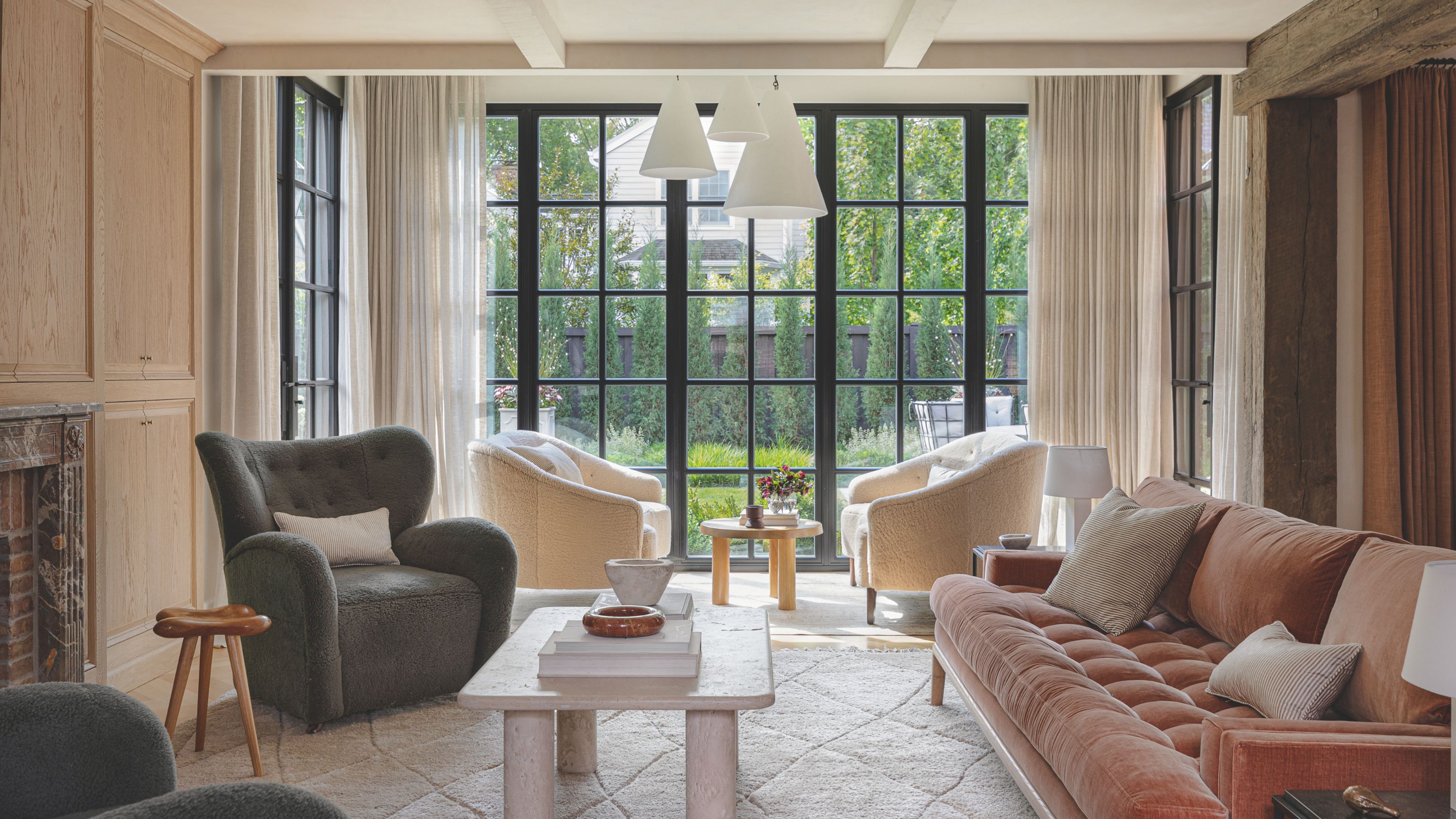
The family, who had been living in a smaller property in the same area, brought only their piano with them. ‘With furniture and art, we started from scratch. We purchased a lot of antiques and sourced pieces from all over the world. Our clients had discerning taste, but they trusted us to do our work and had no problem visualizing our concepts, which made it all feel more seamless,’ Wendy says. ‘While I often work with an art curator or consultant, I sourced the art for this project myself. As a graduate in art history, I have perspective but not the same breadth of knowledge as a curator. I just wanted the art to add a magical alchemy to the interiors.’

The more formal and subdued rooms favored by the former owners were reimagined for a high-energy modern family. ‘We reconfigured the entryway and took space from the walkway to the old library to create a larger mudroom,’ Wendy explains. ‘We also transformed an attic wardrobe into a much-needed home office.’
The sloped ceilings and angled walls at the top of the house were a design challenge that she relished. ‘We lined the office walls with striped fabric using a pattern-drench idea to make it cozy and special,’ Wendy says. ‘I can’t do anything that’s 100% traditional, so I always add some kind of contemporary twist. Often this might come from furnishings or light fixtures.’

Similarly, in an attic bedroom, Wendy used polished plaster to create a cocooning scheme that embraces the slanting ceiling and rooflines. Design details like these truly work to enhance the quirks of the architecture and can be found throughout the house. The recipient of a huge injection of character and much more functionality, this older home has now firmly secured its future.
For more inspiring house tours, you can sign up for our newsletter so you never miss the latest features.