
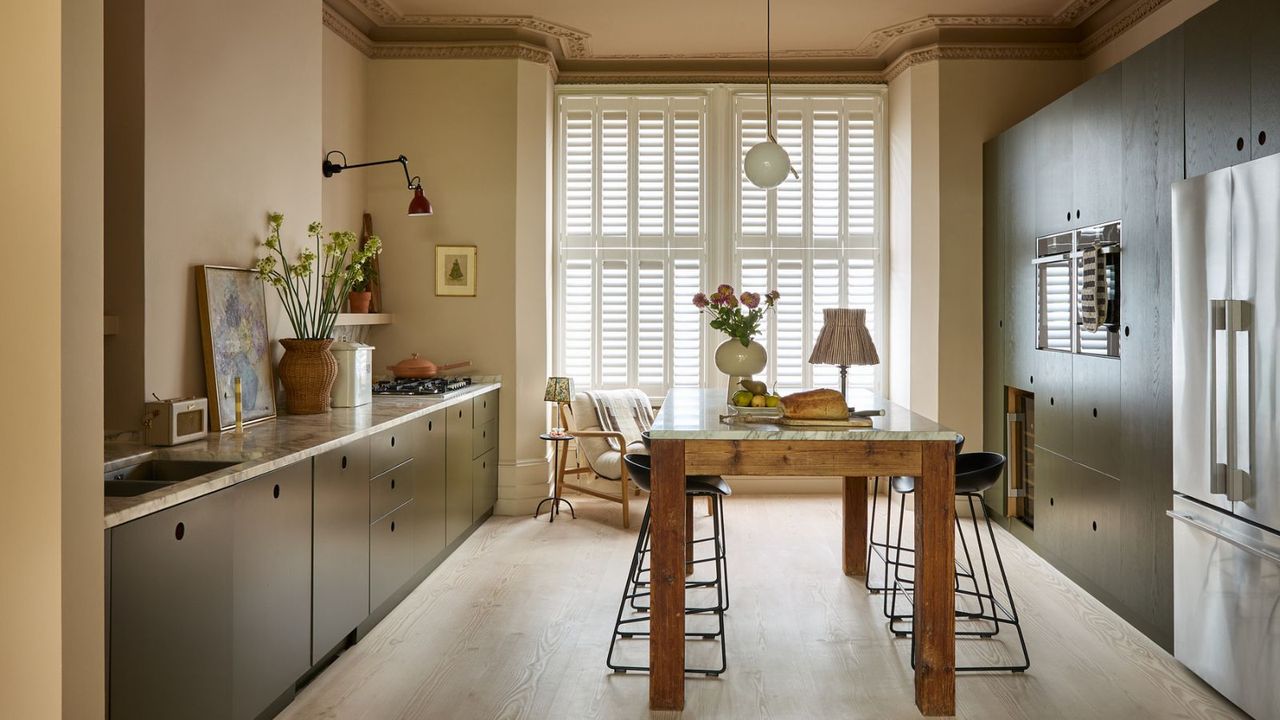
When a kitchen begins to feel dated, we often look to the obvious features, like cabinets, color, and even decor. But so often, it's actually your layout that is making everything feel off.
And according to interior designers, there are a few layouts that, while once popular, are now feeling out of style and stuck in the past. The way we use our cooking spaces has changed, so the way the flow needs to follow suit.

And if this year's kitchen layout trends are anything to go by, configurations that impede socializing and dedicated zones are worth rethinking. These are the 3 layouts designers say feel dated in 2026, and what to choose instead.
3 Dated Kitchen Layout Trends to Avoid
If you're planning to renovate your kitchen in 2026, take notes. Your layout is key to the style and function of your space, so avoid these dated arrangements if you want a scheme that stands the test of time.
1. The Double Island Layout

In a sprawling kitchen, you have a lot of space to play with, and one such solution over the past year or so has been to adopt a double island layout. It doubles the storage and surface space, but for designers, it feels a bit dated and unnecessary.
'While I haven’t designed one myself, I’ve seen quite a few double island kitchens, and I feel we’ll be moving away from that layout in 2026. To me, it often feels a bit odd and disjointed, making the space less cohesive and harder to navigate,' says interior designer Becky Shea.
And she's not the only one who feels this way about the ambitious layout. Interior designer Kristina Khersonsky has also highlighted it as an approach that's falling out of favor.
'While it worked in large, open layouts for a time, it often ends up feeling disconnected and oversized, more about scale than purpose. It can make the kitchen feel more like a showroom than a space for actual gathering,' she notes.
'Design is shifting back toward intentionality and connection. People are reevaluating how they use their kitchens, not just as cooking spaces, but as areas for conversation, hosting, and living. That means layouts that feel more human in scale, with islands and cabinetry designed for flow and functionality, rather than excess,' she explains.
Instead of instinctively trying to fill empty space in your kitchen, consider the way you use your island. Is it a space for gathering or the hub of cooking? 'Butcher’s-block-style tables on wheels or islands that are softer, less boxy, and less dominant are likely to trend in 2026,' says interior designer Laura Stephens.
With its classic wood finish and striking curved countertop design, this freestanding kitchen island adds style and function in abundance, with drawers for smaller items.
For a smaller kitchen, this butcher's block island is a charming choice. Despite its more compact size, there's plenty of storage space, including shelves and towel hooks.
Instead of a double island layout, a larger vintage-inspired design can feel much chicer and much less imposing. The rich wood and generous size of this design is a winner.
2. Unsociable Kitchen Configurations

Kitchens are no longer just cooking spaces. They are the heart of the home, with places to socialize, relax, and even host from time to time. Which is why, for many designers, layouts that hinder these multi-functional uses are falling out of style.
'The best kitchens are more than just functional rooms – they’re also spaces that prioritize gathering. People are gravitating away from kitchens that lack dedicated zones to congregate and socialize,' says interior designer Kathy Kuo.
Instead, embrace kitchen layouts that leave space for cozy seating areas, dedicated zones for drinks stations, and orient appliances so that even when someone is cooking, they can still be part of the conversation.
'Even in small city galley kitchens, there’s often an opportunity to include a petite breakfast nook or a few stools cleverly tucked under the counter,' adds Kathy. Even the smallest kitchens usually have a bit of space for a breakfast bar, even if it means staggering the countertop depth at the end of a run of cabinets.
In a larger kitchen, a dining nook with a round table creates an instant seating space, or if you want to stick to bar seating only, swap out basic stools for something a bit comfier. It's the small layout swaps that make a huge impact on the usability of your kitchen.
Whether you love a dining niche or an on-trend eat-in area, there are a few items you cannot be without. A round table is one, and this antique-style design is so timeless.
Just because it's kitchen seating doesn't mean it shouldn't be comfy. A few pretty throw pillows, like this playful stripe design with scallop edges, make all the difference.
When creating a dining space in a kitchen, banquettes, such as this design, are a great choice. They have that hotel feel while actually taking up much less space than chairs.
3. Overly Open Plan Kitchen Layouts

For a long time, open-plan designs were by far the most coveted. One great room housing the kitchen, dining room, and living area reigned supreme, but as we head towards 2026, designers say that trends are reversing.
'I think we’ll be gravitating away from layouts that are overly open with no boundaries. People want connection, but they also want the ability to close off or visually separate spaces. A little separation goes a long way in making the home feel more intentional and more functional,' says interior designer Ethan Charles.
It's not about rebuilding the walls you once took down, but rather giving each space its own identity and a sense of separation. It could be as simple as using rugs to define an open-plan space, adding glass dividers to your kitchen, or orienting your furniture in a way that creates the sense of entering a new space.
Instead of a layout that creates one expansive space, which can often feel cold and uninviting, especially throughout the winter months, this reimagined approach is about making open plan feel more defined – almost like giving each dedicated space its own layout. And it's easy to achieve with furniture and decor that's interchangeable as trends ebb and flow.
Rugs are the best way to create zones in an open plan space as they add coziness and style. This wool rug might be simple, but it will evolve as your style does.
For something a bit more colorful, this blue vintage-inspired rug is a stunning choice. It's a color that's making a comeback, and a great way to warm up neutral schemes.
If you prefer classic, natural, and durable (especially if you're looking for a kitchen rug), look no further. This design is pared-back but adds plenty of warmth and texture.
When designers refer to dated layout trends, it's less about what's in and more about creating intentional spaces. All of these outdated approaches feel a bit cold, a bit disjointed, and generally hinder the more social, soft kitchen we all desire as of late.