Get all your news in one place.
100's of premium titles.
One app.
Start reading
Cycling News
Cycling News
Sport
Matilda Price

'There were signs everywhere, I just didn't see them' – Chloé Dygert explains how weight gain complicated RED-S diagnosis

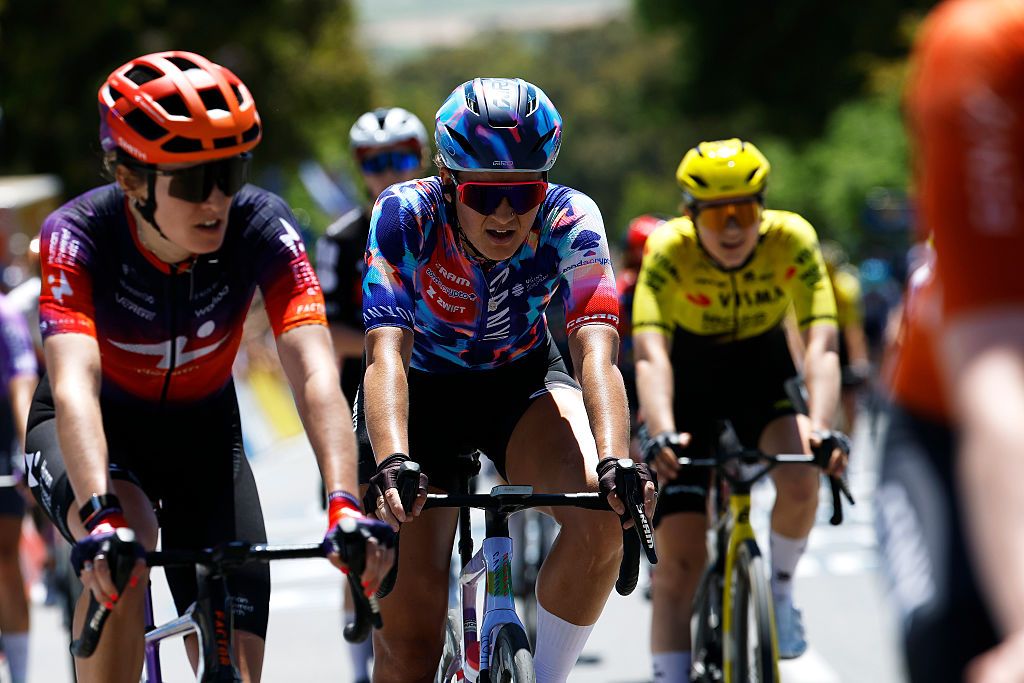
WILLUNGA, AUSTRALIA - JANUARY 17: Chloe Dygert of the United States and Team CANYON//SRAM Zondacrypto crosses the finish line during the 10th Santos Women's Tour Down Under 2026, Stage 1 a 137.4km stage from Willunga to Willunga 134m / #UCIWWT / on January 17, 2026 in Willunga, Australia. (Photo by Con Chronis/Getty Images).

After revealing her RED-S diagnosis earlier this month, Chloé Dygert (Canyon-SRAM) has explained how unusual symptoms and the lack of a weight problem made the diagnosis both difficult to identify and surprising to her and her coach.

RED-S, or relative energy deficiency in sport, is often associated with under-fueling and low body weight, and in women, the loss of a regular period.

But for Dygert, the diagnosis did not come with any problems of being underweight – in fact she explained that she has gained 9kg – which may have contributed to her not looking at RED-S as a possible explanation for the problems she has faced over the last year.

"Most people who know me know that I've always been a good eater. I've never had issues with food, which is why being diagnosed with RED-S came as such a surprise," she said in a lengthy Instagram post on Monday.

"I've never been someone who was 'sickly skinny'. There were certainly times I lost weight while preparing for a specific event, but never to a point that felt unhealthy. My body fat has never dropped below 15%, and outside of my mom occasionally telling me I was getting too thin, nobody has ever expressed concern that I was underweight. When the diagnosis came, my coach was just as surprised as I was.

Read more

Read Cyclingnews' in-depth series on women's health – covering nutrition, menstrual disorders, bone density, period tracking and more

"I think the weight gain is part of why I struggled to believe RED-S could be the answer. So many people associate it with being extremely lean, but RED-S is ultimately about energy availability. In my case, the issue wasn't necessarily calorie restriction.

Instead, she put the diagnosis down to the sustained stress of these various comeback attempts, after having to start over "four separate times because of injuries and crashes" since last summer alone, let alone the serious injuries she has suffered in the past, not least a career-altering crash at the World Championships in 2020.

"It was the enormous energy demand created by repeated injuries, illness, recovery, stress, and constant attempts to come back," she said.

"When I look at my situation, I don't believe my body was under-fueled because I was restricting food. I believe it was under-fueled because it was living under constant stress and was never given a chance to fully recover."

Despite various comebacks on the road, recovering enough to race at least, Dygert realised she was still struggling mentally, physically and emotionally. She has only raced six days this year, three of them resulting in a DNF.

"After my third comeback attempt in February, I started noticing changes that had nothing to do with cycling. I was losing my drive – not just on the bike, but in everyday life. Even things I normally enjoyed, like cleaning and organizing, felt harder. At the same time, I was still gaining weight, which made RED-S seem unlikely in my mind. Looking back, there were signs everywhere. I just didn't see them."

A team doctor pulled her aside during the spring, Dygert explained, to say that something didn't seem right. Further conversations with the Canyon-SRAM team and management eventually led to the diagnosis that Dygert was suffering from RED-S, and the long-term impacts of several injuries.

'RED-S can look different from person to person'

Whilst RED-S is beginning to be understood and taken seriously more and more in professional cycling, it is still associated with a narrow set of symptoms and causes.

In her post, Dygert was keen to recognise those common causes and cases, but also make clear how for riders like her, other struggles can be behind a RED-S diagnosis.

"I don't share this to take away from those whose RED-S developed through intentional under-fueling. Their experiences are real and deserve to be understood. I share it because RED-S can look different from person to person. Every body is different. Every story is different," she wrote.

"For me, under-fueling wasn't about not eating enough. It was about the gap between what my body was taking in and what it was being asked to handle. The repeated injuries, illness, recovery, stress, and physiological strain created a demand that eventually exceeded what my body could sustain. My body wasn't starving from lack of food. It was starving from lack of recovery.

"After enough setbacks, enough restarts, enough stress, my body finally blew – and it blew in a big way."

Despite saying in a previous post that pushing through and coming back is "the only way I know how", Dygert now has to face up to the impact of a career that spans "11 seasons and not one went uninterrupted". However, she was clear that there is another comeback in her yet.

"For now it’s back to focusing on recovery, getting healthy, goals haven’t changed," she wrote. "Just the path getting there has. I'll be back."

Sign up to read this article
Read news from 100's of titles, curated specifically for you.
Already a member? Sign in here
Related Stories
Top stories on inkl right now
One subscription that gives you access to news from hundreds of sites
Already a member? Sign in here
Our Picks
Fourteen days free
Download the app
One app. One membership.
100+ trusted global sources.