
Get all your news in one place.
100’s of premium titles.
One app.
Start reading
Woman & Home
Woman & Home
Lifestyle
Natasha Brinsmead

"There is no general legal rule that says you’re responsible for the fence on the left or right," say experts – so how do you know which fence is yours?

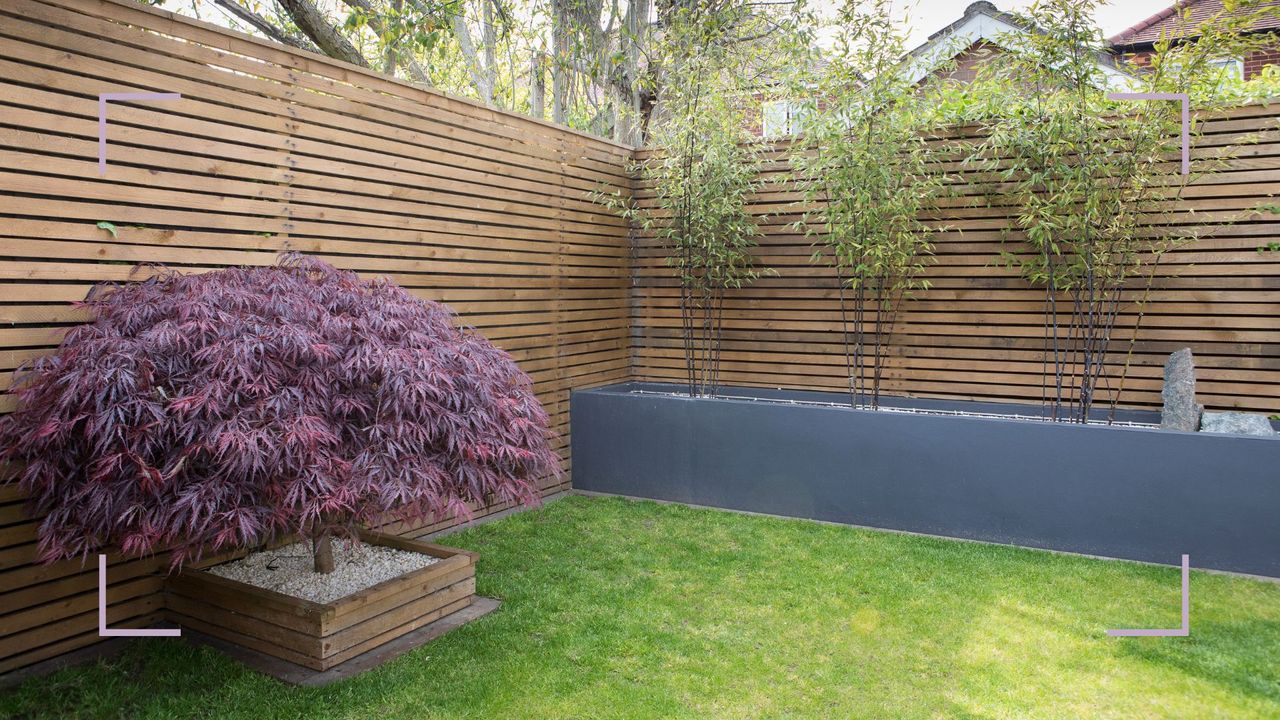
Garden with lawn and slatted fences with raised beds with ornamental trees planted.

However friendly you might be with your neighbours, there is likely to come a time when, due to the nature of living next to them, a niggle or two could arise, particularly when it comes to the question of 'Which fence am I responsible for?'

In some cases, disputes arise over inconsiderate parking or barking dogs, or perhaps your neighbours like to throw raucous parties a little too regularly – or maybe they have become rather slack when it comes to putting out their bins. However, one of the biggest reasons neighbours fall out is over boundaries, particularly those involving fence ideas.

To ensure you continue to live harmoniously with your neighbours, our guide is here to clear up any uncertainty surrounding fence ownership and responsibility.

Which fence am I responsible for in my garden?

Whether you live in a detached, semi-detached or terraced property, there will usually be some kind of boundary around it, marking out where your property ends and another begins, be that a public or private space or piece of land.

Whether this boundary is a hedge, wall or fence, issues arise when homeowners are unsure about who is responsible for these boundaries. Thankfully, there are ways of getting to the bottom of this and, subsequently, preventing or solving neighbourly etiquette issues.

(Image credit: Future | Mark Bolton Photography)

Whether you have fences all around your garden or just on one side, there will come a time when you need to know who is responsible for them. This might be because they have been damaged, or you want to replace them with something more in keeping with the latest garden trends. Unfortunately, determining ownership is not always easy.

"Contrary to popular belief, this is not straightforward," picks up architect Tina Patel from Architect Your Home. "There is no set rule for which fence you may own and you cannot necessarily define this by the posts or the direction of fence boards."

"Disputes over who owns which fence are common, but there is no general legal rule that says you’re responsible for the fence on the left or right," agrees Paula Higgins, CEO at HomeOwners Alliance.

How do I find out which fence is mine?

Given that there is no set of standard rules or garden laws to determine who owns which fence, how can homeowners find out this information?

"The only reliable way to know is to check your property deeds or title plan, which you can find at the Land Registry," explains Paula Higgins. "Modern title plans often show ownership using 'T' marks. A T on your side of the boundary means that the fence or wall is yours to maintain, while two Ts facing each other indicate shared responsibility.

"If there are no T marks, things get less clear," continues Paula. "Long-standing use may suggest a shared boundary, or the fence may have been built entirely on one side’s land. What you can’t do is rely on old myths – there’s no legal basis for 'the left fence is always yours.'"

(Image credit: Future | Mark Bolton Photography)

What happens when deeds don't show fence ownership?

If you live in a period property, it may be more challenging to determine fence ownership.

"Although the best place to start would be your legal deeds, more often than not, in the case of older properties, this may not be defined," says Tina Patel. "You may find your historical paperwork from the conveyancing process will offer some insights.

"If this still draws a blank, and if you have conflicting information to your neighbours, there is a chance that it could be a shared fence," continues Tina. "This means that the cost of the upkeep of the fence is shared."

"If your deeds are unclear, the best step is often a friendly conversation and a simple boundary agreement," adds Paula Higgins, to avoid any potential neighbour disputes.

Should I seek legal help over fence disputes?

If there is no clear answer to who owns a fence shared with a neighbour and you are desperate to get started sorting out your garden, getting legal advice can be a wise idea to prevent conflict.

"Getting the right legal advice at an early stage on any property dispute can be so important," points out Paula Higgins. "If direct negotiation, or even a letter from your solicitor, doesn’t solve the problem, then the next step may well be to consider mediation.

"Mediation allows both parties to have their say and to present their arguments in front of an independent trained mediator, whose job it is to find some common ground and try to seek a resolution which suits all parties. Mediation is usually quicker, much cheaper and far less stressful than a court application.

"It’s also important to consider mediation before the last resort of going to court," adds Paula. "Judges will not look favourably on cases which have not explored all possible solutions before taking a dispute to court."

(Image credit: Future)

What is a boundary agreement?

Once you and your neighbour have agreed who owns which fences around your properties, whether by sitting down and talking it through or with the help of a legal professional, a boundary agreement can be a good way to prevent future disputes.

"You and your neighbour can opt to create a ‘boundary agreement’ to record the boundary between two properties and who is responsible for maintaining a fence, hedge, wall, or tree between two properties," explains Paula Higgins. "However, you can’t use a boundary agreement to sell or give away part of your land. And it’s important to get legal advice if you’re considering making a boundary agreement."

Even with a boundary agreement in place, it might still be worth looking into ways to block your neighbour's view if the fence in question isn't providing the privacy you want.

FAQs

What happens if my neighbour won't repair their fence?

If a fence you share with your neighbour gets damaged and it has been ascertained that it belongs to them, what can you do to get them to repair it?

"You generally can’t force a neighbour to repair or replace a fence that belongs to them," says Paula Higgins. "There isn’t anything in law that you can do to make them. However, you could choose to erect your own fence inside your own boundary.

"Be careful not to damage their existing fence, though," continues Paula. "While you may lose a few centimetres of land, if you can afford your own solution, then this allows you some control of the situation. Remember too, if you want to paint or attach anything to a neighbour’s fence, you must ask permission first." Similar to when you want to cut overhanging branches from a neighbour's tree, permissions are key.

It is well worth looking into the best plants for privacy here, as they could really help.

If the fence in question is at the front of your property, finding out who is responsible for any repair work can be even more crucial if you want to boost the kerb appeal of your home without running into any issues.

Sign up to read this article
Read news from 100’s of titles, curated specifically for you.
Already a member? Sign in here
Related Stories
Top stories on inkl right now
One subscription that gives you access to news from hundreds of sites
Already a member? Sign in here
Our Picks
Fourteen days free
Download the app
One app. One membership.
100+ trusted global sources.