Public pressure and institutional frustration reached a boiling point in Tucson, Arizona, following revelations surrounding the stalled multi-agency search for Nancy Guthrie.
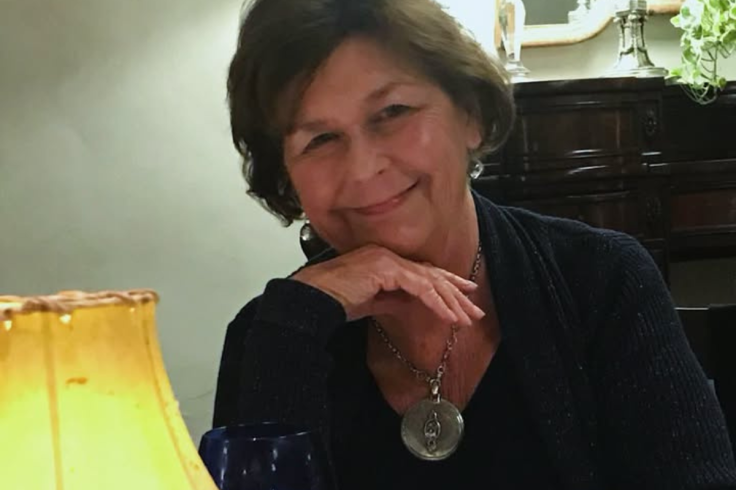
Six months after the 84-year-old mother of NBC Today anchor Savannah Guthrie vanished from her home in the Catalina Foothills on 1 February, family insiders and security analysts have demanded that federal investigators assume primary jurisdiction over the case.
Insiders now fear that crucial time has been lost and a dangerous offender remains at large. One source, interviewed by Page Six, summed up their anger bluntly, warning: 'There's a killer on the loose.'
Central to the escalating controversy is a bitter public dispute between Pima County Sheriff Chris Nanos and FBI Director Kash Patel regarding the deployment of federal resources during the critical opening days following the abduction.
With retired criminal profilers criticising the initial handling of physical evidence and digital trails, the investigation has become a high-stakes test of transparency, federal cooperation, and accountability in American law enforcement.
FBI Role at Centre of Nancy Guthrie Investigation Row
The investigation has faced intense scrutiny over jurisdictional delays and operational friction since the earliest days of the case.
Nanos has fiercely denied accusations that the FBI was locked out of the Nancy Guthrie investigation during the 'critical' first four days after the abduction. He maintains his office did not block the bureau from participating and insists they have cooperated as required.
Yet, for several people watching from inside law enforcement, that defence does not go far enough. Retired FBI profiler Jim Clemente argued that even if agents were technically present, 'that doesn't mean the full force and breadth of the FBI and its services were being utilised'.
Speaking about the jurisdictional setup, he stressed that the bureau 'does not have primary jurisdiction, they have to be invited in', then added that letting ego affect those decisions is 'ridiculous'.
According to Clemente, the idea that agencies were busy squabbling over turf while a vulnerable pensioner vanished is hard to stomach. 'Law enforcement on all sides should have the same goal, to resolve the crime,' he said.
Crime Scene Handling Fuels Anger Over Local Response
Pertinently, the scrutiny of the local response sharply intensified once details of the first days at Nancy Guthrie's house began to leak out.
Clemente and other crime experts have raised serious concerns about how the crime scene was initially handled. He alleged that the house and front porch were released 'almost immediately', before all potential evidence had been properly documented and collected.
'The crime scene was not protected, it was released almost immediately, people were walking over blood spatter evidence on the front porch, stepping on a doormat,' Clemente said.
In his view, that was a loud signal that whatever lay behind the front door probably did not get the painstaking treatment it demanded. He added that it 'would have been smart and expedient' to invite the FBI in fully, with its own forensic teams and specialist photographic unit, in those first hours.
Then there is the question of surveillance footage. Clemente pointed out that it took ten days for investigators to secure the first doorbell video showing a masked intruder outside the property. That footage had to be forensically recovered, he said, after the clip was initially deleted and later obtained via Google.
'The way the case was handled immediately appears as if it was not as serious as it should be,' he argued.
Calls for FBI To Take Charge
After sources close to the Nancy Guthrie investigation began venting their frustration in private conversations, questioning whether local resources have hit their limit.
One insider said the community is tired of watching law enforcement figures trade blame while the assailant remains unidentified.
'Stop the childish finger‑pointing,' the source said. 'There's a killer on the loose. They need to focus their resources on finding that person rather than bickering.'
Asked directly whether the FBI should now take over, Clemente did not hesitate. 'Absolutely,' he replied, although he emphasised that a complete takeover is 'not fully necessary' in order for the bureau to be useful.
He described the FBI as 'a resource for all the country' and highlighted units such as behavioural analysis, the violent criminal apprehension programme and the critical incident response group, all of which could have been deployed early.
Clemente believes those assets 'would have benefited this investigation early on'.
Community Fear and a Killer Who 'Still Presents as Normal'
Another source said 'people want answers' and queried why, in an age of doorbell cameras and digital trails, investigators are still stuck.
Private investigative firms have now been drafted in to help sift thousands of public tips and review existing evidence, a sign that local authorities know they need all the help they can get. Yet for some, the lack of a breakthrough remains impossible to square with the technology available.
'This case should have been solved by now,' one insider said. 'Members of the community fear for their safety. Is the kidnapper so sophisticated with technology that he can outrun both the FBI and local law enforcement? What does this mean for the public safety net?'
The Sheriff's Office has not publicly detailed every step it has taken, and investigators are likely holding back key information.
Clemente warned that whoever abducted Nancy may well have travelled 'a tremendous distance, across state lines or even to Mexico', something that would make federal involvement even more vital.
He has sketched a tentative profile of the offender, stressing it is based on experience rather than secret files.
In his view, the kidnapper 'still presents as normal' in daily life, but would have shown clear signs of stress before, during and after the crime, particularly once images of the masked figure were released.
Investigators should be looking for anyone who abruptly changed their behaviour, left town and came back only once media attention cooled. 'Maybe they cut their hair or shaved their beard, had their car repaired or got a new car,' he suggested. A small detail, a neighbour's hunch, could be enough to pull on 'a little tiny strand' and unravel the offender's cover.
Meanwhile, Savannah Guthrie and her siblings have issued tearful public appeals and kept the one million dollars reward open 'to end this nightmare', as Savannah wrote on Instagram.
The family believes Nancy is gone, but they are still asking for her to be returned. The kidnapper never received a penny of ransom, Clemente noted, yet he suspects they 'got Savannah to beg for her mother back', and that this may have been the ultimate goal.
Tension around the case has been building for weeks as the public learned more about how the early hours of the investigation unfolded. The alarm was raised after Nancy was reportedly taken from her home overnight, and within days the search drew in local deputies, forensics teams and, eventually, federal support.
In recent weeks, the Sheriff's Office released two ransom notes sent to the Guthrie family, one of which chillingly claimed Nancy was 'buried in nature', a phrase that led relatives to say they now believe she is dead, even though no body has been found.
The investigation has become a test of patience for Guthrie's family, for local officials and for the wider community around Tucson. People close to the case say they still want answers, and they want them now.
As public scrutiny mounts, the demand for complete institutional transparency ensures that the search for answers remains at the forefront of headlines.