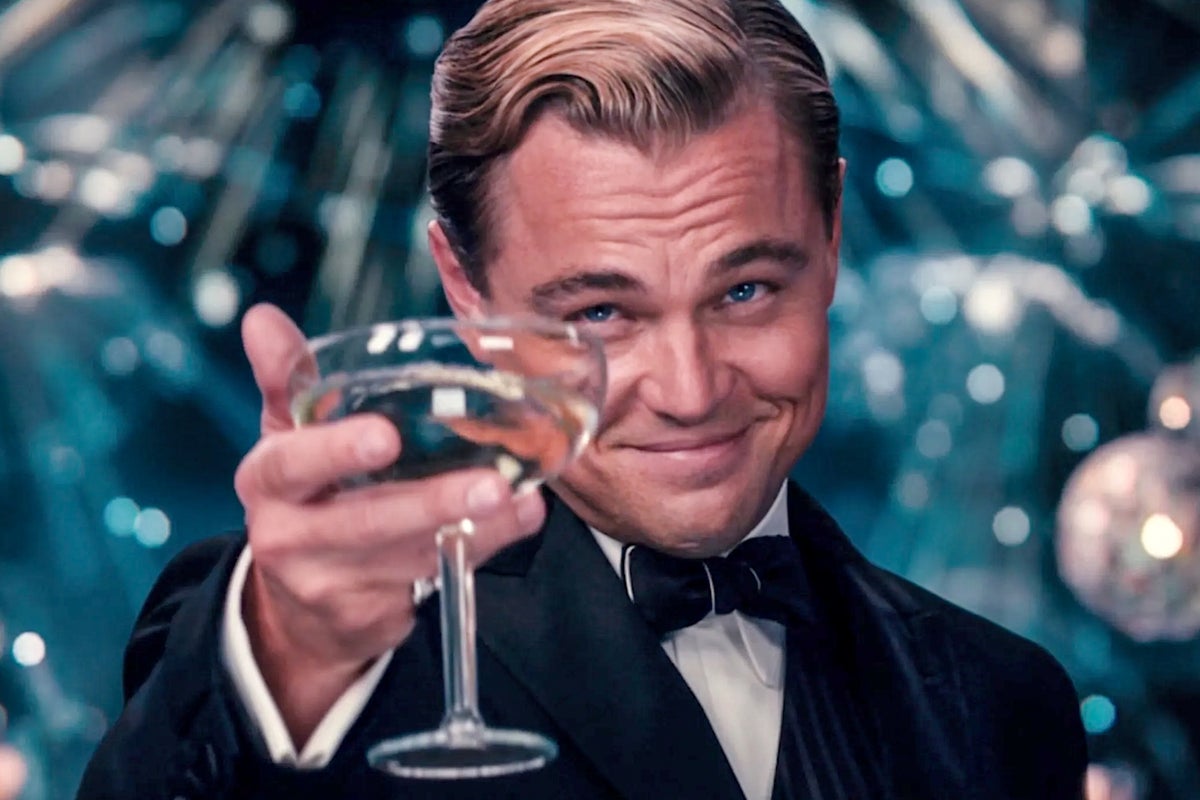
In my house, there are two copies of F Scott Fitzgerald’s The Great Gatsby, which turns 100 this week. The first is my schoolboy edition, rendered almost illegible by the quantity of doodles in the margins: old-fashioned motorcars, champagne flutes, looming pairs of eyes. On the second, a gormless stock photo flapper girl – feathers in her hair, lace gloves covering her hands – stares back at me, insisting, seemingly, on a glamorous vision of interwar America. On the inside of the jacket, a glued-on advert tells me this edition was distributed as part of a scheme to promote laser eye surgery.
The Great Gatsby is a slippery text. It means different things to different people. To some it is a monolith of American literature – a key contender in the Great American Novel sweepstakes – whereas, to others, it has become a cartoonish portrait of a bygone era. Some read it as an excoriation of materialism, others as a vindication of excess. For some it is sibylline, for others, passé.