
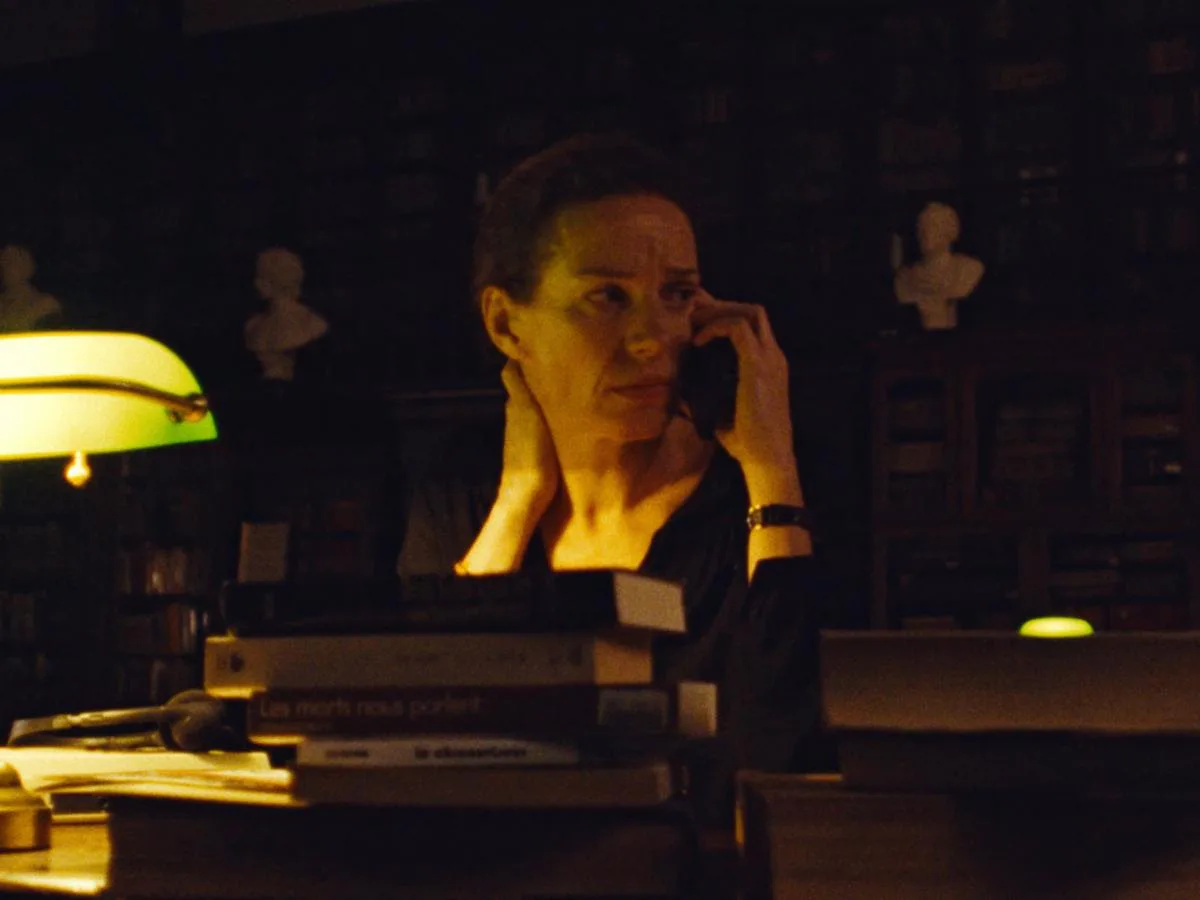
Chronovisor is the kind of work that has you asking, “what is a movie, anyway?” It’s shot and edited as a film, full of exquisitely grainy 16mm visuals of star Anne-Laure Sellier (a real-life academic and researcher) settling in to Gothic reading rooms and walking the chilly streets of Manhattan’s Upper East Side after dark. But a significant portion of that footage also consists of long, unbroken shots of Sellier reading or listening to old cassette tapes that aren’t completely still— people shift in their chairs and make subtle faces as they process information — but are close. And yet, this film is absolutely spellbinding.
At times, Chronovisor plays like an audio drama, or maybe an old-school text-based computer game where you take on the character of Béatrice (Sellier), a philosophy professor who thinks that she may have stumbled onto a secret that could change the course of history. (Or has she?) The action takes place in the viewer’s mind, in other words, as Béatrice follows a trail of recorded lectures and vintage Italian magazines in search of the truth about Father Pellegrino Ernetti, an Italian Benedictine monk who claimed to have invented a device that could see into the past.