
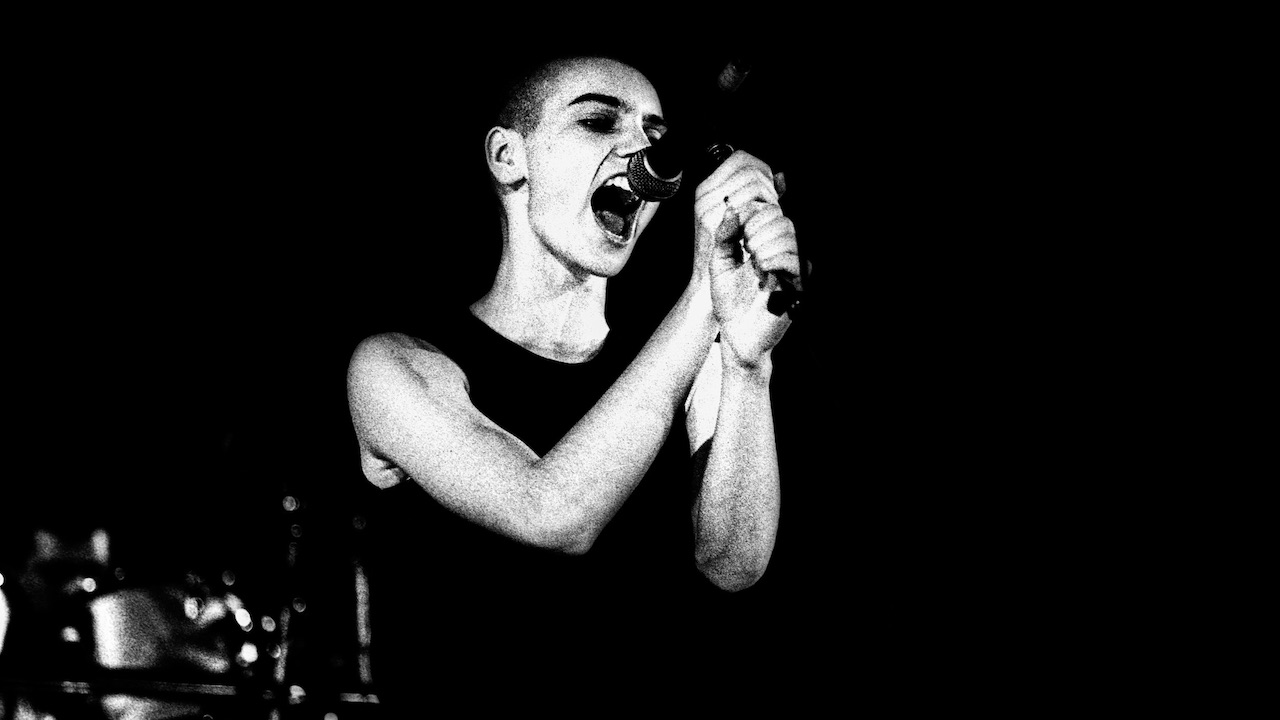
In the spring of 1988, as Sinéad O'Connor's debut album The Lion and the Cobra climbed into the Top 40 of the Billboard 200 chart, the singer's US record company, Chrysalis, felt that celebrations were in order. Nigel Grainge, the owner of O'Connor's UK label Ensign, had told Chrysalis' president that he should expect something in the region of 25,000 sales for the record in America but, in just six months, it had already passed the 200,000 sales mark, no mean feat for an a collection largely ignored by radio.
In recognition of the fact that more and more people were becoming fans of the young Irish singer, some bright spark in Chrysalis' promotions and marketing division, decided it would be a hilarious gimmick to send radio stations and music magazines promo postcards featuring doctored images of celebrities without any hair, and to send out a photo of record label staff wearing (white) skin-coloured skull caps for publication in music industry magazine Billboard. O'Connor wasn't amused.
“It makes me think that my record company are assholes,” she told a journalist, revealing that she went into the label's office afterwards and “went fucking mad.”
When the story was recounted in Musician magazine in June '88, Nigel Grainge expressed sympathy with his friends at the US label.
“She’s not the easiest person to get along with," he told the magazine, adding, as if this were a negative personality trait, “She’s very much her own person.”
That comment said a lot more about Grainge than O'Connor. In the same interview, the label boss admitted that he and the singer “had quite a lot of disagreements over her getting pregnant” before the release of the album, which had led to “a lot of personal acrimony.” What he didn't mention, but O'Connor later did, both in her 2021 memoir Rememberings, and in Nothing Compares, Irish film-maker Kathryn Ferguson 2022's documentary film about her career, was that he had phoned a doctor to “impress upon her” that, for the sake of her career, it would be best for her and everyone else if she had an abortion.
“Your record company has spent £100,000 recording your album,” the singer recalled the doctor telling her. “You owe it to them not to have this baby.”