
Everybody always tries to read too much into major tournaments. A lucky penalty here, a brilliant save there, and suddenly the whole narrative changes. Back in 1982, when Algeria beat West Germany, Chile and Honduras battled hard and Cameroon went home undefeated, there was much breathless chatter about the dawning of a brave new world for football—and perhaps then, it was. For the first time, there was a recognition in Europe and South America that maybe the rest of the world knew how to play.
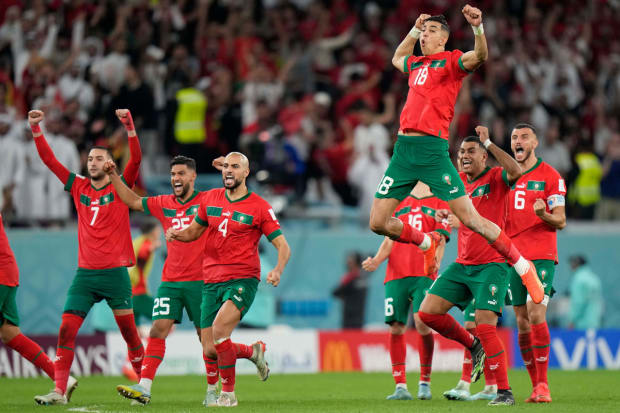
Forty years on, there had been plenty of similar commentary after the group stage, after three sides from the Asian confederation (Japan, South Korea, Australia), plus two African teams (Morocco, Senegal) and the United States made it to the last 16. And yet one round further on, and we’re back with a familiar list of quarterfinalists: Brazil, Argentina and a bunch of Europeans. Perhaps the last 16 is a sign of things to come, but let’s give it another couple of tournaments before making definitive judgments. If there has been much change over the past four decades, since Europe and South America first noticed the rest of the world, it has been incremental.
Luca Bruno/AP