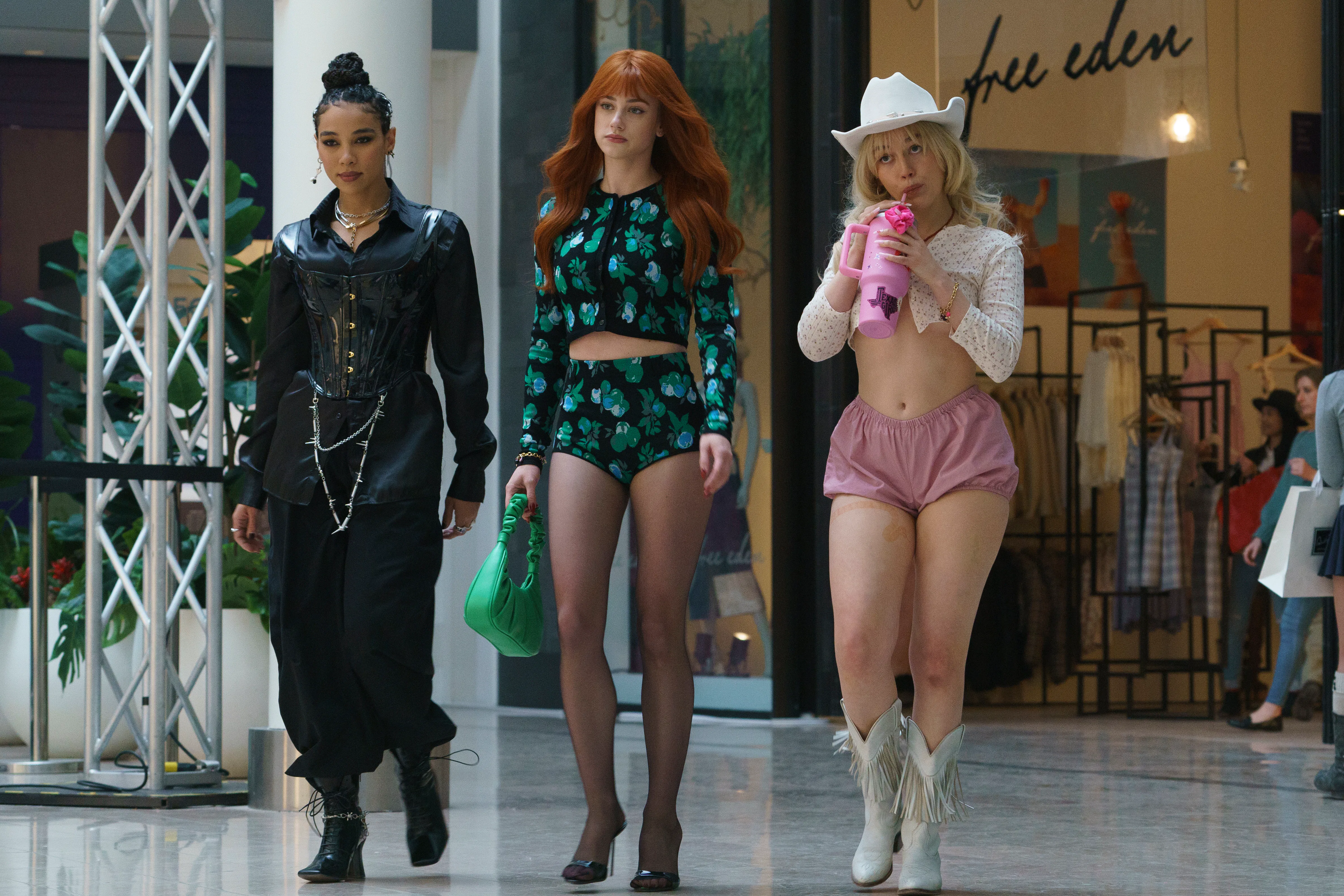
It feels correct that Diablo Cody’s name appears in the credits of Forbidden Fruits. Cody didn’t write the film; it’s adapted from the deliciously named play Of the woman came the beginning of sin, and through her we all die by Lily Houghton, loosely inspired by Houghton’s experience working at a bohemian retail chain. Cody didn’t direct, either; that job goes to Meredith Alloway, making the jump to feature filmmaking after a series of well-received short films. But Diablo Cody — who serves as a producer on Forbidden Fruits — wrote Jennifer’s Body. And without Jennifer’s Body, this film, and others like it, would not exist.
Forbidden Fruits is part of a burgeoning subgenre of horror movies that engage specifically with femininity and feminine aesthetics, dubbed “girl horror” in a recent article in Rue Morgue magazine. “Girl horror” gained momentum in the late 2010s, corresponding to the increased presence of women, both as fans and as creators, in the once almost entirely male horror space. At the same time, critics started to re-evaluate Cody and director Karyn Kusama’s 2009 film, making the duo patron saints of a new wave of unapologetically girly horror flicks like Raw (2016) and Promising Young Woman (2020).