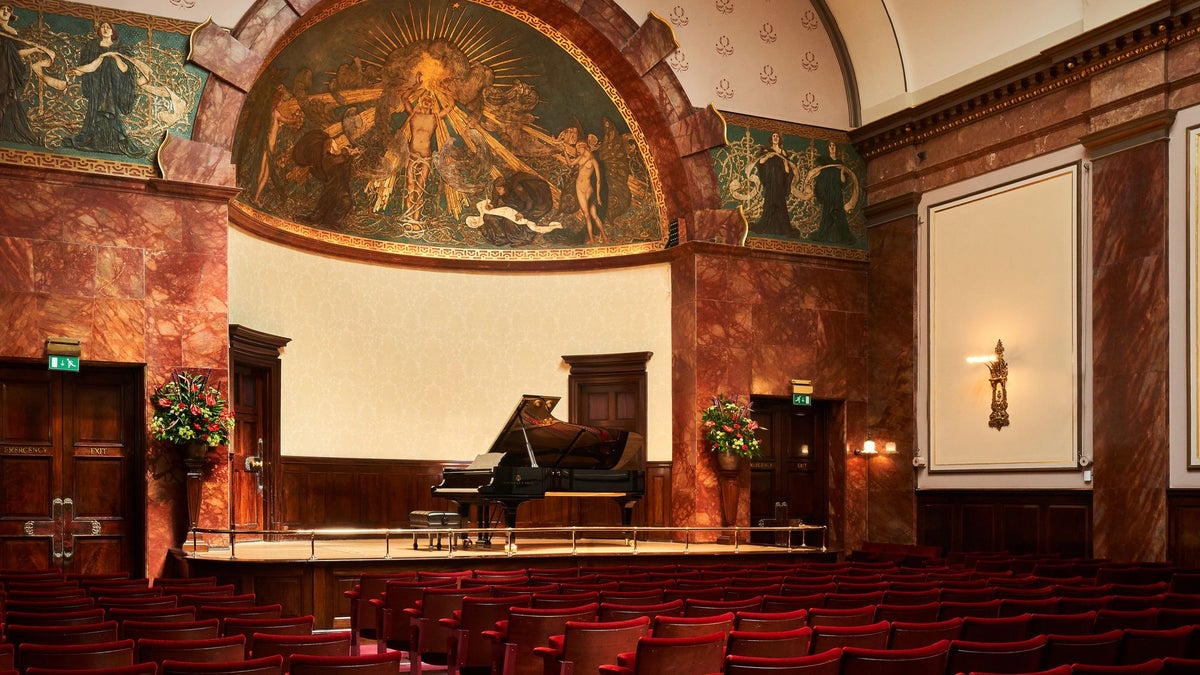
The Wigmore Hall is the London venue that classical musicians most love to play in. This spring it celebrates 125 years since it opened as a place for recitals and small-scale ensembles – the stage cannot hold a full orchestra and the intimacy of sound for 550 listeners would be spoiled if too many musicians were crammed onto it. The oblong hall faces a recess, rather like the apse of a church, and is overlooked by a beautiful gold mosaic of a figure reaching for the sun.
It began as Bechstein Hall, a place to demonstrate the quality of the firm’s pianos, which were sold from the shop next door. These days, Bechstein has its modern showroom further up the street and Steinway’s is just across the road. So the name was changed to the Wigmore Hall, after the street in which it stands, when German sounding names became a focus for antagonism at the start of World War Two. Right from the beginning, though, the finest musicians wanted to play here, as the array of signed photographs in the backstage green room attests.