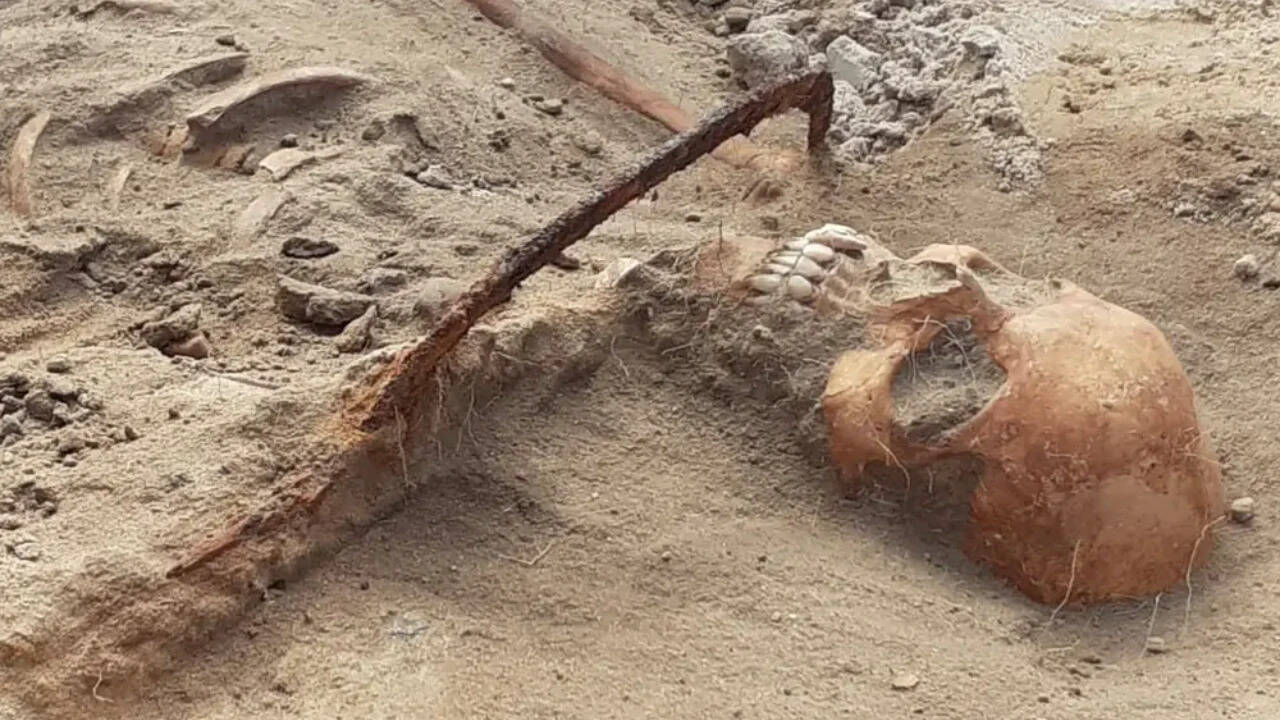
Since 2005, archaeologists have been excavating an unmarked 17th-century cemetery near Pień, close to Ostromecko in Poland, uncovering more than 100 human burials, at least 30 of which show deliberate signs that the dead were pinned down, locked in place or positioned specifically to stop them from rising. Among the most striking finds are a young woman buried with an iron sickle laid across her neck and a triangular padlock fastened to her toe, and a child buried face down with a similar lock placed near the feet. Led by Dariusz Poliński of Nicolaus Copernicus University, the excavation has become one of the most detailed physical records anywhere of what archaeologists call anti-vampire burial practices, measures rooted not in the blood-drinking figure of modern fiction but in an older, more localised fear of revenants, the dead believed capable of returning to harm the living. Taken together, these findings offer a rare and tangible window into a belief system rarely preserved this vividly, showing how deeply supernatural fear could shape everyday burial customs long before folklore ever committed such practices to written record.
Get breaking news anytime, anywhere. Download the TOI app now!