
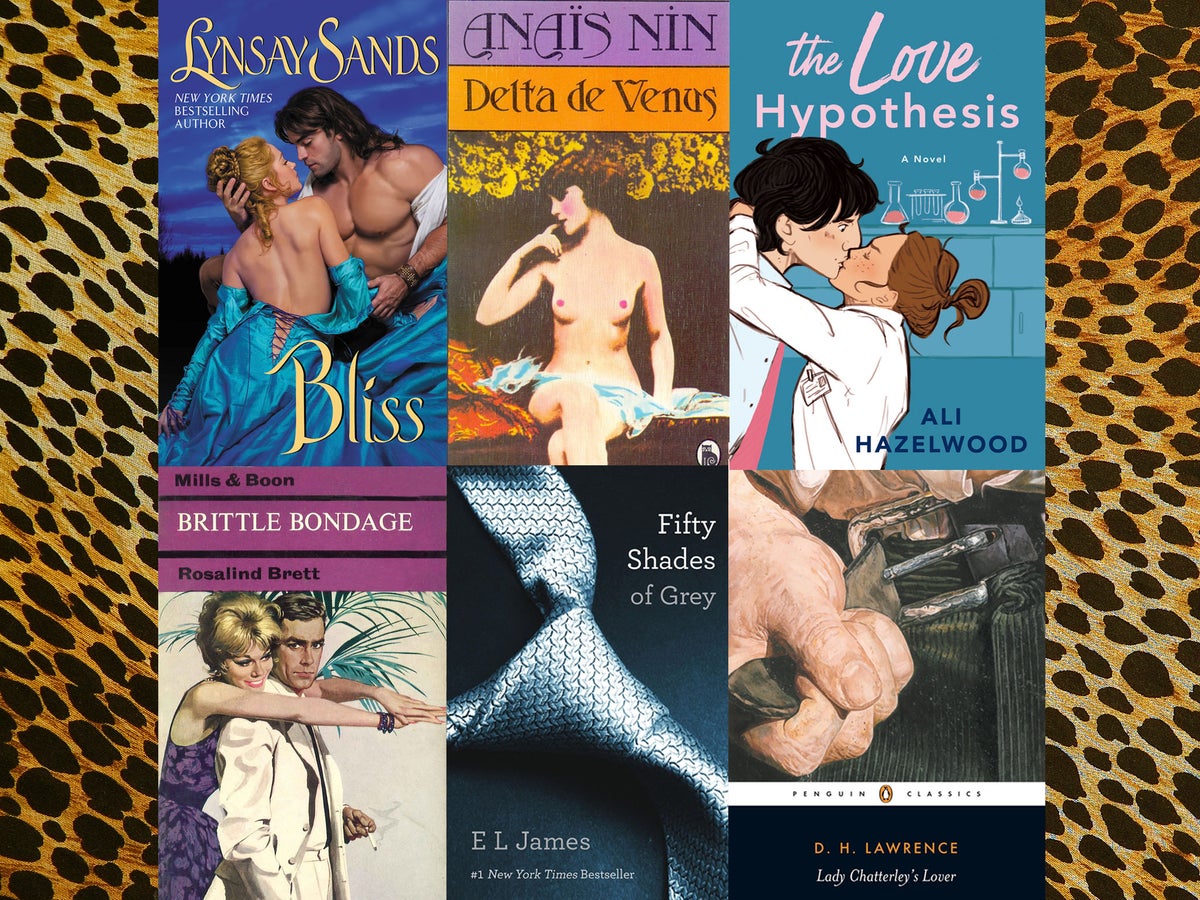
It was George Eliot who, in the mid-19th century, first wrote about not judging a book by its cover. But it still rings true. At first glance, Ali Hazelwood’s The Love Hypothesis seems like any other romcom novel. There’s a cartoon image of a man and a woman kissing, with an array of science equipment in the background. To the unassuming reader, it would seem like it was a book about a pair of scientists falling in love. Little would they know that it’s secretly smut.
The word, describing something obscene or indecent, was once associated with the moral outrage of campaigners such as Mary Whitehouse (“Ban this filth!”) who was known in the Sixties and Seventies as Britain’s “smut-buster”. But now it has been reclaimed and reframed with positive connotations for a younger generation. These days, in literature, smut is generally used to describe a book of any genre that includes one or more sexually explicit scenes. This can be anything from a romcom novel to science fiction and fantasy – monster smut is predicted to be the next big thing. Smut-filled novels have been gaining traction on social media, specifically TikTok – or BookTok, I should say – where the hashtags #smut and #smuttok have 3.7 billion and 3.2 billion views respectively.