Get all your news in one place.
100's of premium titles.
One app.
Start reading
The Times of India
The Times of India
World
TOI World Desk

The United States deliberately poisoned all 41 kilometers of Yellowstone's Soda Butte Creek in the 1990s, killing every fish in the river after invasive brook trout overwhelmed native cutthroat trout, and years later, the iconic native fish returned

It seems to be the plot of some environmental thriller. Wildlife officials used rotenone to remove fish from more than 41 kilometers of Soda Butte Creek in Yellowstone National Park, reviving a restoration strategy first used there in the 1990s.

Get breaking news anytime, anywhere. Download the TOI app now!

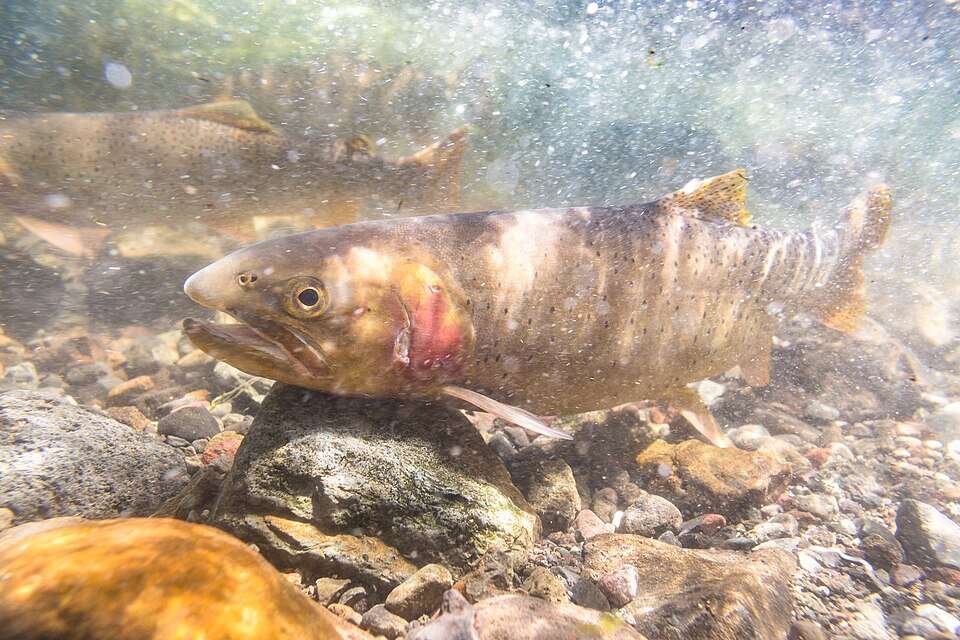
According to conservation biologists, the procedure may have been necessary to help prevent the species’ decline in Yellowstone National Park. After several years, Yellowstone cutthroat trout were spotted in Soda Butte Creek again, illustrating ecosystem recovery after invasive species removal.

Introduction of fish in Yellowstone: how it all started

In 1872, when Yellowstone National Park was established, its rivers and lakes were home to 12 native fish species and subspecies that had dispersed to the region about 8,000 to 10,000 years earlier following glacier melt.

In the late 19th and early 20th centuries, park officials released more than 300 million fish into Yellowstone waters between 1880 and the 1950s, according to Koel et al. in Yellowstone Science. Many of the species intentionally released into Yellowstone waters were nonnative, including rainbow trout, brown trout, brook trout and lake trout.

Reasons for prioritizing Soda Butte Creek as a conservation site

Soda Butte Creek is a major tributary of the Lamar River in northern Yellowstone and an important breeding habitat for Yellowstone cutthroat trout. According to the US National Park Service , brook trout became established in Soda Butte Creek outside Yellowstone National Park near Cooke City, Montana. Polluted water from abandoned mine tailings acted as a chemical barrier that kept brook trout from moving downstream.

When the area was cleaned and the quality of the water was improved, brook trout began entering Soda Butte Creek and started competing with cutthroat trout.

For almost two decades, fisheries staff had been using electrofishing to catch and remove brook trout every year. Despite catching and removing several thousand individuals in total, brook trout were constantly expanding their territory. Finally, scientists realized that electrofishing alone would not solve the problem.

Controversial measure of poisoning the creek

However, in 2015, Yellowstone National Park’s Fisheries Program resorted to a much more drastic measure.

After modifying the flow of Ice Box Falls to prevent fish from moving upstream, the biologists treated about 41 km of Soda Butte Creek and its tributaries with rotenone, a fishicide widely used in fisheries since the 1960s. This compound kills fish by blocking oxygen uptake through the gills but breaks down in water within days. According to the National Park Service, it does not pose a serious danger to humans or mammals when used in controlled conditions. Prior to starting the operation, hundreds of indigenous Yellowstone cutthroat trout were caught using an electrofishing device and then transferred to other water bodies. After the effects of the rotenone were gone, the caught fish were released back into the creek.

The 2015 procedure resulted in the removal of the majority of brook trout. To make sure no fish remained alive after that, the rotenone treatment was performed again in 2016.

The native trout staged an amazing comeback

The strategy worked.

According to Yellowstone National Park’s Native Fish Conservation Program report, electrofishing surveys and environmental DNA sampling found no sign of brook trout between 2017 and 2021. In addition, Yellowstone cutthroat trout populations made a steady comeback during this period, regaining their numbers prior to the chemical application. The report suggests that the recovery illustrates how removing the invasive species helped native trout rebound.

The story does not end here

However, the recovery process was not all smooth.

Officials believe the fish may have migrated into the stream from adjacent areas outside the national park, but the source remains unclear.

In 2023, the park treated the creek with rotenone again after moving native cutthroat trout out of the area. According to the National Park Service, this action will help prevent brook trout from invading the Lamar River watershed, which supports a genetically pure Yellowstone cutthroat trout population. Conservation biologists say the action was intended to prevent further decline of one of Yellowstone’s native fish species.

Sometimes invasive species become so established that drastic action is needed to protect native species.

Sign up to read this article
Read news from 100's of titles, curated specifically for you.
Already a member? Sign in here
Related Stories
Top stories on inkl right now
One subscription that gives you access to news from hundreds of sites
Already a member? Sign in here
Our Picks
Fourteen days free
Download the app
One app. One membership.
100+ trusted global sources.