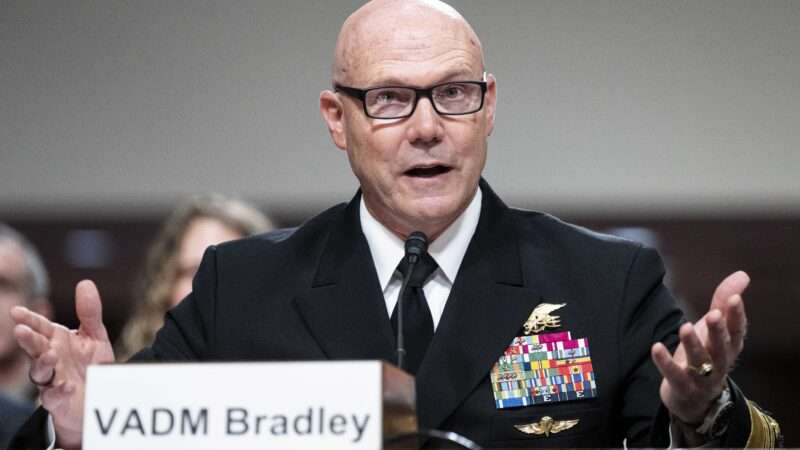
On Thursday, Adm. Frank M. Bradley, commander of the newly controversial September 2 operation that inaugurated President Donald Trump's deadly military campaign against suspected drug boats in the Caribbean and the eastern Pacific, briefed members of Congress about his justification for ordering a second missile strike that killed two men who survived the initial attack. Hours later, the U.S. Southern Command announced yet another boat attack, raising the total to 22 and the death toll to 87.
The confluence of those two developments highlights the risk that the debate about Bradley's second strike will obscure the broader issue of whether Trump's reality-defying assertion of an "armed conflict" with drug smugglers, which supposedly turns criminal suspects into "combatants," is enough to transform murder into self-defense. While the renewed congressional interest in the legal and moral justification for Trump's bloodthirsty anti-drug strategy is welcome, that inquiry should not be limited to the question of whether one particular attack violated the law of war.