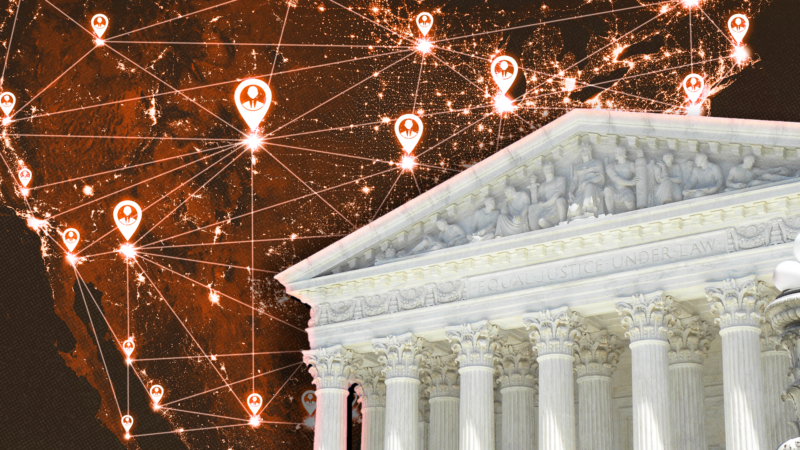
In Carpenter v. United States (2018), the U.S. Supreme Court held that warrantless government tracking of cellphone users via their cellphone location records violated the constitutional right to be free from unreasonable search and seizure. "A person does not surrender all Fourth Amendment protection by venturing into the public sphere," the Court said. "We decline to grant the state unrestricted access to a wireless carrier's database of physical location information."
Later this month, the justices will hear oral arguments in another case that sits at the intersection of cutting-edge technology and the Fourth Amendment. And just like in Carpenter, the privacy rights of millions will once again be at stake.