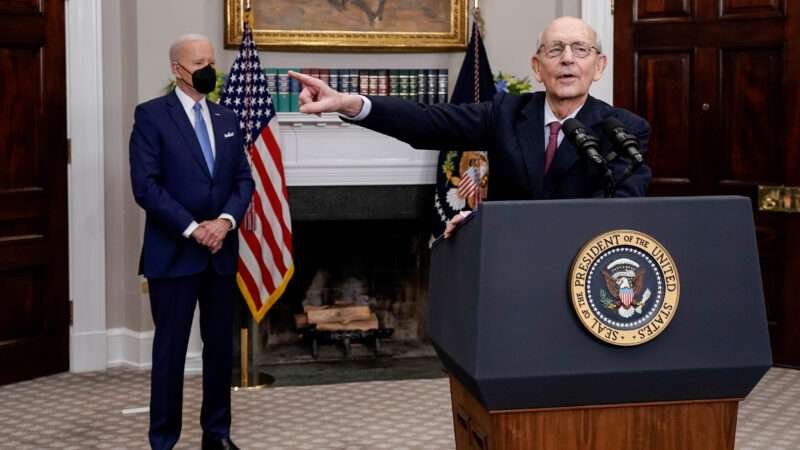
President Joe Biden's vow to nominate a black woman to replace retiring Justice Stephen Breyer on the U.S. Supreme Court has sparked a predictable partisan fight about identity politics. But there is a more productive Supreme Court fight that we should be having.
To be sure, the background of a judicial nominee does matter. Take Clarence Thomas. When the Supreme Court heard oral arguments in 2003 about a state law that criminalized the burning of a cross "with the intent of intimidating any person or group of persons," Thomas spoke from personal experience about the horrors of growing up in Jim Crow America. The law at issue in Virginia v. Black was intended to counteract "almost 100 years of lynching and activity in the South" by the Ku Klux Klan and other racist groups, Thomas told the hushed courtroom. "This was a reign of terror, and the cross was a symbol of that reign of terror." Race comes up again and again in Thomas' writings, speeches, and opinions. As I noted a few years ago, "many of his critics may be too ignorant to know it, but Thomas' writings are steeped in African-American history and grapple repeatedly with the long shadow cast by slavery and Jim Crow."