
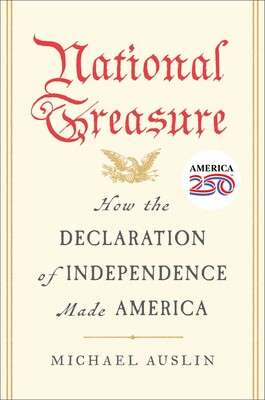
[This post is excerpted from the new book, National Treasure: How the Declaration of Independence Made America (Avid Reader Press/Simon & Schuster).]
To the delegates of the Continental Congress, the Declaration of Independence did not reflect abstract ideas. To begin with, it was a pressing piece of administrative business after the vote for Independence on July 2, necessary for legitimizing the American struggle against King and Parliament, as well as a means of garnering foreign support, primarily from France. Yet it also was a covenant invoking the Creator and identifying a people that it hoped to unite. This covenant was instituted to defend against tyranny and maintain a specific political community in its traditional rights. Its sanction came from a righteous cause, and as Congress began to edit Thomas Jefferson's draft on July 2 and 3, it found itself not only tightening his argument, but also making more explicit the divine sanction that underpinned the document.













