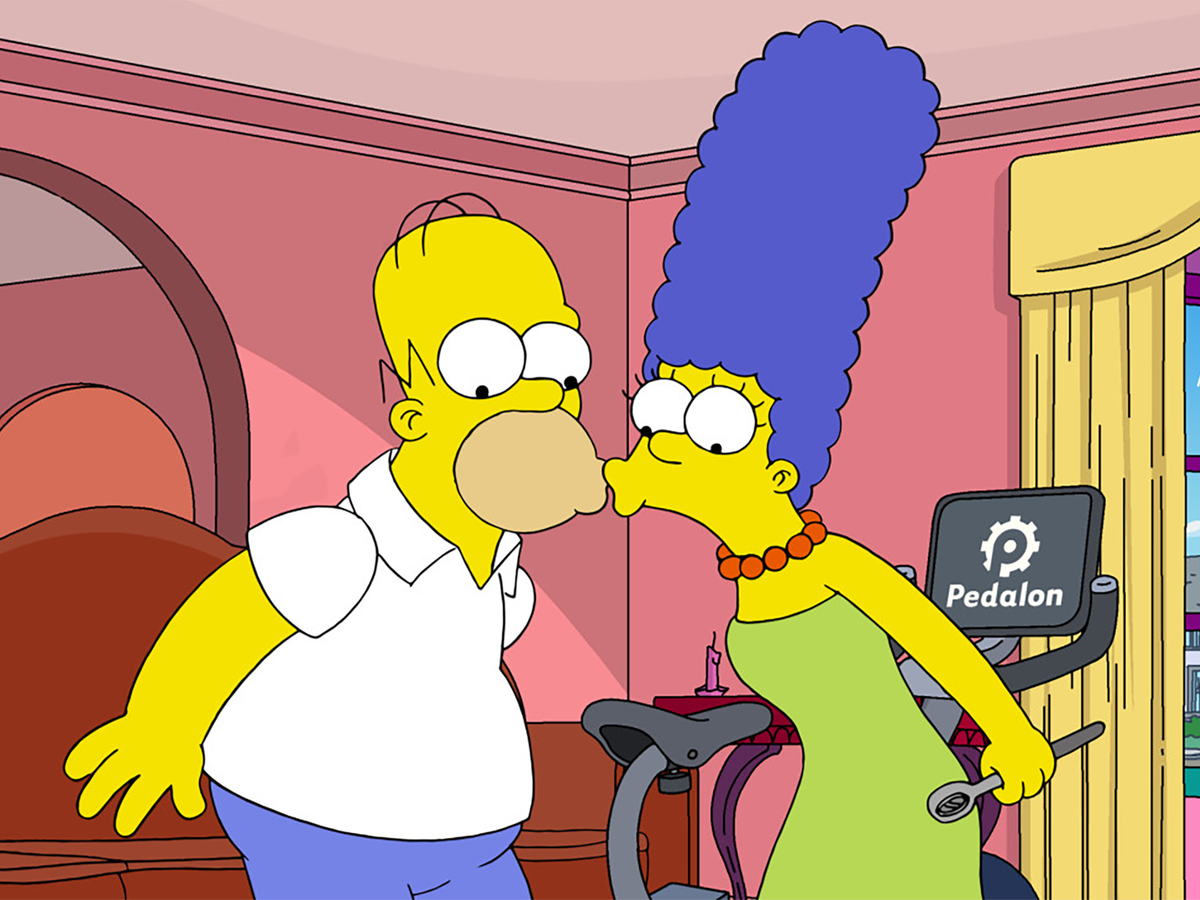
The final segment of last weekend’s The Simpsons episode “Treehouse of Horror XXXIII” starts off looking very familiar. It’s a scene from “Marge vs the Monorail”, the 1993 episode written by Conan O’Brien that’s regularly voted among the show’s finest half-hours. Homer is proudly showing his family around the cockpit of the monorail, yet just as he’s about to deliver his famous line about the family of possums living in it – “I call the big one Bitey” – a couple of drunken bros appears and chant the catchphrase in unison. After the pair force beer down his neck, Homer learns he’s not really Homer at all: He’s a high-tech robot host of the sort that populates Westworld. We’re in “SimpsonsWorld”, a theme-park attraction jampacked with fan-favourite references from Kamp Krusty to Hank Scorpio with his flamethrower. When Homer is taken off to be repaired, he learns the sinister truth about his reality. “Calm down Mr Simpson,” a technician urges. “I know it feels like you’re a man but you’re actually something much, much more expensive… intellectual property.”
It’s funny because it’s true. The Simpsons has long contended with critics who argue the show is so far past its Nineties heyday it should be put out of its misery. But in reality it’s still way too big to cancel. The animated series, now in its 34th season, is both the longest-running scripted primetime show on American television and one of the most heavily and lucratively merchandised. In 2019, it was considered the crowning jewel that convinced Disney to shell out $71b for Fox’s entertainment business. If the show were ever taken off the air, its value as globally recognisable IP would surely make it only a matter of time before it was rebooted and resurrected. Just look at Futurama, another Matt Groening creation, which Hulu announced it would be reviving for an eighth season earlier this year. Like one of those hosts in Westworld, you can kill it but it will never really die.