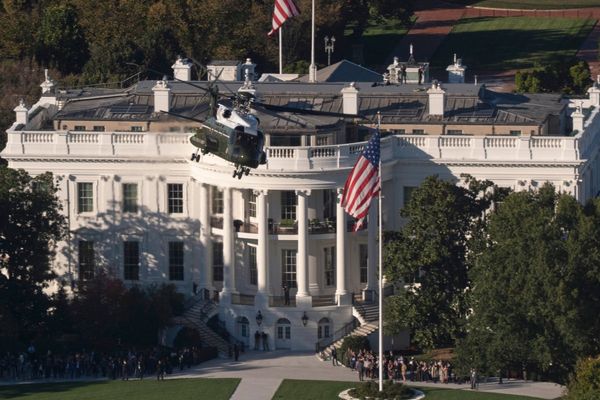
Sshh! Don’t look suspicious. Keep your head down. We’re on our way to a really secret organization in suburban Virginia just outside Washington, D.C. As we drive along Dolley Madison Boulevard, don’t bother looking at the razor wire, tall gates, and armed guards on the right. Everybody knows that’s CIA headquarters—there’s a marked sign out front (and a gift shop inside, at least for employees). No, we’re going a couple more miles and hanging a left until we reach a squat, rust-colored two-story building with meager windows, a PRIVATE PROPERTY sign, no identification, and all the character of a brick storage shed. The front door is locked. Some locals have called the place the Kremlin. In the upstairs reception area, you’ll see half-a-dozen portraits of the owners and their relatives. Admire them if you like, but taking photos of the portraits is strictly prohibited.
Welcome to the astonishingly modest world headquarters of Mars, the third-largest private company in the U.S. (behind Cargill and Koch Industries). With about $33 billion in global revenue last year—we talked it out of them—Mars would be in the top 100 of the Fortune 500, ahead of McDonald’s, Starbucks, and General Mills. It employs 72,000 people, more than a third of them in America. (Only about 80 work in the McLean, Va., headquarters; it’s so small that when the chairman of Nestlé once paid a visit, he thought he was in the wrong location.) Its diversified galaxy of brands for man and beast are iconic—from chocolate favorites like M&M’s and Snickers to Wrigley’s Juicy Fruit and Lifesavers to pet-care products like Pedigree and Whiskas, as well as Uncle Ben’s Converted Rice. The company says it does 200 million consumer transactions a day. But despite that reach across civilization and into customer pockets, Mars is among the most secretive, insular, and little understood multinational companies around.